Mill in the Forest Clearing — History & Facts
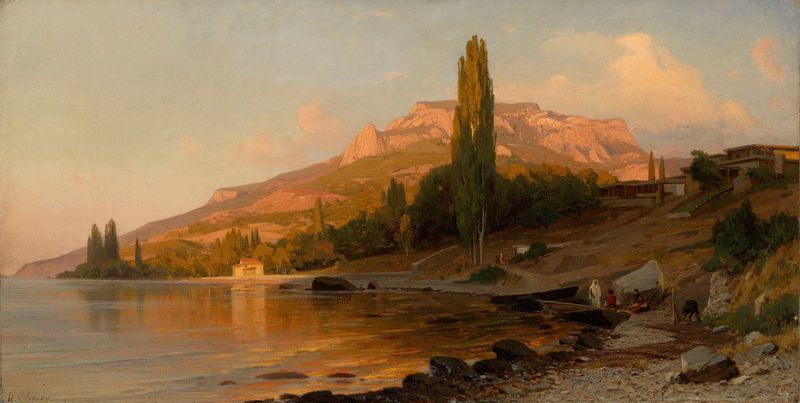
Could beauty survive in a century of chaos? The answer lies in the serene canvas that reflects the tranquil harmony between nature and human craftsmanship, inviting us to ponder the legacy of both. Look to the center of the painting, where a rustic mill stands majestically, surrounded by verdant trees that whisper the secrets of the forest. The soft light filters through the foliage, casting delicate shadows that dance upon the water's surface, enhancing the sense of serenity. The artist’s deft brushwork creates texture on the mill's weathered wooden structure, while the palette—rich greens and earthy browns—evokes a sense of warmth and refuge. As you explore the painting further, consider the juxtaposition of the manmade mill and the untamed wilderness surrounding it.
This contrast symbolizes the fragile balance between progress and preservation, highlighting the enduring beauty found within nature's embrace. The gentle ripples in the water mirror the stillness of the scene, invoking feelings of peace amidst the passage of time, as if the mill stands as a steadfast guardian of memories long forgotten. In 1887, Volodymyr Orlovsky painted this work during a period marked by political upheaval in Eastern Europe. He was living in Kyiv, where he was deeply influenced by the natural beauty of the Ukrainian landscape and the cultural legacy of his homeland.
This painting reflects his desire to capture the essence of nature amid the changing tides of history, ensuring that beauty persists even in the face of uncertainty.