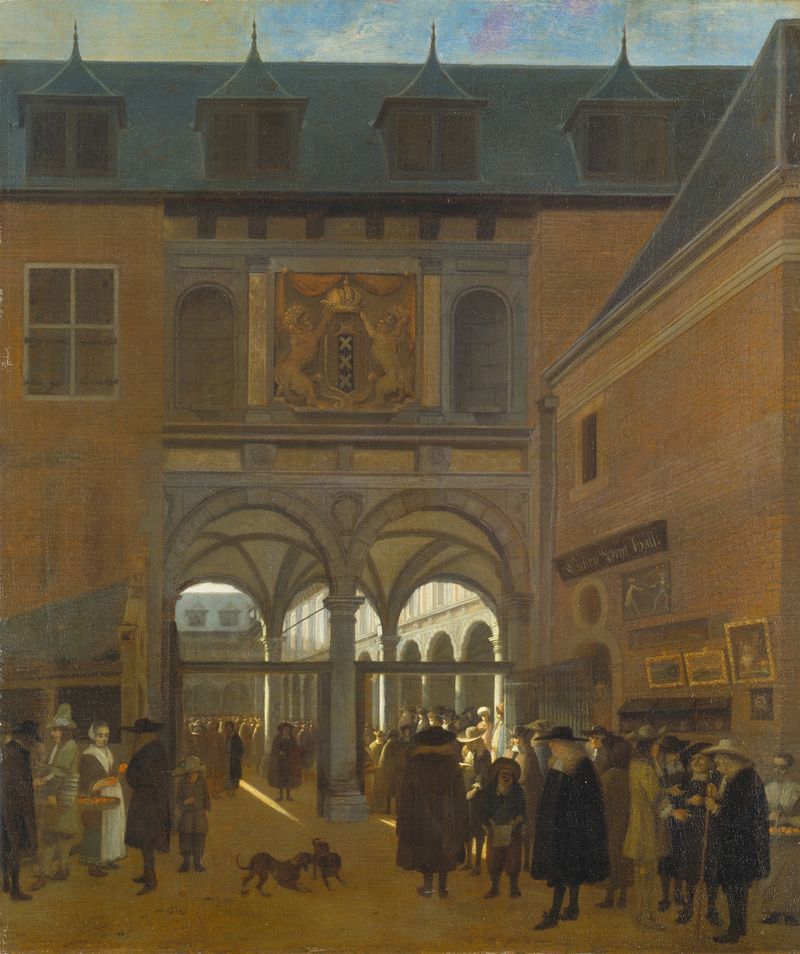
Minervatempel, dabei eine Herde Vieh und Hirten — History & Facts
In the realm of art, there are moments when tranquility conceals turmoil, where serene landscapes whisper of the burdens carried by their inhabitants. Job Adriaensz Berckheyde’s work captures this dichotomy, inviting us to ponder the delicate balance of existence. Look closely at the majestic Minervatempel, nestled within a verdant landscape; it draws your gaze like an anchor amidst the swirling life below. Notice how the warm hues of the temple contrast with the cool greens of the surrounding fields.
The gentle brushwork illustrates the movement of the herd, their bodies fluid and alive, while the distant figures of shepherds stand slightly apart, embodying both guardianship and solitude. The architectural elegance commands attention, yet the vibrant life around it reveals a deeper narrative. As your eye wanders, consider the juxtaposition of the temple’s grandeur against the pastoral scene. The flourishing life below may reflect the struggles of the shepherds, their labor a silent testament to the sacrifices made for sustenance and security.
The herd, seemingly carefree, dances with the gentle breeze—a metaphor for fleeting joy amidst the rigors of daily toil. This tension evokes a sense of empathy, inviting us to reflect on our own lives and the unseen burdens we carry. Berckheyde painted this artwork during the late 17th century, a time marked by the flourishing of Dutch Golden Age art. He was working in Haarlem, where the artistic community was keenly focused on realism and the interplay of light and shadow.
During this period, the artist honed his techniques, capturing not only the beauty of architecture but also the liveliness of everyday life, intertwining both elements to create a rich, immersive experience.