Mondscheinlandschaft — History & Facts
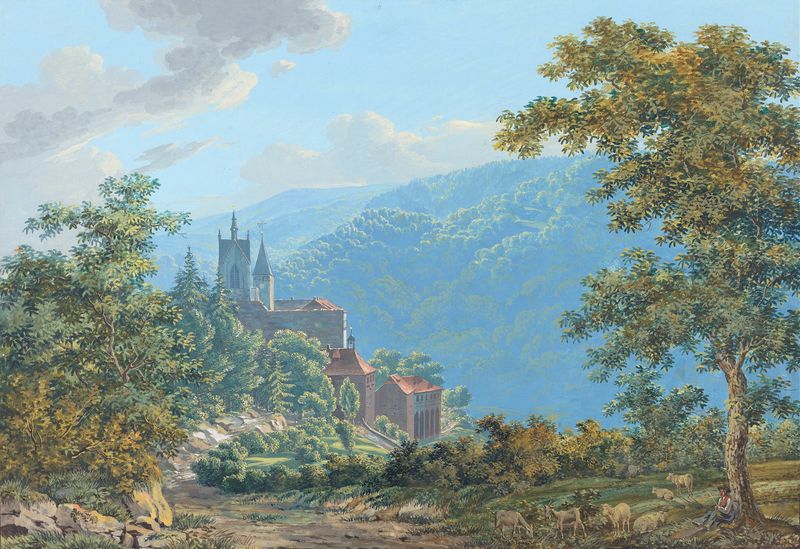
In the soft glow of moonlight, the landscape speaks in whispers of faith and tranquility, inviting introspection amidst its serene beauty. The stillness fosters a connection between the viewer and the vastness of the night sky, evoking a sense of reverence for nature’s quiet majesty. Focus on the luminous moon hanging low in the sky, casting silver hues across the tranquil waters below. Look to the left at the gentle undulations of the hills, their contours softened by the night, while the foreground is adorned with delicate aquatic plants, their shadows stretching gracefully.
Huber’s brushwork is meticulous, capturing the interplay of light and shadow, with his restrained palette enhancing the ethereal atmosphere. The contrast between the calm water and the distant hills hints at deeper emotional currents—the interplay of solitude and communion with the divine. Each brushstroke conveys a quiet yearning, a longing for connection that transcends the physical realm. The painting invites reflection on one’s own beliefs, positioning nature as a conduit for spiritual contemplation, while the stillness suggests that sometimes, faith is found in silence. In 1811, Huber painted this piece during a period of transition in the art world, influenced by Romantic ideals that celebrated nature and emotion.
Living in Germany, he was part of a movement that sought to express the ineffable—a yearning for something greater amidst the mundane. This work reflects his personal quest for meaning, capturing the essence of a moment where reality and spirituality intertwine.