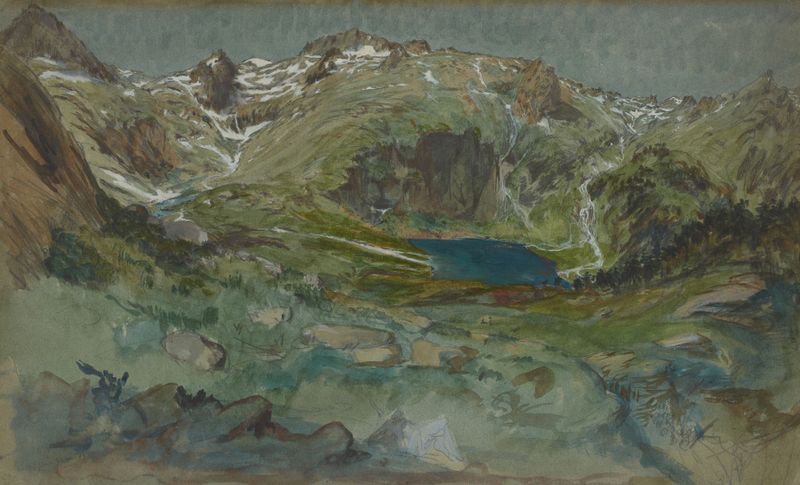
Mont Blanc Seen from the Massif, Les Aiguilles Rouges — History & Facts
What secret hides in the quiet of the canvas? The stillness of this landscape whispers a faith that transcends the mere act of observation, inviting the viewer to pause and ponder the majesty of nature. Focus first on the sweeping horizon, where Mont Blanc rises with an ethereal grace. Notice how the gentle strokes of blues and whites blend seamlessly, capturing the snow-kissed peaks that evoke both awe and solemnity. The foreground, adorned with the textured greenery of the Aiguilles Rouges, creates a vivid contrast, while the subtle play of light casts shadows that dance across the soft terrain, grounding the ethereal atmosphere in reality. Delving deeper, the juxtaposition of rugged mountains and delicate flora suggests a balance between strength and fragility.
The artist's choice to utilize a muted palette reinforces a sense of serenity, while the expansive sky embodies limitless possibilities, reflecting the tension between man’s ambitions and nature’s grandeur. There is a profound silence in this beauty, a moment suspended in time that invites introspection and reverence. In 1874, during a crucial period of artistic exploration, Eugène-Emmanuel Viollet-le-Duc painted this piece while immersed in the Romantic ideals that celebrated nature's beauty and power. Living in France, where the avant-garde was taking shape, he sought to connect the sublime landscapes with a spiritual essence, showcasing his architectural background through a meticulous attention to detail.
This work stands as a testament to the reverence for nature that marked an era of transformation in art.