
Montague House, Whitehall — History & Facts
Memories, like brushstrokes, can illuminate the past, yet they often shimmer just out of reach. Look to the center where the grand façade of Montague House rises majestically, its intricate details carved against a backdrop of soft, muted tones. The warm ochres and delicate grays create a dialogue between light and shadow, inviting the viewer to explore the depths of architectural elegance. Notice how the gentle light filters through the clouds, casting a subtle glow on the weathered stone, while the surrounding trees stand sentinel, their dark silhouettes framing the structure with a sense of timelessness. As you delve deeper, observe the delicate interplay of nostalgia and permanence.
The colors evoke a sense of fading memory, hinting at the grandeur that once was, while the empty space surrounds the house speaks of absence and history lost. The contrast between the vibrancy of the house and the muted environment suggests a longing for what has passed, reminding us that every building holds the echoes of lives once lived within its walls. David Roberts painted this work in 1862, a time when he was establishing his reputation as a prominent landscape artist. Living in London, he was captivated by the architectural marvels of the city, and this piece reflects his fascination with both the grandeur of buildings and their historical context.
The mid-19th century was a period of great change in Britain, marked by industrial progress and a growing awareness of heritage, which infused his work with a sense of purpose and exploration.
More Artworks by David Roberts
Browse all →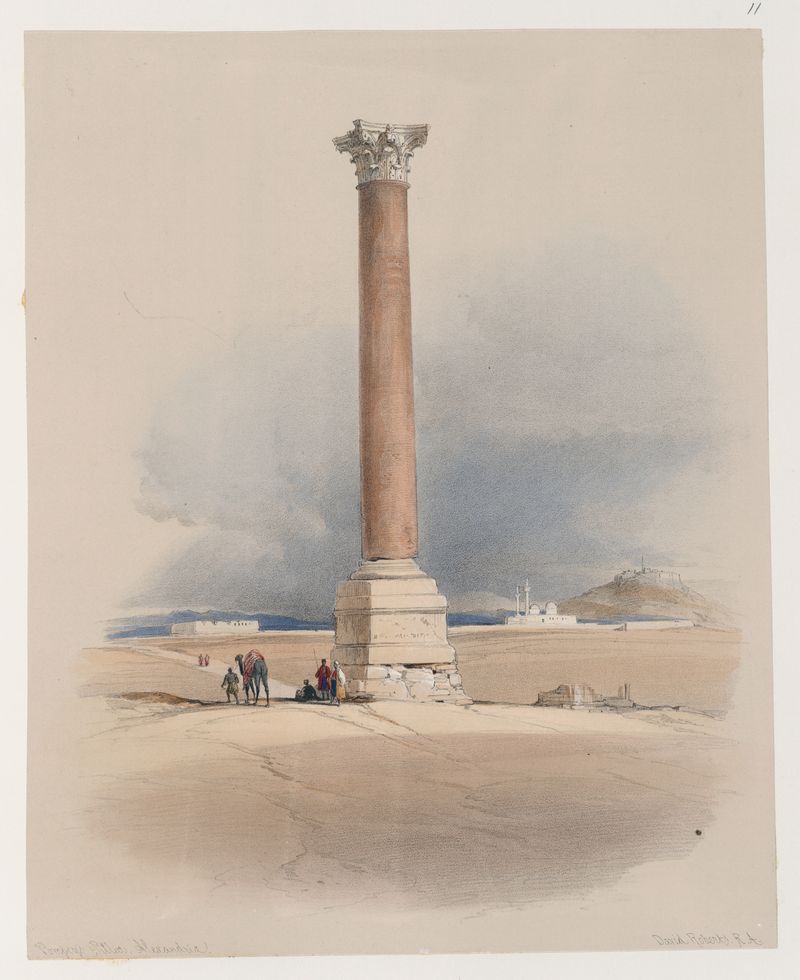
Pompey’s Pillar, Alexandria.
David Roberts

Approach to the Fortress of Ibrim.
David Roberts

Karnac [Karnak]. Nov. 29th, 1838.
David Roberts
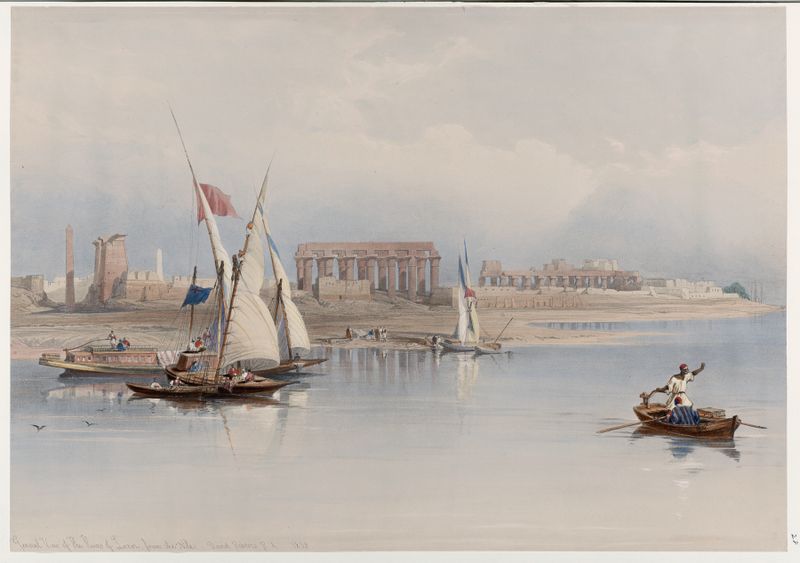
General view of the ruins of Luxor, from the Nile. 1838.
David Roberts

Statues of Memnon at Thebes, during the inundation.
David Roberts

Entrance to the tombs of the kings of Thebes. Bab-el-Malouk [Bîbân al-Mulûk].
David Roberts

The Fortress of the Alhambra, Granada
David Roberts
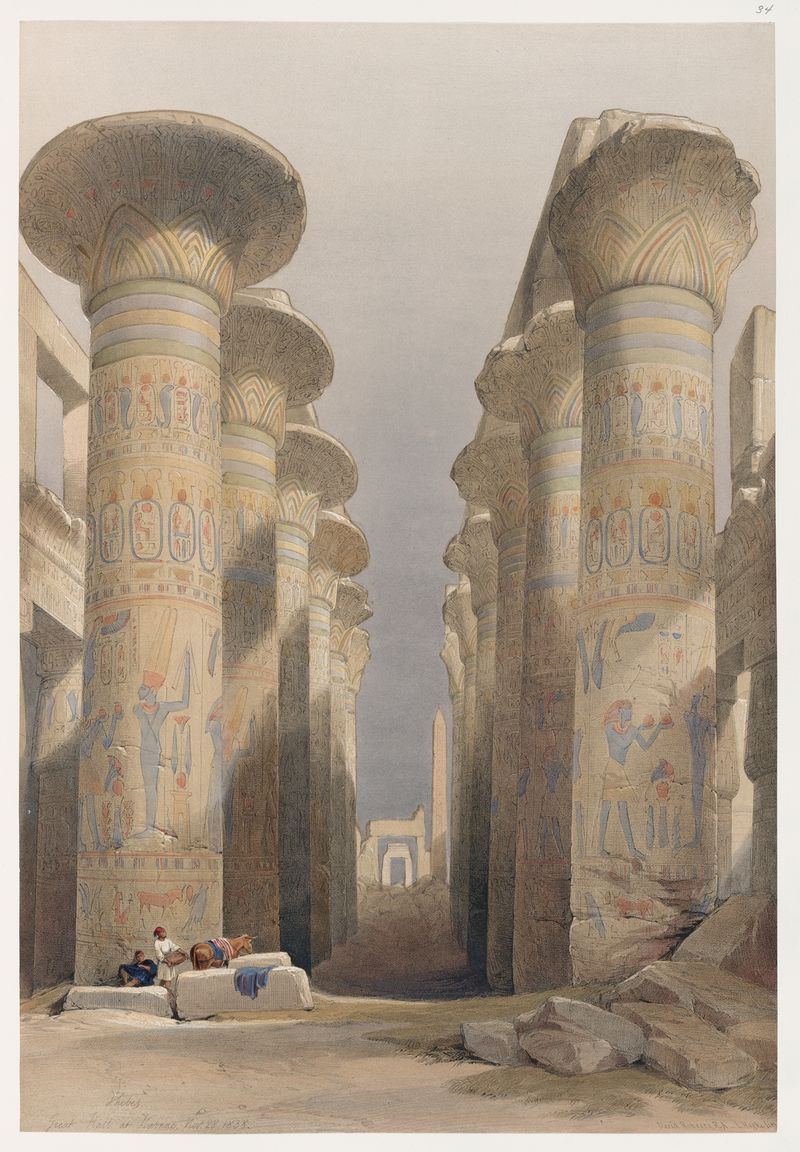
Thebes. Great Hall at Karnak. Nov. 28, 1838.
David Roberts
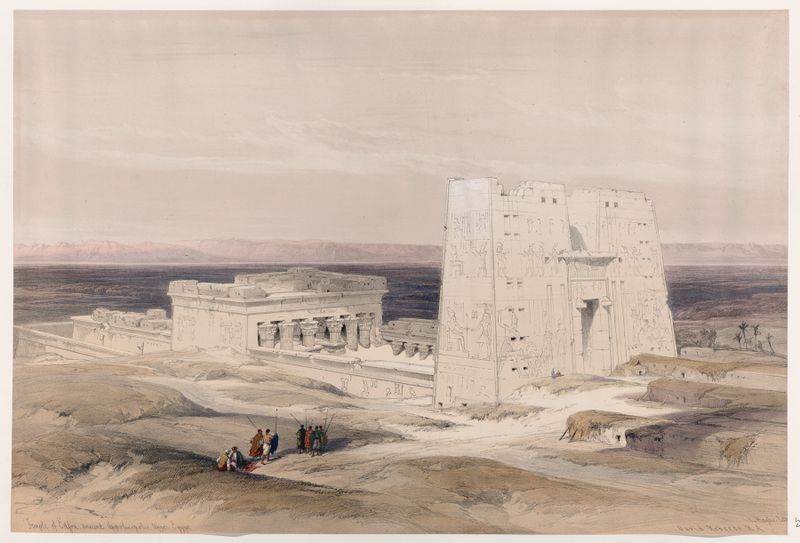
Temple of Edfou [Idfû], ancient Appolinopolis, Upper Egypt.
David Roberts

Temple of Kalabshee [Kalabsha, Kalâbishah], Nubia. Nov. 1838.
David Roberts
More Architecture Art
Browse all →
The statue of Liberty
Frédéric Auguste Bartholdi

View of Houses in Delft, Known as ‘The Little Street’
Johannes Vermeer

View of Houses in Delft, Known as ‘The Little Street’
Johannes Vermeer

The Cathedral in Rouen. The portal, Grey Weather
Claude Monet

The yellow house
Vincent van Gogh

The Church in Auvers-sur-Oise, View from the Chevet
Vincent van Gogh