Moonlight Encampment — History & Facts
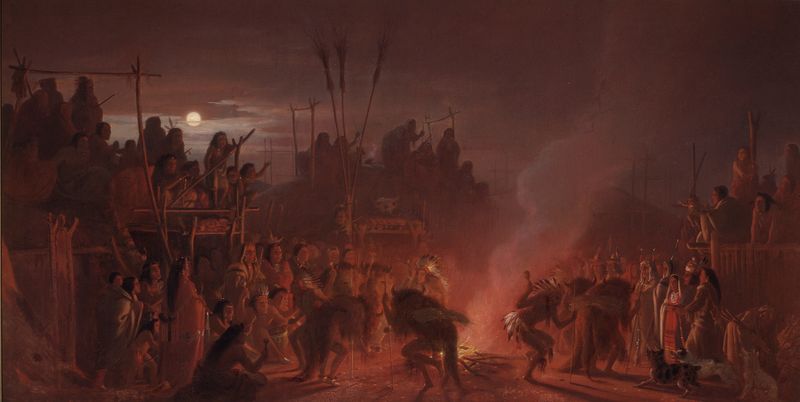
Where does light end, and longing begin? In the depths of shadowy woods, a campfire flickers, illuminating a world caught between the earthly and the divine. Look to the center of the canvas where the warm glow of the fire radiates, casting a gentle light on the faces of weary travelers. Notice the contrast between the vibrant oranges and yellows of the flames and the deep blues and greens of the surrounding wilderness. The dark silhouettes of trees loom, almost reverent, as they frame the scene, highlighting a moment suspended in time.
The figures are caught in a profound stillness, each gesture soft yet expressive, hinting at stories untold. As you gaze deeper, the juxtaposition of warmth and chill becomes palpable. The encampment, a sanctuary amidst the haunting wilderness, speaks to the tension between humanity's search for solace and the vast, uncaring universe. Each figure's expression carries traces of longing, suggesting that their presence beneath the moonlight is both a refuge and a reminder of the divine yearning that exists within us all.
The moon, a distant orb in the corner, further emphasizes this ethereal quality, as it bathes the scene in a silvery glow, creating an almost dreamlike atmosphere. During the time Moonlight Encampment was painted, Wimar was immersed in the American Romantic movement, which sought to evoke emotion through nature's grandeur. Living in the mid-19th century, he engaged with themes of both spirituality and the sublime. This was a period of exploration and growth in his artistic journey, shaped by a burgeoning interest in how light interacts with the natural world and humanity's enduring quest for connection with the divine.