Moonlight Landscape — History & Facts
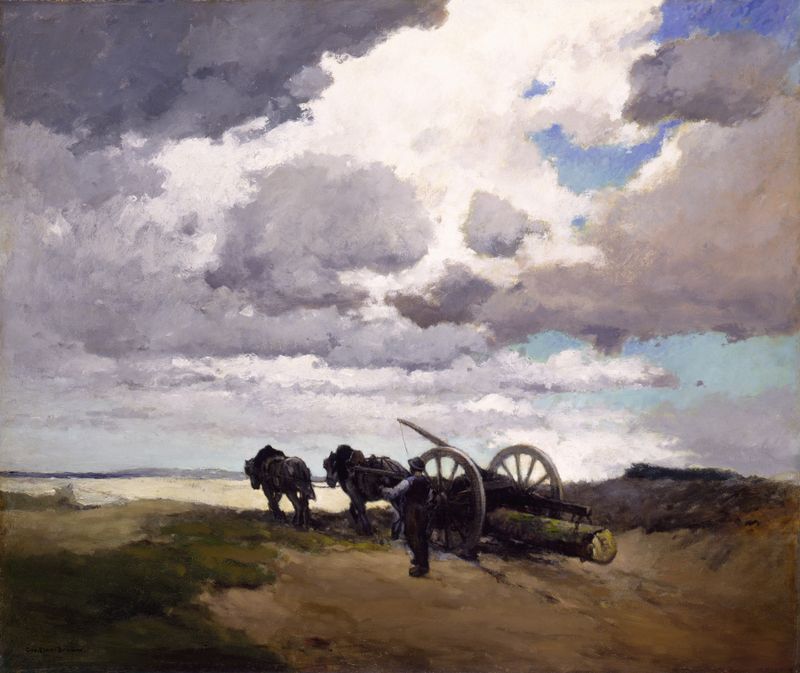
Who listens when art speaks of silence? In the gentle embrace of muted colors and tranquil shadows, Moonlight Landscape invites the viewer to contemplate the profound stillness interwoven with the illumination of night. Look to the center of the canvas where a silvery moon casts a soft glow over a serene landscape. Notice how the light glimmers on the water’s surface, creating a path that seems to lead into the depths of night. The delicate brushwork and cool color palette evoke a sense of calm, while the softened edges of the trees and hills suggest a world both familiar and dreamlike.
Each stroke reflects the artist's mastery in capturing the subtle interplay of light and shadow, drawing the viewer deeper into this ethereal scene. Yet beneath this surface calm lies a subtle tension. The juxtaposition of bright moonlight against the enveloping darkness creates a sense of mystery, inviting questions about what lies beyond the illuminated path. The stillness is palpable, yet the shadows seem to whisper secrets.
This contrast mirrors the duality of existence—between light and darkness, the known and the unknown—challenging us to ponder our own place within this vast landscape. In the 19th century, George Elmer Browne painted this work during a time of introspection and burgeoning artistic movements. Working in the United States, he was part of the American Impressionist movement, which sought to capture the nuances of light and atmosphere. As new ideas about nature and perception were blossoming among artists, Browne's exploration of nocturnal scenes reflected both the personal and societal shifts of his time, harmonizing with the evolving discourse on the relationship between art and its viewer.