Moonlight night on Rügen — History & Facts
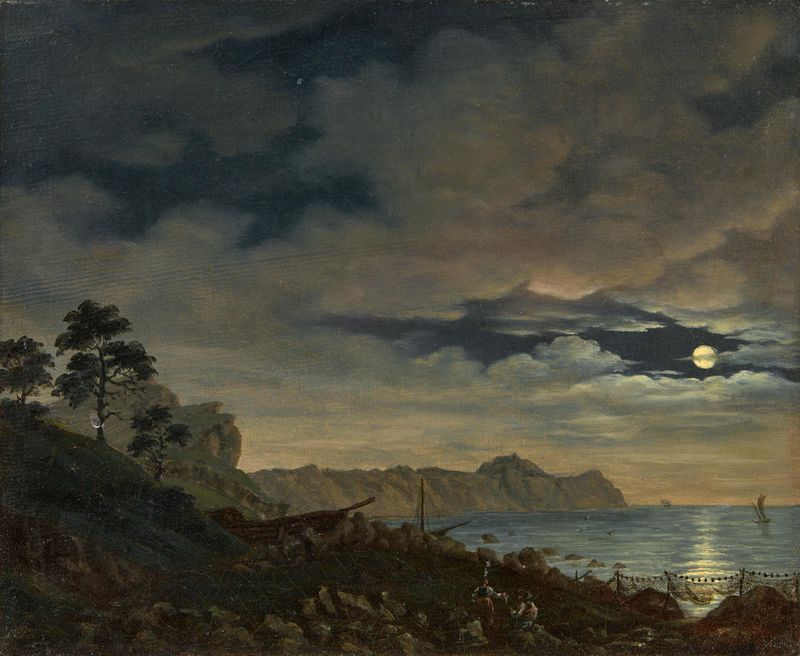
In the heart of a moonlit night, emotions dance like shadows across the surface of the water. The stillness of the scene belies the turbulence within, suggesting an undercurrent of madness that pulls at the viewer's sensibilities. Look to the left, where a silvery glow bathes the edge of the shoreline, illuminating jagged rocks and gentle waves. Notice how the moon hangs low, casting a stark light that contrasts with the deep, blue hues of the sky.
The brushwork is delicate yet deliberate, with swirling clouds that seem to echo the restless thoughts of a mind teetering on the edge of serenity and chaos. Each stroke captures the haunting beauty of nature, inviting introspection and contemplation. Delve deeper into the painting's subtle contrasts, where tranquility clashes with an undercurrent of agitation. The rippling water signifies movement, like the chaotic thoughts swirling in a restless mind, while the serene moonlight represents fleeting moments of clarity.
The tension between light and dark captures the duality of existence — the calm surface masking deeper emotional turmoil. Here, madness and beauty coexist, embodying the struggle we all face between chaos and peace. In 1840, Boeck painted this mesmerizing piece while residing in Germany. The Romantic movement was in full swing, as artists sought to explore the depths of human emotion and the sublime aspects of nature.
Amidst the shifting tides of societal change, this work reflects the artist's personal journey, grappling with his own inner demons while capturing the raw intensity of the natural world around him.