Moorland Landscape — History & Facts
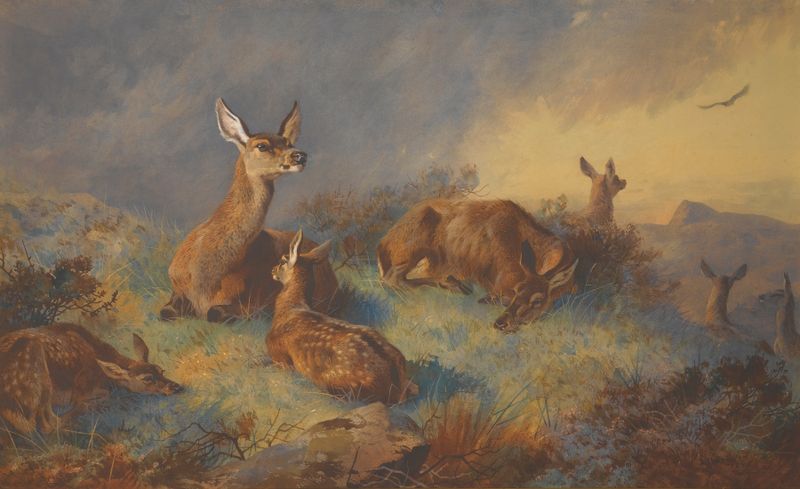
In every stroke, the artist captures an awakening—a deep, unspoken connection between nature and the viewer. The raw beauty of untouched landscapes pulses with life, beckoning us into its serene embrace. Focus first on the sweeping horizon, where rolling hills meet a sky brushed with variations of blue and gold. Notice how the gentle undulations of the moorland are infused with vibrant greens and earthy browns, creating a tactile quality that invites exploration.
The meticulous detailing in the foreground, where grasses sway and wildflowers bloom, contrasts with the soft, distant hills, emphasizing a sense of depth and tranquility. Each element is composed with precision, revealing the artist’s intimate understanding of the natural world. Hidden within the layers of color are themes of solitude and renewal. The interplay of light and shadow reveals moments of stillness, grounding the viewer in a sense of peace amidst nature's vastness.
There is a whisper of life—perhaps a bird in flight or the rustle of leaves—imbuing the landscape with a pulse that transcends mere representation. The landscape is not just a place; it is a living entity, mirroring our own internal awakenings. During the time this work was created, Archibald Thorburn was deeply immersed in the natural world, often spending time in the remote corners of Britain. His commitment to depicting wildlife and landscapes coincided with a growing appreciation for the natural environment in art, as the late Victorian era saw a shift towards realism and romanticism.
This painting reflects his dedication to capturing the essence of the moorlands, a testament to the beauty that lies in the untamed and the untouched.