Moorland Landscape with Waterfall, Vale of Neath, South Wales — History & Facts
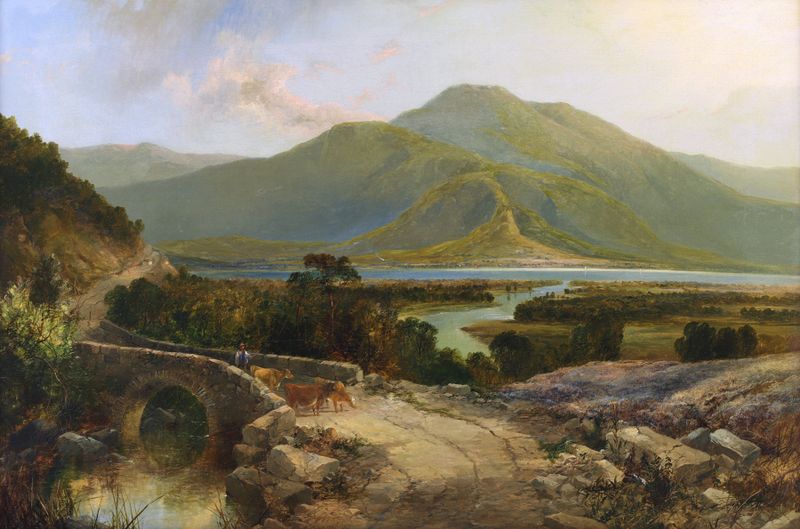
Could beauty survive in a century of chaos? In Moorland Landscape with Waterfall, Vale of Neath, South Wales, the answer unfolds through the delicate interplay of nature's elements, inviting us into a world where tranquility reigns amidst the tumult of the 19th century. Look to the center of the canvas where the waterfall cascades with an almost ethereal grace, its silvery strands catching sparks of sunlight. The vibrant greens of the surrounding moorlands provide a rich contrast to the flowing water, drawing the eye toward the interplay of light and shadow. Notice how the artist uses a palette of soft earth tones, combined with bursts of color in the foliage, to create depth and life, guiding your gaze across the undulating hills and toward the horizon. In the tranquility of this landscape, hidden tensions emerge.
The serene waterfall symbolizes renewal and the constant passage of time, while the rugged terrain evokes the relentless struggle of nature. Smith captures not just a moment, but a revelation: the delicate balance between chaos and beauty, inviting reflection on humanity's place within this vast, indifferent world. The interplay between the crashing water and the stillness of the land suggests both harmony and conflict, as if to say that chaos can coexist with serene beauty. James Burrell Smith painted this artwork in 1875, a period marked by industrial change and environmental concerns.
Working in Wales, Smith was part of a movement that sought to capture the sublime beauty of nature during a time when the rise of industry threatened to overshadow it. His landscapes serve as a poignant reminder of both the fragility and resilience of the natural world, reflecting the spirit of a time in flux.