
Mosque El Mooristan, Cairo. — History & Facts
In a world awash with noise and distraction, can we find divinity in the details that surround us? Look closely at the intricate patterns that adorn the facade of the mosque, where every tile tells a story and every color sings a hymn. Notice how the warm terracotta hues contrast beautifully with the cerulean sky, inviting you to trace the delicate arabesques that dance across the surface. The foreground draws your gaze to a cluster of figures, their rhythmic movements echoing the architectural elegance, while the towering minarets reach upward, beckoning towards the heavens.
This interplay of human life and architectural marvel creates a captivating harmony. Beneath the surface, the painting reveals a dialogue between light and shadow, suggesting a relationship between the earthly and the divine. The serenity of the scene is punctuated by the figures engaged in worship, embodying a profound spiritual connection that transcends the mundane. Additionally, the mosque stands as a symbol of the cultural tumult of the time, a reminder of the history, faith, and resilience that shape the fabric of society.
Every stroke seems to whisper of the beauty found in devotion, as well as the complexities of a world steeped in tradition yet poised for change. David Roberts painted this piece between 1846 and 1849 during his travels in Egypt. A prominent figure in the Romantic movement, he sought to capture the exotic landscapes and grand architecture of the Middle East. At this time, the art world was experiencing a shift towards exploration and realism, and Roberts' works became a bridge between romantic ideals and the emerging fascination with contemporary life and culture.
More Artworks by David Roberts
Browse all →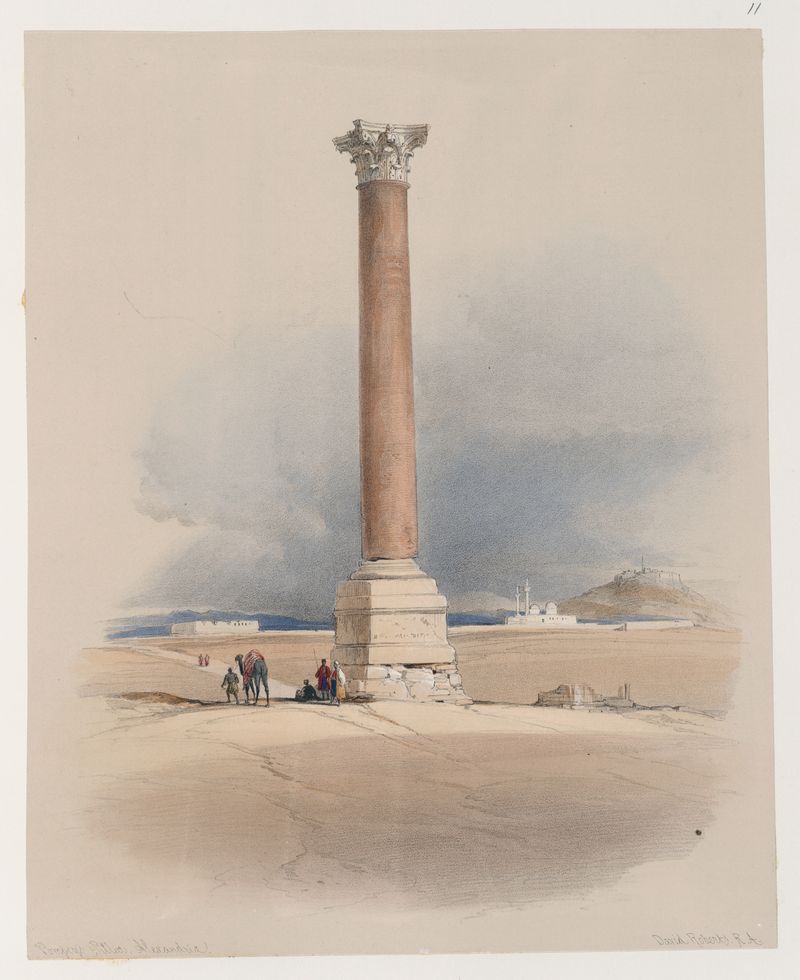
Pompey’s Pillar, Alexandria.
David Roberts

Approach to the Fortress of Ibrim.
David Roberts

Karnac [Karnak]. Nov. 29th, 1838.
David Roberts
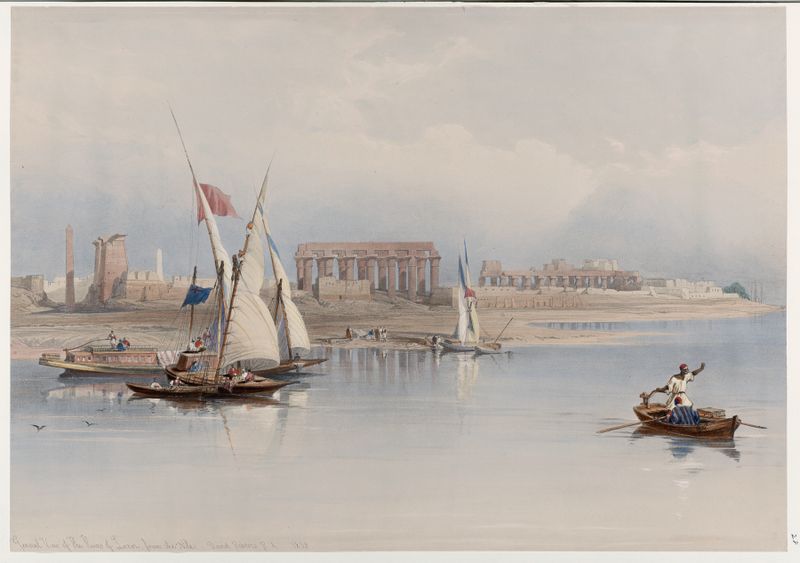
General view of the ruins of Luxor, from the Nile. 1838.
David Roberts

Statues of Memnon at Thebes, during the inundation.
David Roberts

Entrance to the tombs of the kings of Thebes. Bab-el-Malouk [Bîbân al-Mulûk].
David Roberts

The Fortress of the Alhambra, Granada
David Roberts
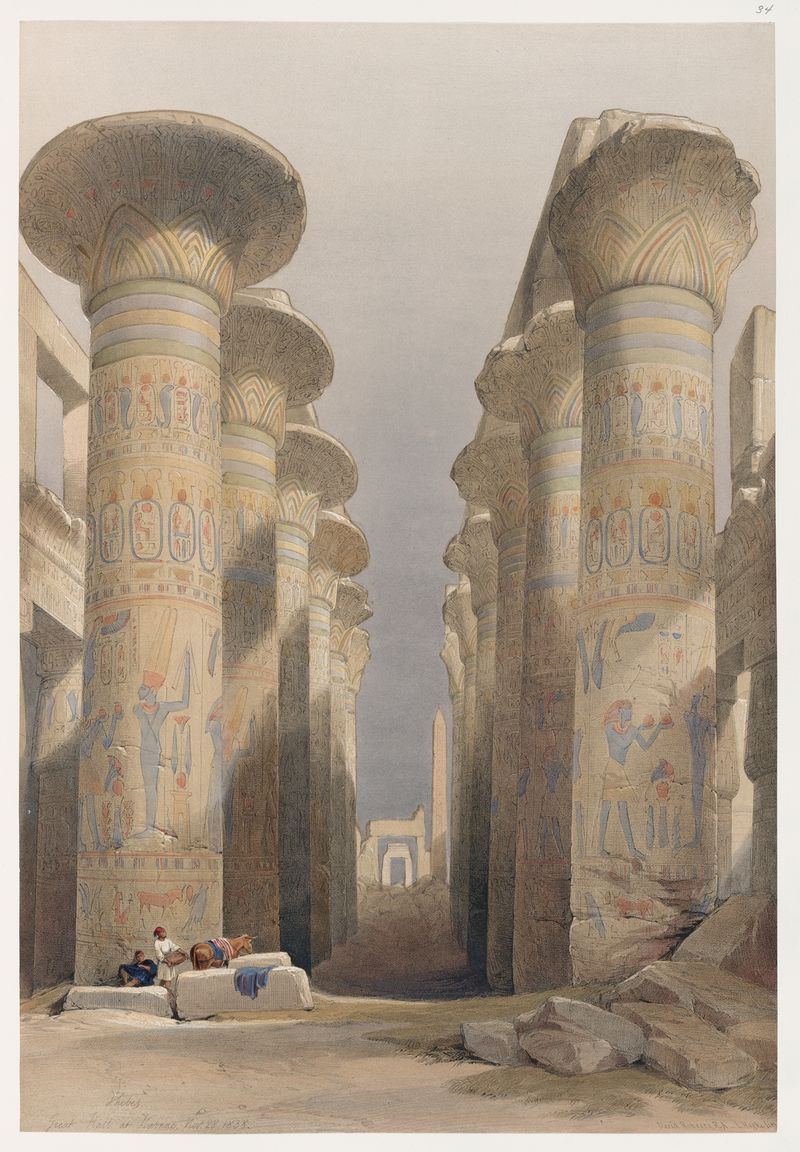
Thebes. Great Hall at Karnak. Nov. 28, 1838.
David Roberts
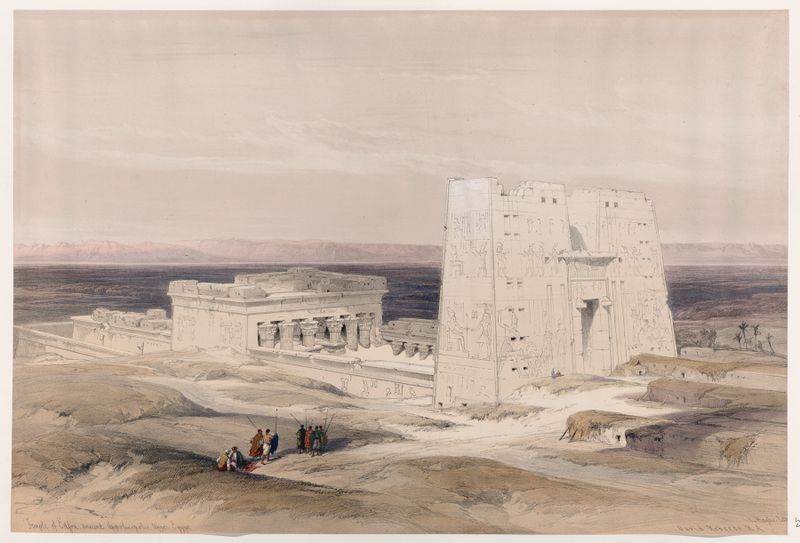
Temple of Edfou [Idfû], ancient Appolinopolis, Upper Egypt.
David Roberts

Temple of Kalabshee [Kalabsha, Kalâbishah], Nubia. Nov. 1838.
David Roberts
More Architecture Art
Browse all →
The statue of Liberty
Frédéric Auguste Bartholdi

View of Houses in Delft, Known as ‘The Little Street’
Johannes Vermeer

View of Houses in Delft, Known as ‘The Little Street’
Johannes Vermeer

The Cathedral in Rouen. The portal, Grey Weather
Claude Monet

The yellow house
Vincent van Gogh

The Church in Auvers-sur-Oise, View from the Chevet
Vincent van Gogh