Motif from Brügge — History & Facts
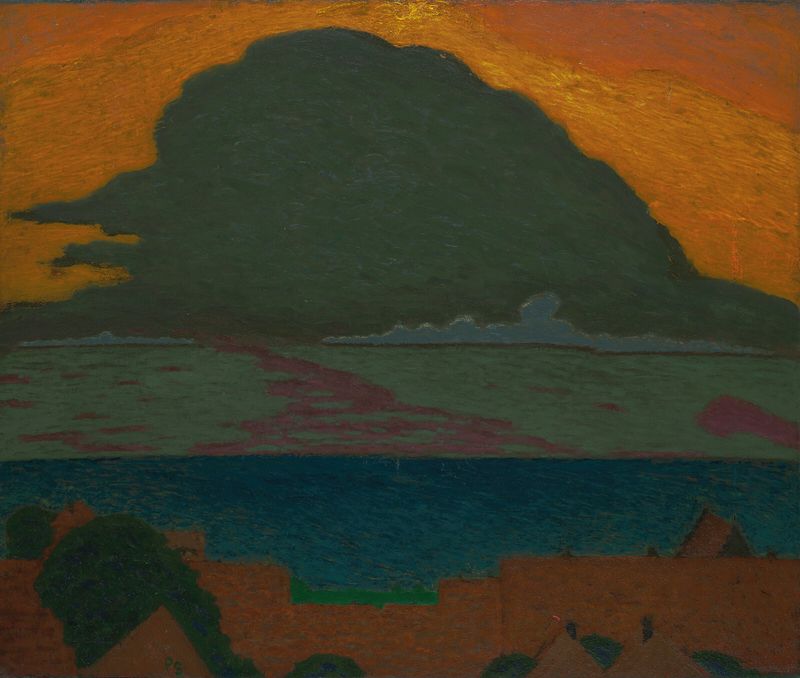
In the stillness of decay, where beauty and ruin intertwine, a tale unfolds through the delicate strokes of a master hand. Look to the left, where hints of faded colors weave together in a tapestry of both vibrancy and deterioration. The ochres and muted greens create a haunting landscape, inviting the viewer to explore the textured depths of the canvas. Notice the intricate lines that suggest once-cherished structures now being reclaimed by nature, illustrating a poignant contrast between human ingenuity and the inevitability of time’s passage. In this work, Swedlund captures the tension between beauty and decay through the careful layering of paint, revealing emotional depths beneath the surface.
The juxtaposition of sharp, angular forms against softer, organic shapes evokes a sense of nostalgia and loss, reminding us of what was and what will inevitably fade. Each brushstroke resonates with the awareness that beauty often emerges from the remnants of something lost, invoking reflection on the transient nature of existence. Created in 1898, this piece emerged during a period when the artist, residing in Sweden, was deeply influenced by the Symbolist movement’s exploration of themes like decay and rebirth. As industrialization transformed landscapes across Europe, many artists, including Swedlund, turned their gaze to the remnants of the past, seeking to capture the profound emotions tied to the passage of time.
This painting reflects both a personal and collective dialogue with the ephemeral, marking a significant moment in art history.