Motif from Vichy — History & Facts
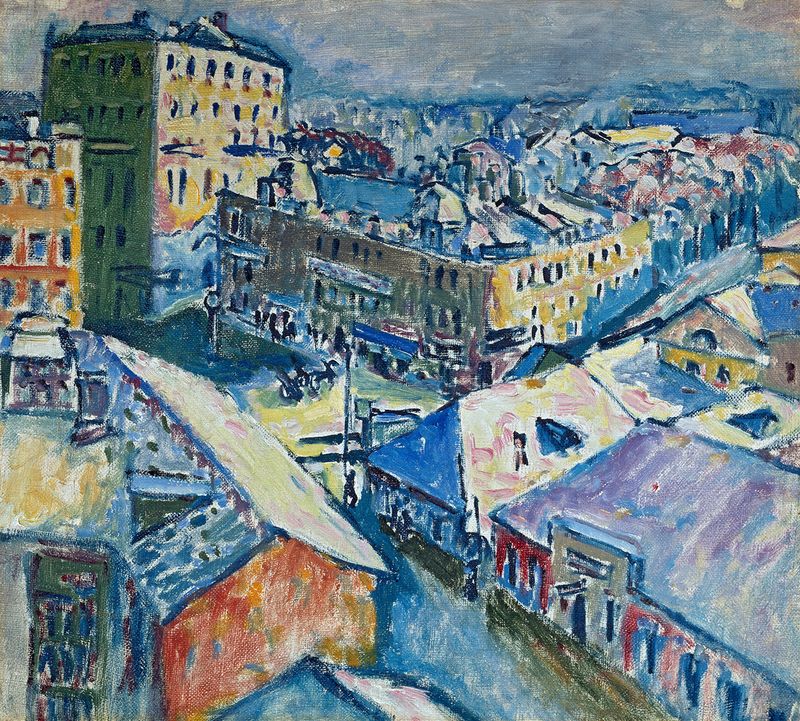
Who listens when art speaks of silence? In Motif from Vichy, the viewer is invited to wade through an ocean of muted colors and evocative forms, where the essence of ecstasy and longing seems suspended in stillness. Look to the center, where soft whispers of vibrant hues collide, creating a symphony of reds, yellows, and blues that pulse faintly against a backdrop of cool, subdued tones. Notice how the brushstrokes dance lightly, each one a testament to the artist's hand, inviting your gaze to explore the layered textures. The composition's balance teeters between chaos and harmony, drawing you into its intricate web of shapes that suggest a fleeting moment of joy, captured yet just out of reach. Delve deeper into the artwork, where the contrast between the vivid and the muted unfolds a narrative of longing.
The juxtaposition of dynamic forms against understated backgrounds evokes a tension between ecstasy and contemplation. The delicate interplay of light and shadow infuses the scene with both vibrancy and melancholia, suggesting that within moments of ecstasy, there exists a whisper of silence that resonates long after the colors fade. During the time Hjalmar Sandberg created this piece, the art world was evolving with movements pushing boundaries and experimenting with abstraction. Sandberg's artistic journey was marked by exploration and self-discovery, reflecting broader societal changes in the early 20th century.
His work often embodies a search for emotional truth amidst the chaos of modern life, and Motif from Vichy serves as a poignant reminder of this quest.