Motiv aus der Wachau mit Ruine Dürnstein — History & Facts
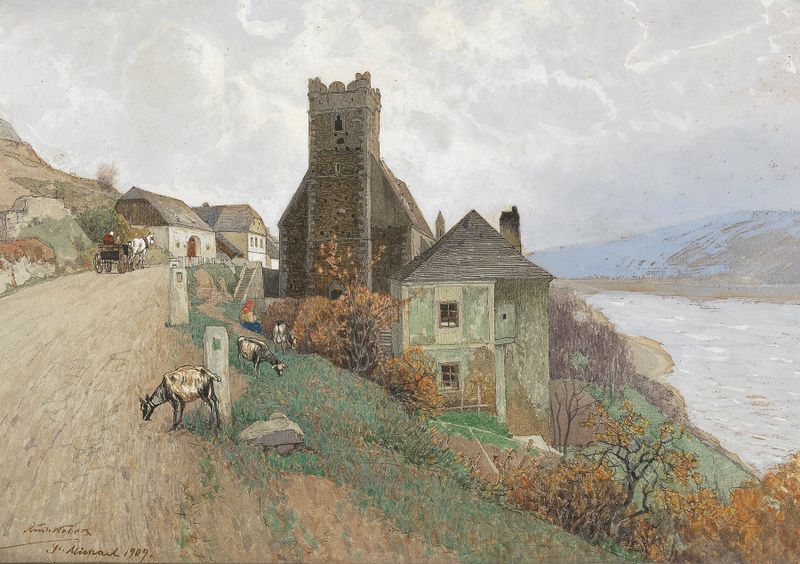
Betrayal seeps into the landscape, whispering through the gentle hills and the crumbling ruins that stand sentinel against the passage of time. Focus on the luminous greens and golden tones that envelop the scene. Notice how the delicate brushstrokes create a sense of movement in the foliage, while the cool blues of the river reflect a silent depth. The towering ruins emerge from the canvas with a starkness that contrasts the vibrant life surrounding them, drawing the viewer's eye toward the heart of the composition.
This juxtaposition between decay and vitality hints at stories of loss and forgotten lives, adding a layer of complexity to the tranquil beauty. Hidden within the soft layers of color are echoes of history and emotional tension. The ruins cast long shadows, suggesting a lingering betrayal that once shattered the harmony of the valley. Each stone tells a tale of endurance, yet hints at the fragility of what remains.
The interplay between light and shadow evokes a sense of nostalgia, inviting contemplation on the passage of time and the relationships that weave through it. In the late 19th century, Rudolf Weber painted this piece during a period of personal exploration and artistic growth. Living in Germany, he was influenced by the Romantic movement's fascination with nature and its emotional resonance. As he captured the essence of the Wachau Valley, he was not only reflecting on the beauty of his surroundings but also engaging with broader themes of love and betrayal that resonated throughout the world of art at that time.