Motiv bei Dornholzhausen — History & Facts
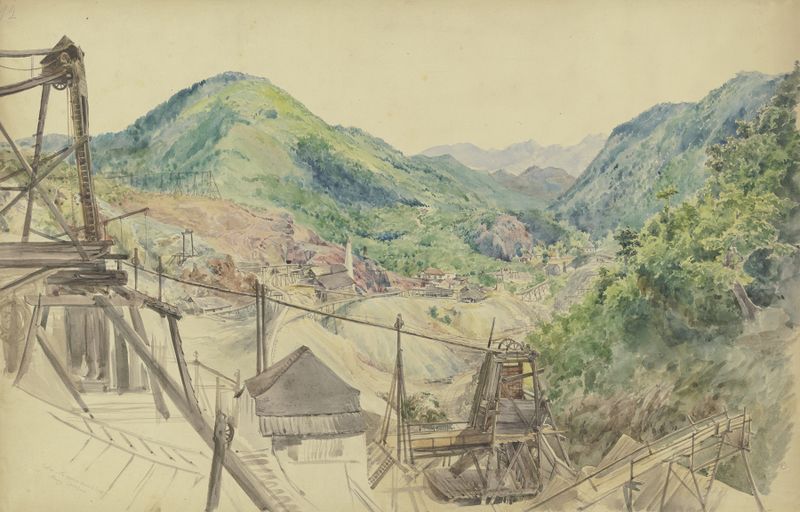
Could beauty survive in a century of chaos? In Motiv bei Dornholzhausen, innocence dances delicately amidst the encroaching shadows of the late 19th century. Look to the center of the canvas, where a serene landscape unfolds, verdant fields stretching under a soft azure sky. The gentle strokes of green and gold evoke the lushness of nature, while the distant hills cradle the horizon. The artist’s careful layering of paint creates a sense of tranquility, inviting us to step closer to the scene.
Notice how the light caresses the trees, casting dappled shadows on the ground — a testament to the harmony between man and nature. The work encapsulates a profound juxtaposition of innocence and the looming turmoil of the era. As the pastoral scene unfolds, a subtle tension arises from its idyllic portrayal against a backdrop of societal change. The simplicity of rural life contrasts sharply with the industrial advancements of the time, hinting at an innocence that may soon be lost.
Each detail, from the delicate flowers in the foreground to the expansive sky, beckons the viewer to ponder the fragility of such beauty. Adolf Hoeffler painted Motiv bei Dornholzhausen in 1889, during a period marked by rapid industrialization and cultural shifts in Europe. Working in Germany, Hoeffler sought solace in the pastoral landscapes that often reflected a longing for simpler times. This artwork emerges from his desire to capture the purity of nature amidst the chaos of a changing world, showcasing his commitment to realism while celebrating the enduring spirit of innocence.