
Motiv bei Plankenberg — History & Facts
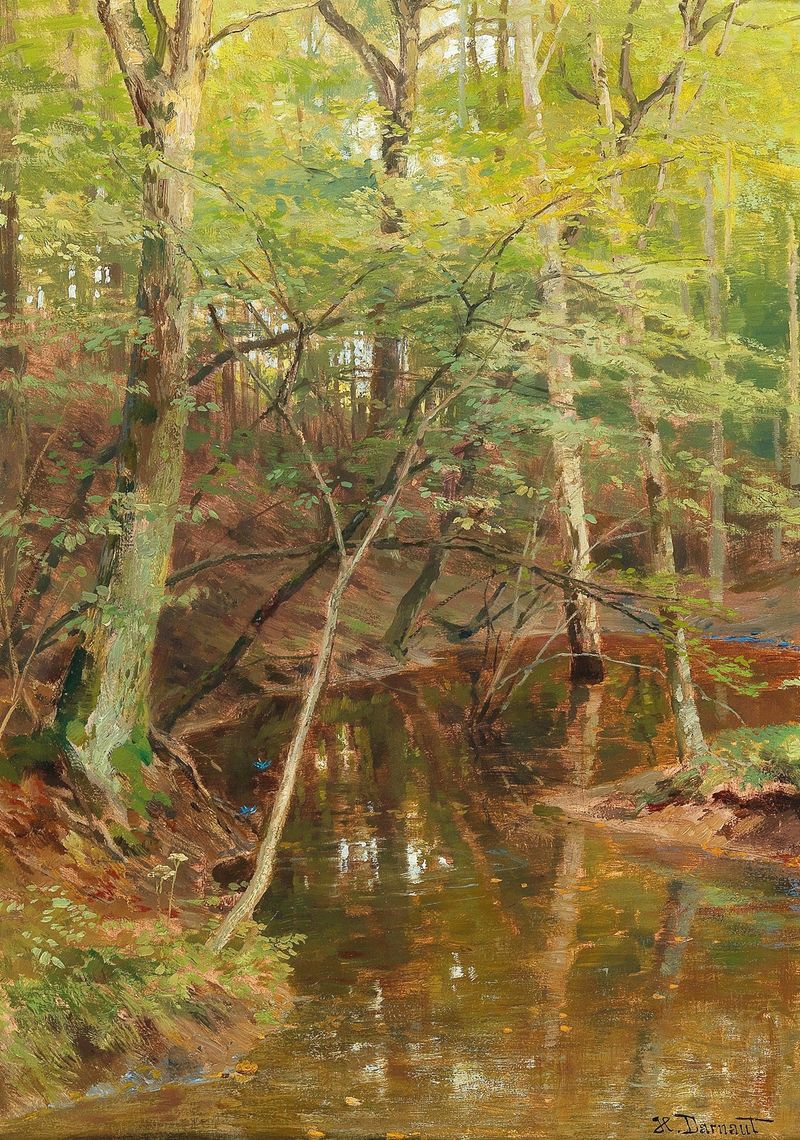
What if silence could speak through light? In Motiv bei Plankenberg, the interplay of shadow and illumination reveals the unspoken destinies of those who dwell in its serene embrace. Look to the foreground, where a slender path, flanked by delicate trees, invites the viewer deeper into the scene. Notice how the soft, muted greens mingle with the warm, golden hues of sunlight filtering through the leaves, casting dappled patterns on the ground. This careful balance of color and light not only guides the eye but evokes the sensation of a tranquil afternoon, where time seems to pause.
The artist employs fluid brushwork to convey movement, suggesting the gentle rustle of leaves and the whisper of the breeze. Beneath its tranquil surface, the painting embodies a rich emotional tapestry. The path represents a journey, symbolizing the choices we face and the destinies that lie ahead. The vibrant light sneaks through the foliage, hinting at hope and possibility, while the shadows linger at the edges, reflecting the uncertainty that accompanies every decision.
This contrast between light and dark heightens the sense of contemplation and fate, inviting viewers to reflect on their own life pathways. Hugo Darnaut painted Motiv bei Plankenberg during a period marked by introspection in the art world, likely in the early 20th century. At this time, artists were exploring new forms of expression, often emphasizing emotional depth over realism. Darnaut, influenced by the tranquil landscapes of his native Austria, infused his work with a sense of serenity and philosophical inquiry, capturing the essence of a world on the brink of change.
More Artworks by Hugo Darnaut
Browse all →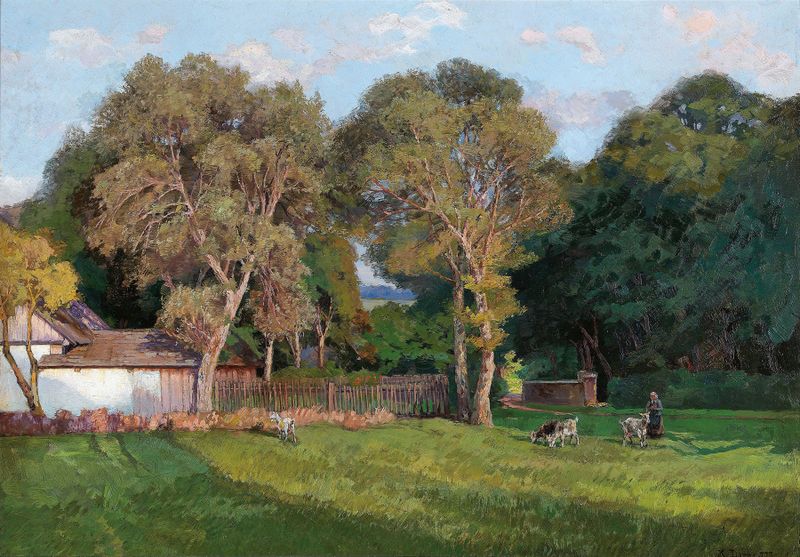
Aus dem Wienerwald
Hugo Darnaut
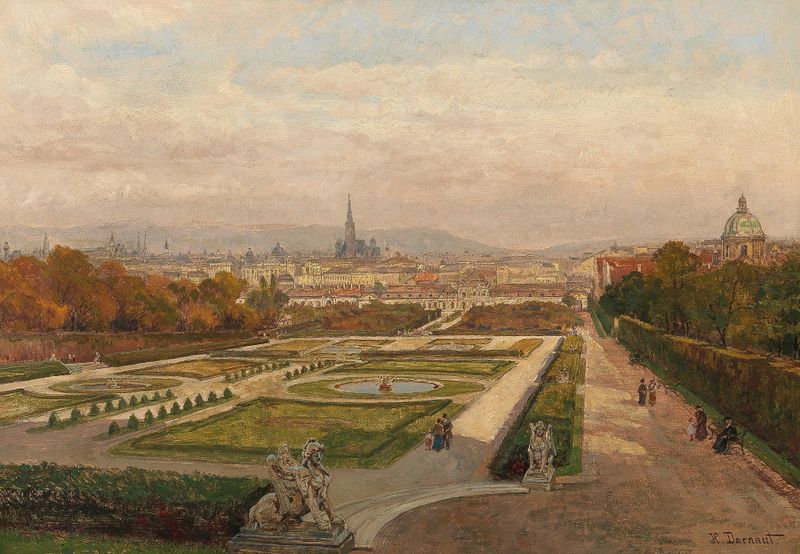
Blick vom Belvedere auf Wien
Hugo Darnaut

Motiv aus Plankenberg
Hugo Darnaut

In einem Wiener Garten (II., Praterstraße 60)
Hugo Darnaut

A Scene at Dusk in Late Autumn
Hugo Darnaut

Die Ruine Starhemberg im Piestingtal
Hugo Darnaut
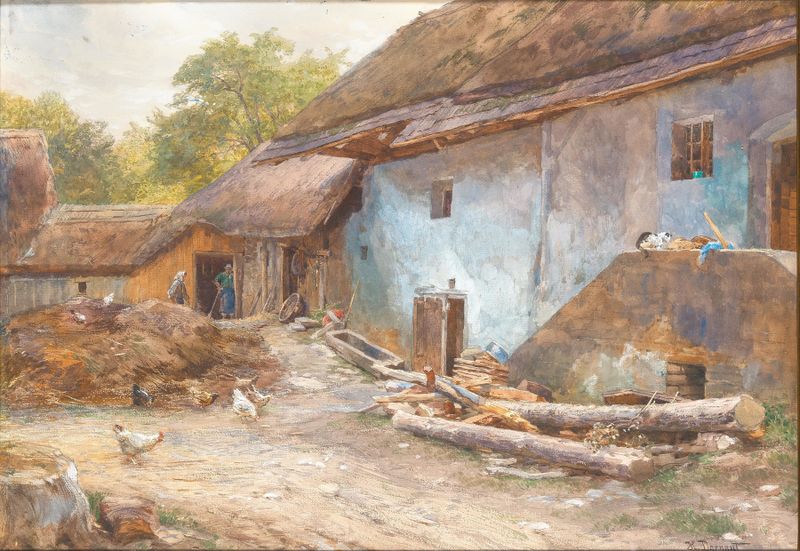
Niederösterreichischer Bauernhof
Hugo Darnaut

River Landscape with Small Herd of Cows and a Village in the background
Hugo Darnaut
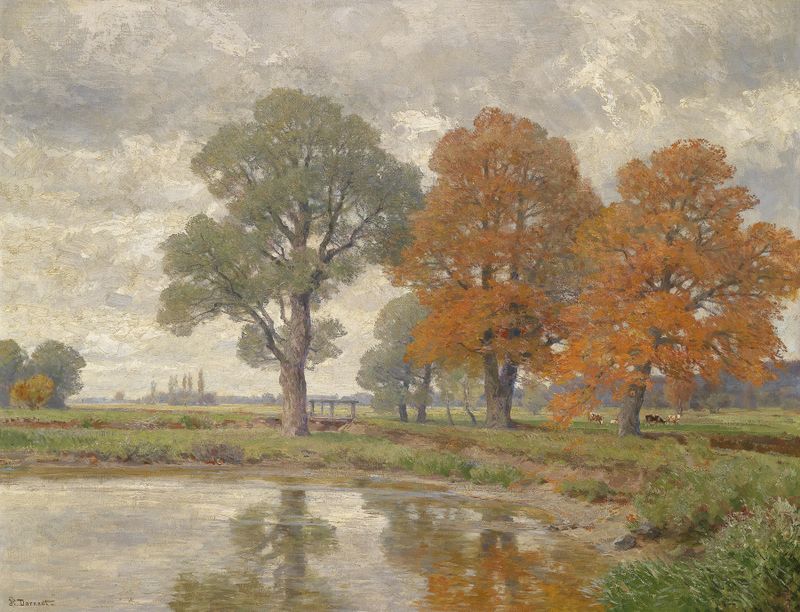
Spätherbsttag
Hugo Darnaut
Woodland Stream
Hugo Darnaut





