Mountain Landscape — History & Facts
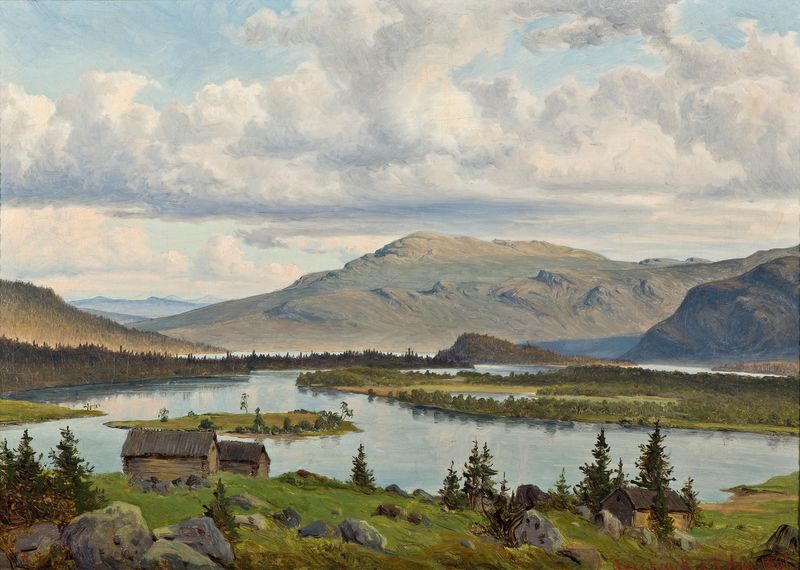
In every brushstroke, the inevitability of mortality is gently whispered, beckoning us to confront our transient existence amidst nature’s eternal beauty. Look to the foreground, where lush greens mingle with earthy browns, drawing your gaze toward the majestic mountains looming in the distance. Notice how the sky transitions from soft blues to the muted grays of impending twilight, enveloping the entire scene in a quiet reverie. Holm’s deft use of light spills across the peaks, illuminating their rugged edges while casting shadows that signify the weight of time and the fleeting nature of life. As you absorb the layers of color, consider the contrast between the vibrant life depicted in the lush meadows and the stark, imposing mountains, which seem to silently guard the landscape.
This interplay reveals a tension between vitality and permanence, suggesting that while nature may thrive, it also serves as a reminder of our own mortality. The stillness captured in this moment speaks volumes, inviting reflection on the relationship between existence and the passage of time. In 1862, Per Daniel Holm created this work while living in Sweden, during a period marked by a rising interest in Romanticism and the sublime in nature. The art world was evolving, grappling with themes of emotional depth and the sublime, which influenced many artists of the time.
Holm’s exploration of landscape painting reflects both his personal journey and the broader cultural currents, capturing the timeless dialogue between humanity and nature.