
Mountain Landscape — History & Facts
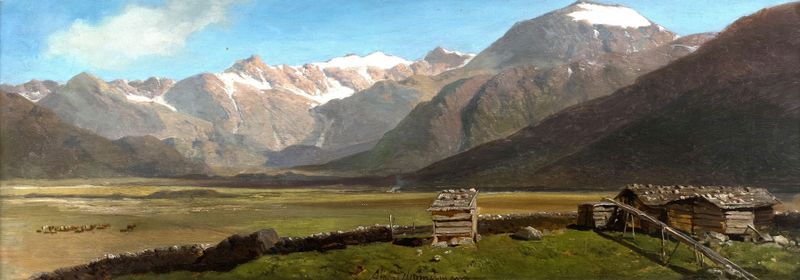
When did color learn to lie? In a world where hues often hide the truth, a certain desolation lingers in the heart of this mountain landscape, evoking an unsettling solitude that resonates deeply. Look to the rugged peaks that dominate the canvas, their jagged edges contrasting starkly against a muted sky. The palette of somber greens and blues, punctuated with hints of ochre, guides your gaze upward. Notice how the light struggles to penetrate the dense atmosphere, creating a heavy silence that envelops the mountainous expanse.
The brushstrokes, both vigorous and hesitant, echo the tumultuous emotions stirred within the viewer, suggesting a deeper narrative behind the seemingly serene scene. Amid the grandeur of nature, tiny details emerge, whispering stories of isolation. The absence of human presence amplifies the feeling of loneliness, as if the mountains stand as silent sentinels to forgotten dreams. Even the winding path, inviting yet elusive, hints at journeys untaken and conversations yet to be had.
The interplay of light and shadow reveals not just the landscape but the emotional terrain of a soul caught between beauty and despondency. This work emerged from Albert Zimmermann's exploration of landscapes during a time marked by personal reflection and artistic evolution. While the exact date remains unknown, the artist was likely creating in the late 19th or early 20th century, a period when European artists began to delve deeper into the psychological dimensions of their environments. As the world around him transformed, he sought to capture not just the visual splendor of nature, but its capacity to evoke profound feelings of loneliness and introspection.
More Artworks by Albert Zimmermann
Browse all →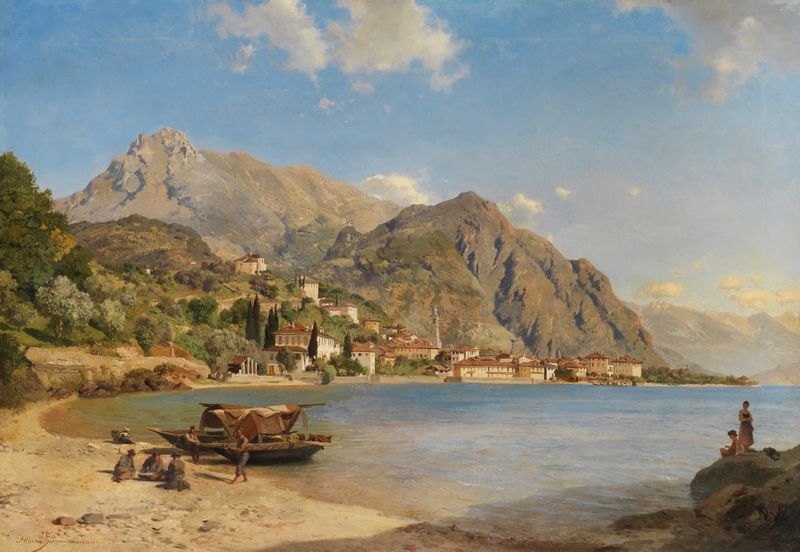
Am Ufer des Comer Sees (Menaggio)
Albert Zimmermann

Gewittersturm im Hochgebirge
Albert Zimmermann

A Lake in the Alps, in the Background the Monte Rosa Chain in Switzerland
Albert Zimmermann

Landscape
Albert Zimmermann
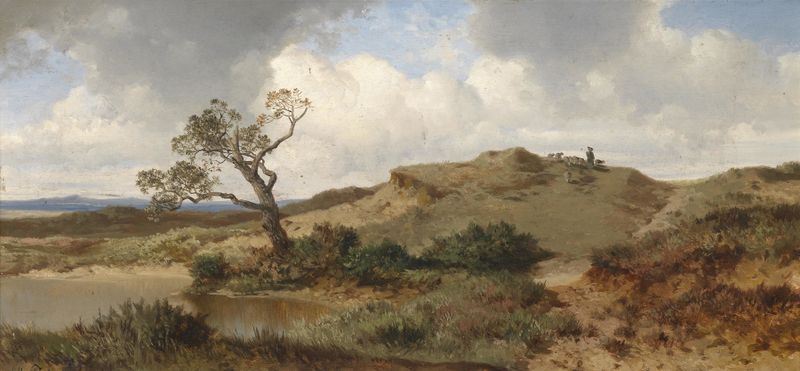
Schwäbische Alb
Albert Zimmermann

Coastal Landscape In Sorrento Near Naples
Albert Zimmermann
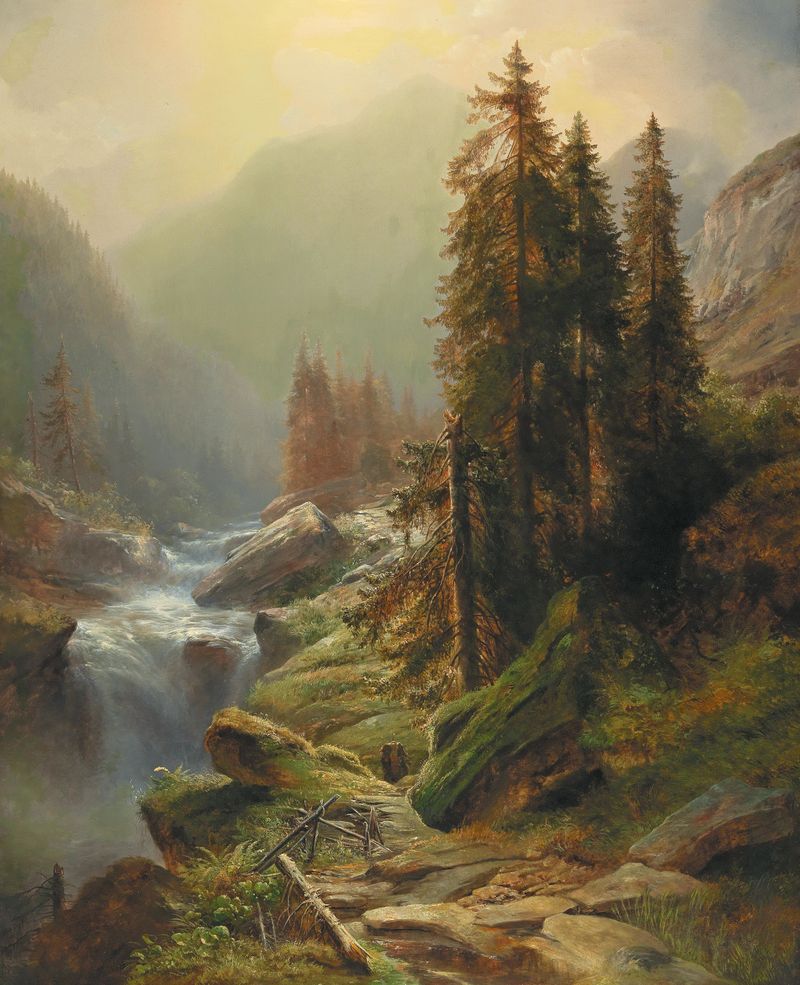
Large Mountain Landscape
Albert Zimmermann
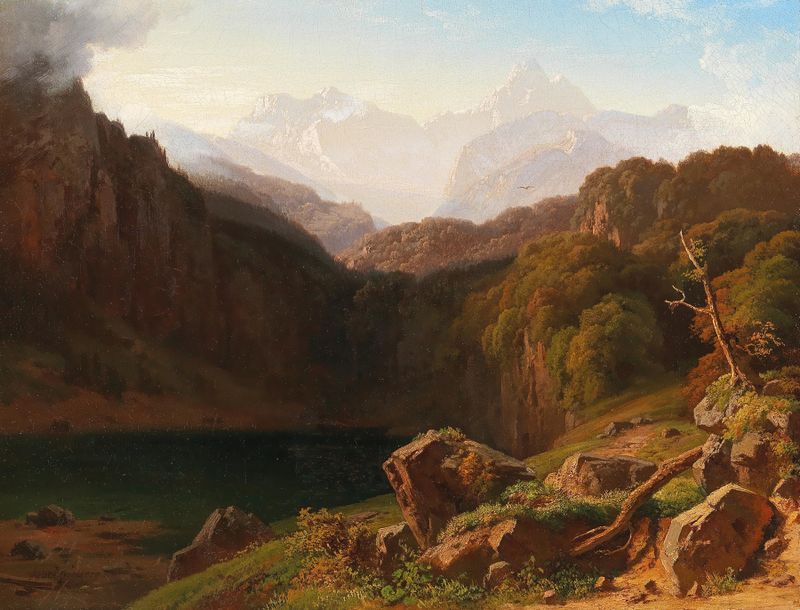
A View of Grossglockner from Kals
Albert Zimmermann
Almhütten auf einer Ebene mit Gebirgskette
Albert Zimmermann
Landschaft mit figürlicher Staffage
Albert Zimmermann





