Mountain landscape with a bridge — History & Facts
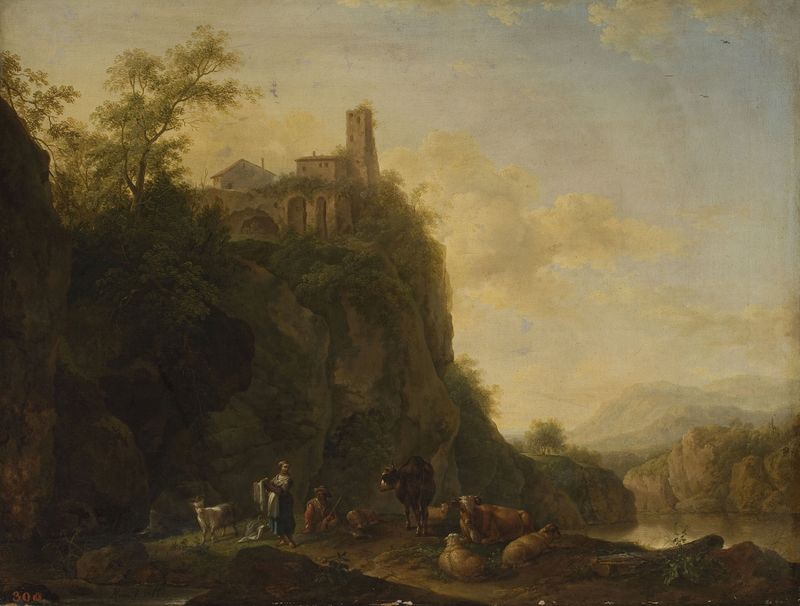
What if silence could speak through light? In a world often overwhelmed by noise, the stillness of a mountain landscape holds poignant echoes of loss and longing. Look to the center of the canvas, where a gentle bridge arches over a shimmering stream, inviting the viewer into the tranquil expanse. The mountains loom protectively in the background, their snow-capped peaks kissed by the soft glow of dawn. Notice how the artist's delicate brushwork brings life to the foliage, with varying shades of green cascading down the slopes.
The palette is equally balanced, with cool blues contrasting against warm earth tones, creating a harmonious yet somber atmosphere. In this idyllic setting, the bridge serves as a metaphor for connection and separation. The silent water beneath hints at depths of emotion, while the distant mountains evoke a sense of isolation. Subtle details, like the solitary figure on the bridge, suggest a journey through grief — a search for solace in nature’s embrace.
The interplay of light and shadow echoes the duality of hope and despair, prompting the viewer to reflect on their own experiences of loss. Joseph Roos painted this landscape in 1767, a time when the Enlightenment was influencing art towards a more naturalistic representation. Living in a society grappling with the tensions of change, Roos sought to capture the sublime beauty of the natural world, perhaps as an antidote to the tumultuous emotions of his era. This work reflects not only his technical mastery but also a deep understanding of the human condition, making it resonate with timeless relevance.