Mountain Landscape with Waterfall, Village, and Distant Pagoda — History & Facts
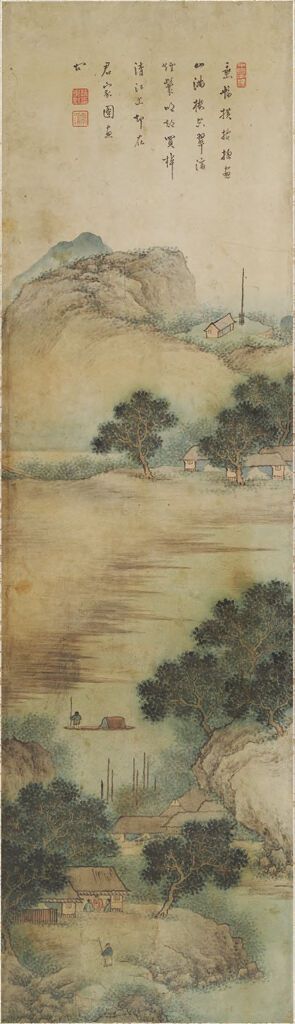
Who listens when art speaks of silence? In the delicate brushstrokes of a distant mountain landscape, one can sense the solitude that permeates the air, whispering of both beauty and isolation. Look to the left at the cascading waterfall, where crystalline water tumbles gracefully over rugged rocks, glistening under a soft, muted light. Notice how the gentle hues of green and blue establish a tranquil harmony, while the village nestled below hints at human presence, yet feels isolated amid the vastness of the surrounding mountains. The distant pagoda, perched like a guardian on the far ridge, draws the eye upward, its architectural elegance contrasting with the raw natural beauty that envelops it. Beneath the serene surface, there lies a tension between the vibrancy of life in the village and the stillness of the mountains.
The waterfall's dynamic motion suggests a fleeting moment, a reminder of time's passage, while the quiet splendor of the landscape invites introspection. This juxtaposition evokes feelings of loneliness, as the viewer contemplates the lives of those who dwell here, forever overshadowed by the grandeur of nature itself. Cho Chung-muk, working in the second half of the 19th century, painted this masterpiece during a time of cultural transition in Korea. As Western influences began to seep into the art world, he remained deeply committed to traditional techniques, encapsulating the essence of Korean landscapes with an emotional depth that speaks to the human experience.
This painting reflects not only his skill but also the quiet resilience of a nation in flux, captured in a moment of solitude.