Mountain waterwall in St. Gervais — History & Facts
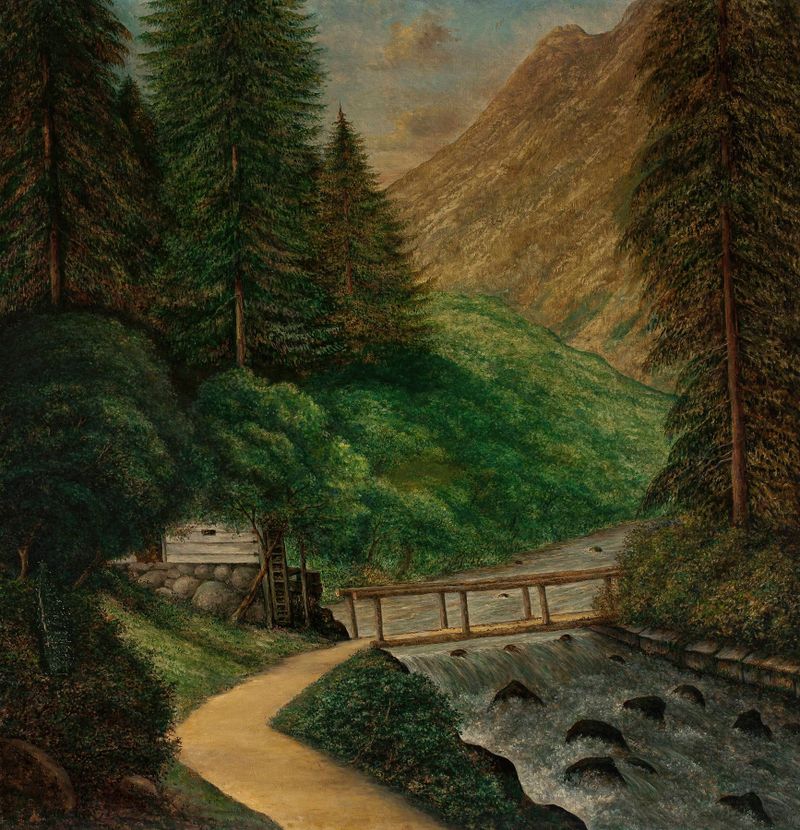
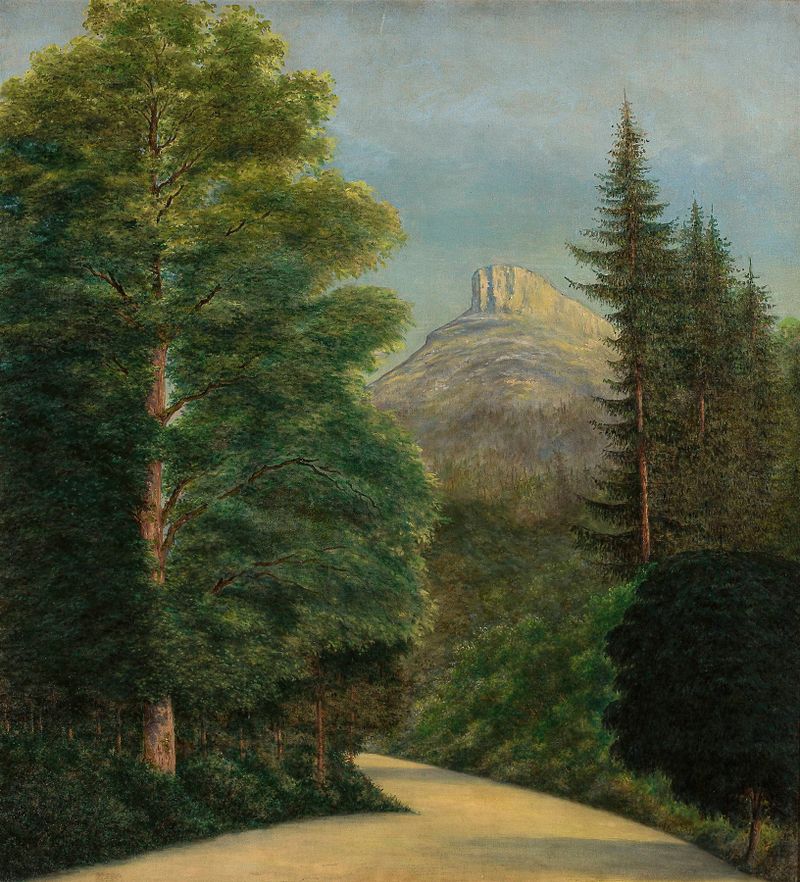
In the stillness of a moment, the duality of nature unfolds, revealing its beauty and inherent chaos. Look to the center where the water cascades down the rocky cliff, its motion frozen yet intense, as if the canvas itself holds its breath. Notice how the hues of blue and green blend seamlessly, creating a symphony of shadows and highlights that dance across the surface. The texture of the paint conveys a visceral energy, each stroke echoing the violent rush of water against stone, a testament to both nature's grace and its ferocity. In the background, the serene peaks seem to loom in silent witness, adding a stark contrast to the tumultuous waterfall.
There’s a tension between the tranquility of the mountains and the raw power of the water, suggesting a struggle between serenity and chaos. This juxtaposition may reflect the artist's contemplation of violence not just as a destructive force but as an essential element of life’s beauty. The falling water implies a relentless cycle, hinting at nature’s capacity to renew itself, even through tumult. Cyprian Lachnicki created this evocative work during a time of personal exploration, likely reflecting his own internal conflicts.
Active in the late 19th and early 20th centuries, he was influenced by the burgeoning movements of Impressionism and Post-Impressionism, grappling with how to convey emotion and mood through color and form. Though the exact date remains unknown, it’s clear that Lachnicki was immersed in a world shifting towards a new understanding of artistic expression, seeking to capture the essence of existence in every stroke.