
Mountainscape — History & Facts
In an era ripe for revolution, nature often reflected the tumultuous spirit of the times, offering solace and inspiration amidst change. A mountainscape can hold the echoes of strife and beauty, reminding us of the power inherent in transformation. Look to the left of the canvas, where majestic peaks rise sharply against a sublime sky. The artist employs a palette of rich greens and deep blues, contrasting with the soft pastels of the clouds that cradle the mountains.
Notice how the light bathes the scene, illuminating the rugged texture of the rocks, while shadows dance in the valleys below, creating a tension between serenity and the raw power of nature. Each brushstroke whispers of movement, inviting you to traverse the terrain. Delving deeper, the interplay between light and shadow hints at an emotional landscape, one that mirrors the revolutionary sentiments of the time. The mountains, while imposing, are also nurturing; they cradle the valleys like arms holding onto something precious.
This duality evokes feelings of hope and struggle, suggesting that beauty often arises from upheaval. The viewer is left to ponder the connections between the natural world and human experience, and how one can inspire the other. Created in 1789, this work emerged during a pivotal moment in European history, just as political unrest began to reshape nations. Rauscher, painting in Germany, was influenced by the Sturm und Drang movement, which celebrated intense emotion and the sublime in nature.
As the world around him shifted, he sought to capture the essence of this transformative period, using the mountains not just as a backdrop, but as a metaphor for the resilience and strength found in the heart of chaos.
More Artworks by Johann Albrecht Friedrich Rauscher
Browse all →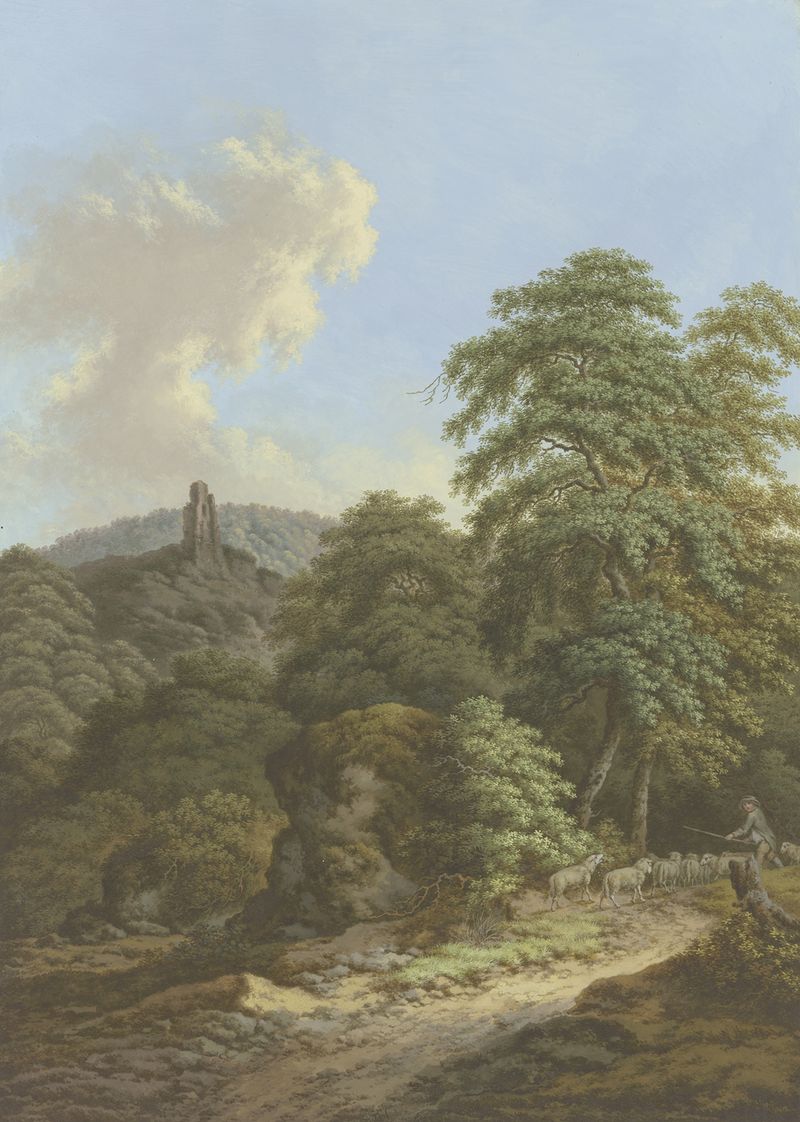
Blick auf eine Burgruine, im Vordergrund ein Schäfer mit Herde
Johann Albrecht Friedrich Rauscher

Waldtal mit Blick auf eine Burgruine, im Vordergrund eine Hirtin mit drei Rindern und einem Hund
Johann Albrecht Friedrich Rauscher
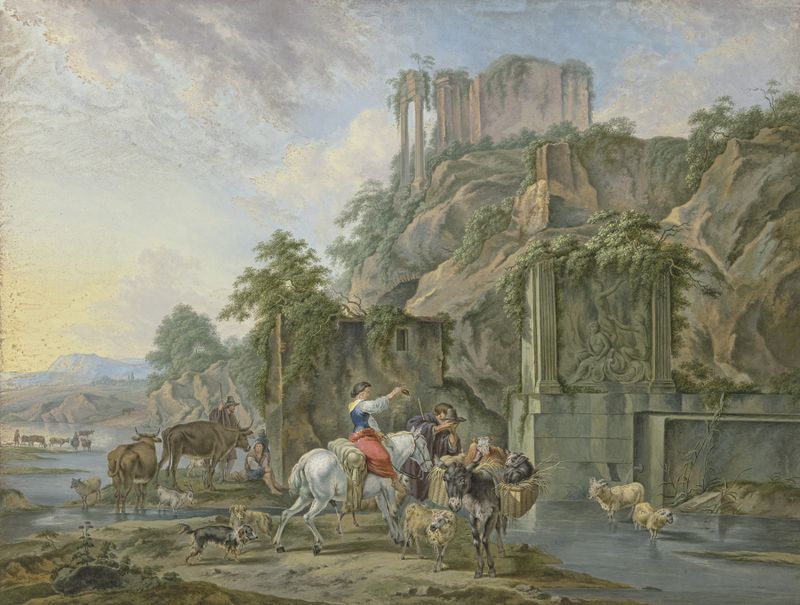
Hirten an einem römischen Brunnen
Johann Albrecht Friedrich Rauscher
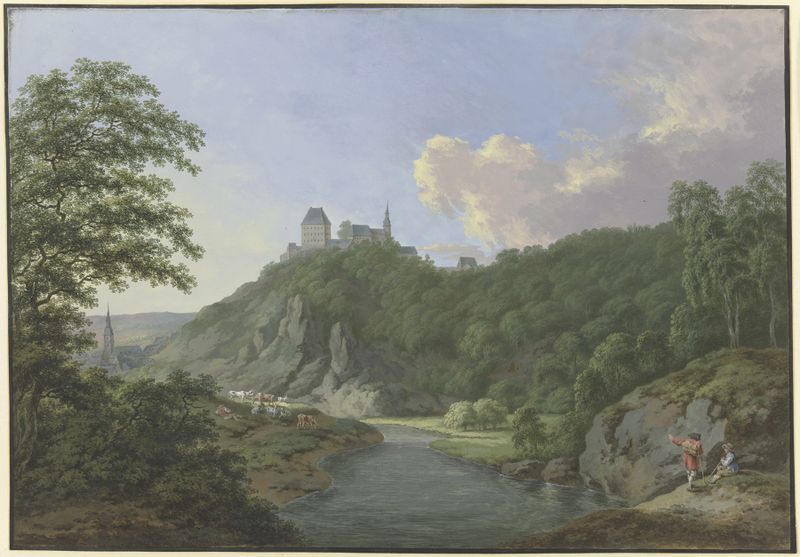
Schloß zu Hirschberg an der Saale im Voigtland
Johann Albrecht Friedrich Rauscher

Eichenwald, im Vordergrund eine Frau mit einem Korb auf dem Kopf, begleitet von einem Mann und einem Knaben
Johann Albrecht Friedrich Rauscher

Landschaft mit einer Ruine, links ein hoher Baum, im Vordergrund zwei Wanderer
Johann Albrecht Friedrich Rauscher
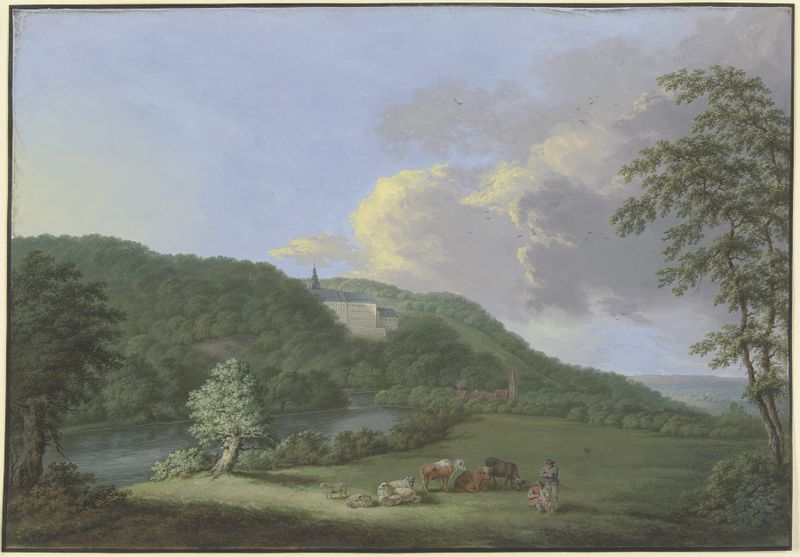
The castle near Gera
Johann Albrecht Friedrich Rauscher
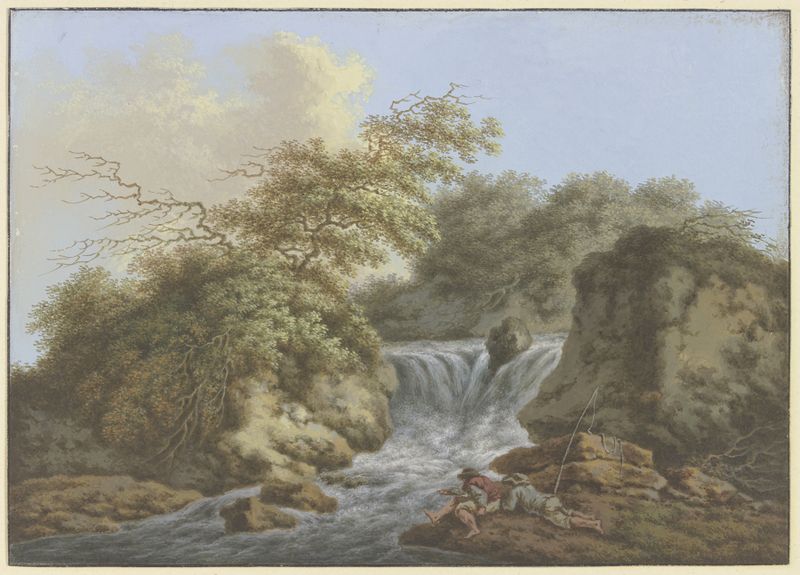
Wasserfall zwischen zwei Felsen, am Ufer rechts zwei Angler
Johann Albrecht Friedrich Rauscher





