Nachtstimmung — History & Facts
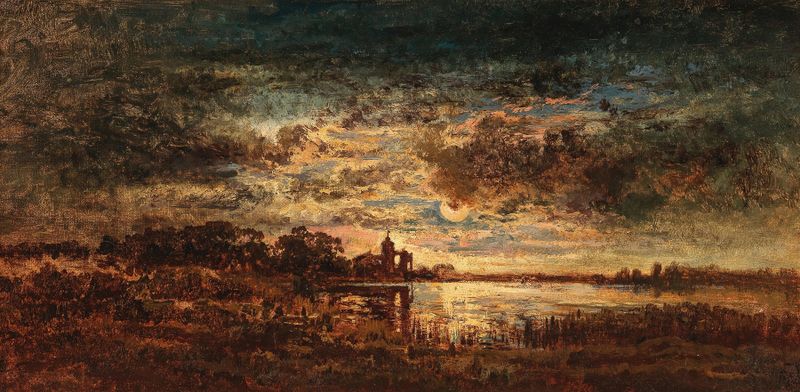
Could a single brushstroke hold eternity? The weight of grief lingers within the textured layers of this haunting work. Focus first on the deep, melancholic blues that dominate the canvas, swirling like shadows of unspoken sorrow. Notice how the strokes dance with an ethereal elegance, evoking the stillness of night and amplifying the silence that envelops the scene. The muted hues blend seamlessly, creating an atmosphere thick with emotion, drawing the viewer into a contemplative space that feels both infinite and intimate. As you explore further, pay attention to the delicate highlights that peek through the darkness, suggesting faint glimmers of hope within despair.
This contrast manifests a poignant duality; while the color palette resonates with loss, the subtle illumination speaks to resilience. Each brushstroke captures the essence of longing, allowing us to feel the artist's own battle with mortality and memory, as if he invites us to share in his personal grief. Waldhauser created this piece during a period marked by introspection and turmoil, when the art world was grappling with the aftermath of war and the profound impact of personal loss. Working in the early 20th century, he was influenced by the Symbolist movement, aiming to express the inexpressible through his evocative use of color and texture.
This artwork, while undated, captures not only his individual experience but also echoes the collective melancholy of an era forever changed.