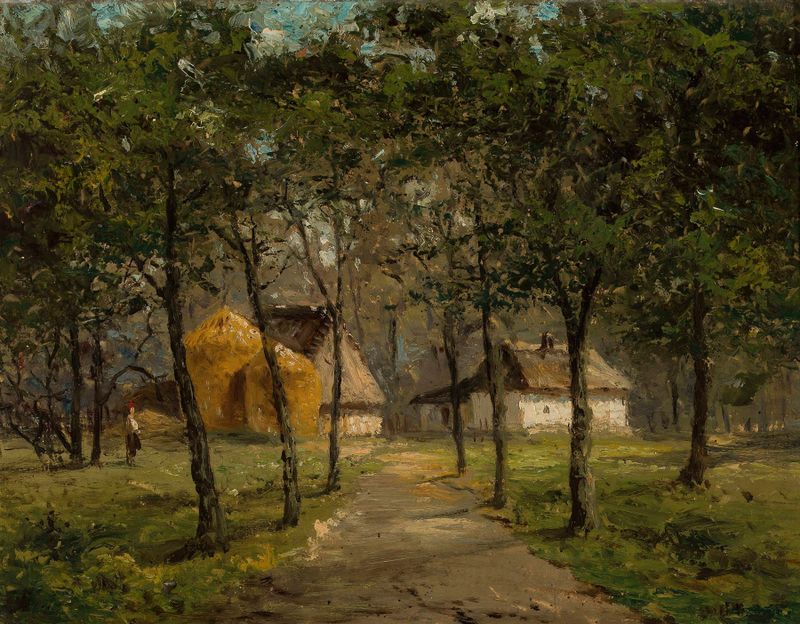
Near Vilnius – River landscape — History & Facts
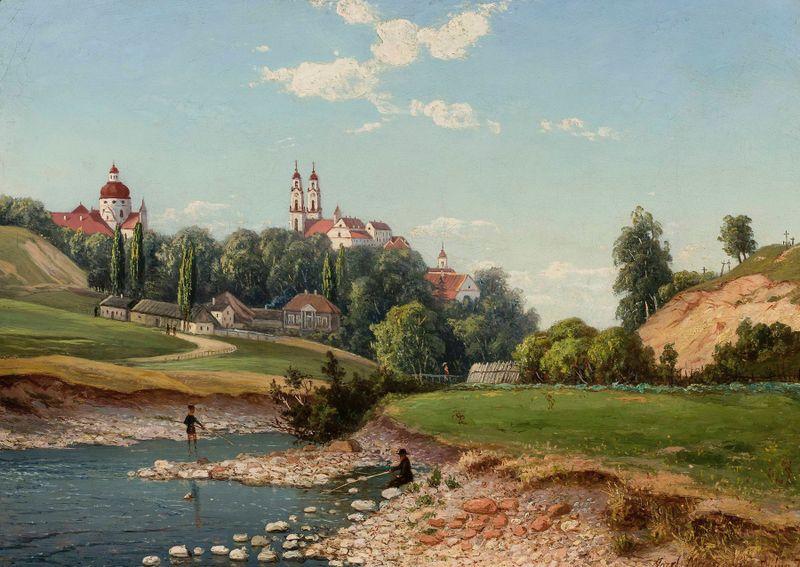
Did the painter know this moment would outlive them? In the hushed embrace of nature, time seems suspended, beckoning the viewer to linger just a moment longer. Look to the left where the river gently meanders, its surface shimmering with hints of sunlight that dance like fleeting memories. Notice how the verdant trees stand sentinel along the banks, their rich greens contrasting with the warm golds and browns of the earth. The soft brushwork captures the serenity of the landscape, inviting you to breathe in the fresh air, as if the essence of the countryside surrounds you. Hidden within this idyllic scene are layers of yearning and nostalgia.
The tranquil river can symbolize the flow of time, a reminder of life's inevitability and the quiet melancholy that accompanies fleeting moments. The gentle ripples reflect not just light but also a longing for connection with nature, the past, and perhaps with a simpler existence. Each natural element, from the modest clouds to the distant horizon, urges contemplation and evokes a sense of peace, tinged with the bittersweet essence of memory. Józef Marszewski painted this masterpiece in 1872, during a time when romanticism in art was flourishing across Europe.
Living in Poland, he was immersed in the changing tides of his homeland's identity, as nationalism intertwined with artistic expression. This period marked a significant transition in the art world, where landscapes became vessels for emotional depth, allowing painters like him to explore and articulate their own feelings of connection to nature and place.