
Neeltje van der Cruysse — History & Facts
In Neeltje van der Cruysse, the delicate poise of the subject suggests a transcendent allure, yet hints at deeper sorrows resting beneath her serene facade. The painting offers an invitation to explore the complexities of beauty and vulnerability, revealing the intricate dance between allure and heartache. Look closely at the left side of the canvas where the gentle light caresses the figure's silk gown, illuminating its rich textures and intricate lace. The artist’s deft brushwork captures the softness of Neeltje’s skin, while her downcast gaze directs us to the subtle play of shadows across her face.
The muted yet warm color palette accentuates the intimate ambiance, inviting the viewer to linger in her world, where elegance meets an unspoken melancholy. When examined closely, the details reveal an emotional tension: the tight grip of her hands betrays a sense of restraint, perhaps reflecting societal expectations of the time. The exquisite jewelry that adorns her neck serves as a gilded chain, suggesting that beauty can sometimes feel like a burden. This juxtaposition encapsulates the duality of her existence—an outward appearance of grace, contrasting sharply with the inner turmoil that remains hidden from view. Gerard Terborch painted this work in the late 1660s, during a period marked by the refinement of Dutch genre painting.
At this time, Terborch was establishing himself in the art world, focusing on intimate, informal scenes of daily life, often portraying femininity with sensitivity and depth. His attention to the subtleties of human emotion and societal roles reflects the complexities of the era, where beauty was both revered and confining.
More Artworks by Gerard Terborch
Browse all →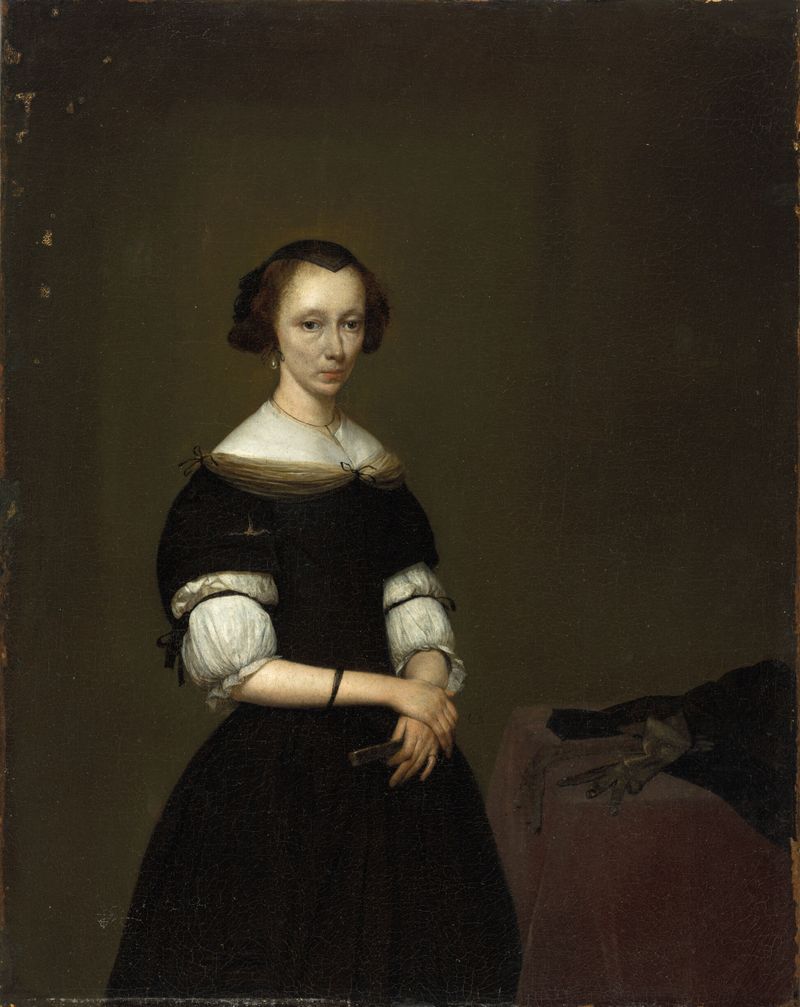
More Portrait Art
Browse all →
Las meninas
Diego Velázquez

Self-portrait with a Bandaged Ear and Pipe
Unidentified artist

Girl with a Pearl Earring
Johannes Vermeer

The Sampling Officials of the Amsterdam Drapers’ Guild, Known as ‘The Syndics’
Rembrandt van Rijn

The Hundred Guilder Print: the man seen on the back in the lower left corner
Rembrandt van Rijn

Portrait of Dr Gachet
Vincent van Gogh