
Námestie pred Dómom v Košiciach — History & Facts
Could a single brushstroke hold eternity? In Námestie pred Dómom v Košiciach, a moment is captured that echoes the weight of destiny, as if every detail is imbued with a sense of inevitability. First, your gaze should be drawn to the vibrant hues of the square, alive with a palette that dances between the warm earth tones and cool shadows. Notice how the sunlight spills across the cobblestones, illuminating the intricate textures of the buildings that cradle the cathedral. Each figure, rendered in meticulous detail, adds a layer of life to the scene, inviting the viewer to step into this bustling moment in time. As you look closer, consider the contrast between the towering façade of the cathedral and the humble figures below.
The juxtaposition of the sacred and the everyday life unfolding at its feet presents a powerful narrative on faith, community, and the inexorable flow of time. Each passerby seems to carry their own story, creating a tapestry of destinies intertwining beneath the watchful gaze of the spires. In 1936, Štefan Fodor was deeply rooted in the world of Slovak art, embracing a naturalistic style that resonated with national identity. At this time, the interwar period brought both hope and uncertainty to Europe, influencing artists to reflect upon their surroundings in profound ways.
Fodor's work emerged from a desire to capture the spirit of his homeland, creating a connection between the past and the present that would resonate with generations to come.
More Artworks by Štefan Fodor
Browse all →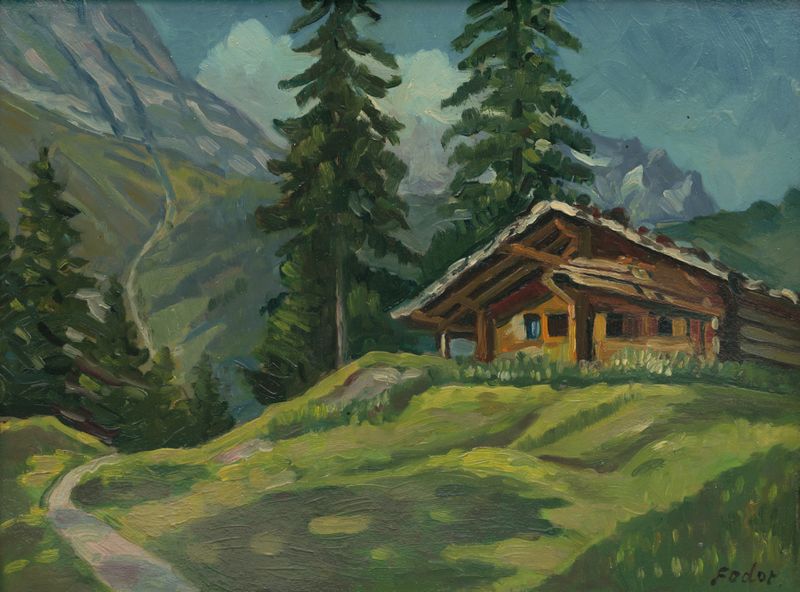
More Architecture Art
Browse all →
The statue of Liberty
Frédéric Auguste Bartholdi

View of Houses in Delft, Known as ‘The Little Street’
Johannes Vermeer

View of Houses in Delft, Known as ‘The Little Street’
Johannes Vermeer

The Cathedral in Rouen. The portal, Grey Weather
Claude Monet

The yellow house
Vincent van Gogh

The Church in Auvers-sur-Oise, View from the Chevet
Vincent van Gogh