Nocturne, River Clyde — History & Facts
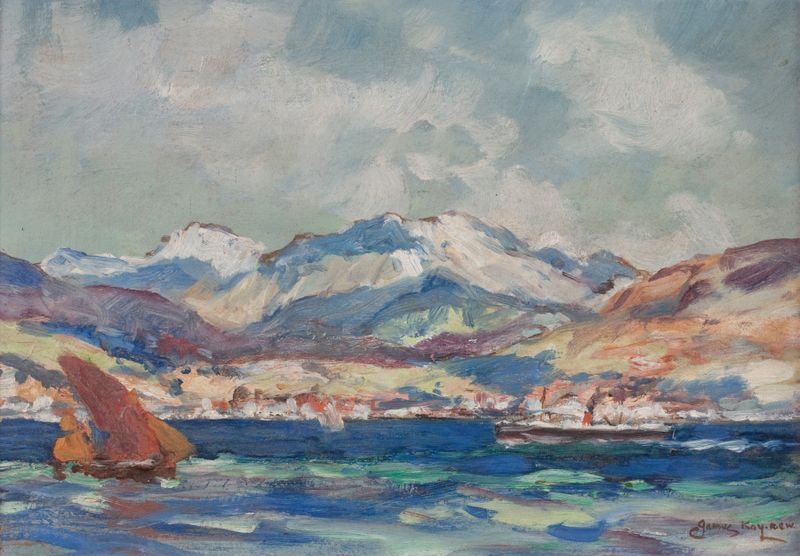
Could a single brushstroke hold eternity? In the soft embrace of twilight, the River Clyde reflects a world on the brink of night, a yearning for the elusive beauty that often slips through our fingers. Look to the center where the river’s surface glimmers, a restless dance of light and shadow. The deep blues and muted purples create a serene yet melancholic atmosphere, while the painter's delicate brushwork evokes the fluidity of water and life itself. Notice how subtle strokes mimic the gentle ripples, drawing the viewer's eye across the canvas, inviting contemplation of the horizon that seems to merge with the heavens. The interplay of light and darkness whispers of longing, a tension between the familiar and the unknown.
The distant silhouettes of trees and buildings, shrouded in twilight, embody the quiet of solitude, yet hint at the pulse of a city that never sleeps. This contrast between the serene water and the looming shadows speaks to the profound human experience—caught between desire and reality, forever reaching but never grasping. Created in 1887, this piece emerged during a transformative period for James Kay, who was part of the Glasgow Boys, a group that championed naturalism and the depiction of contemporary life. The industrial landscape of Scotland was evolving, mirroring the artist’s own journey as he explored themes of beauty and transience amidst the changing world.
The river, once a bustling artery of commerce, now reflects the stillness of a moment, capturing the heart of an era in flux.