
Obelisk of Heliopolis. — History & Facts
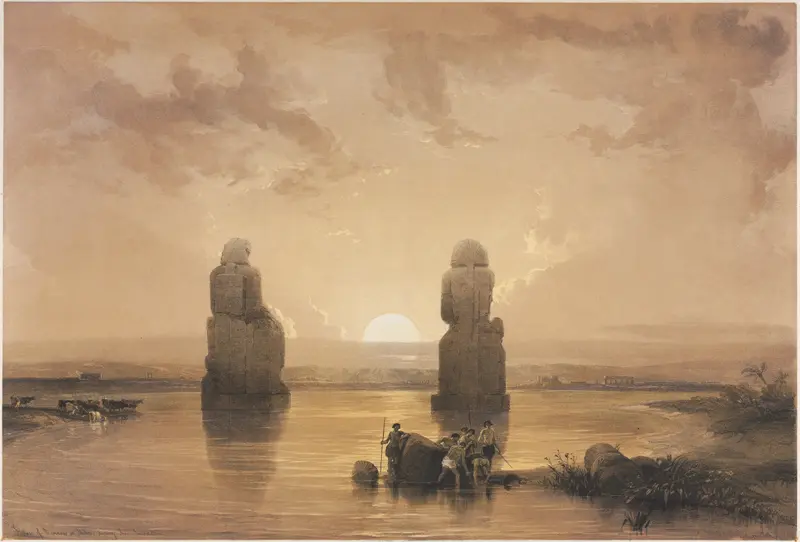
In Obelisk of Heliopolis, David Roberts presents a striking depiction of an ancient Egyptian obelisk. The painting features warm earth tones, with the obelisk towering against a bright blue sky. Surrounding the obelisk are hints of lush greenery and distant architectural ruins.
The overall composition conveys a sense of grandeur and historical significance. Roberts uses oil on canvas to create this artwork, allowing for rich textures and vibrant colors. The brushwork is detailed, particularly in the rendering of the obelisk's surface and the surrounding landscape. The dimensions of the painting are approximately 100 x 150 cm, making it a substantial piece.
The perspective draws the viewer's eye upward, emphasizing the height of the obelisk. David Roberts was a Scottish painter known for his detailed depictions of Middle Eastern and Egyptian landscapes. Obelisk of Heliopolis reflects his fascination with ancient architecture and his travels in Egypt. An interesting fact about this work is that it was created during the 1840s, a time when European interest in Egyptology was rapidly growing.
Roberts' paintings played a significant role in shaping Western perceptions of ancient Egypt.
More Artworks by David Roberts

Approach to the Fortress of Ibrim.
David Roberts
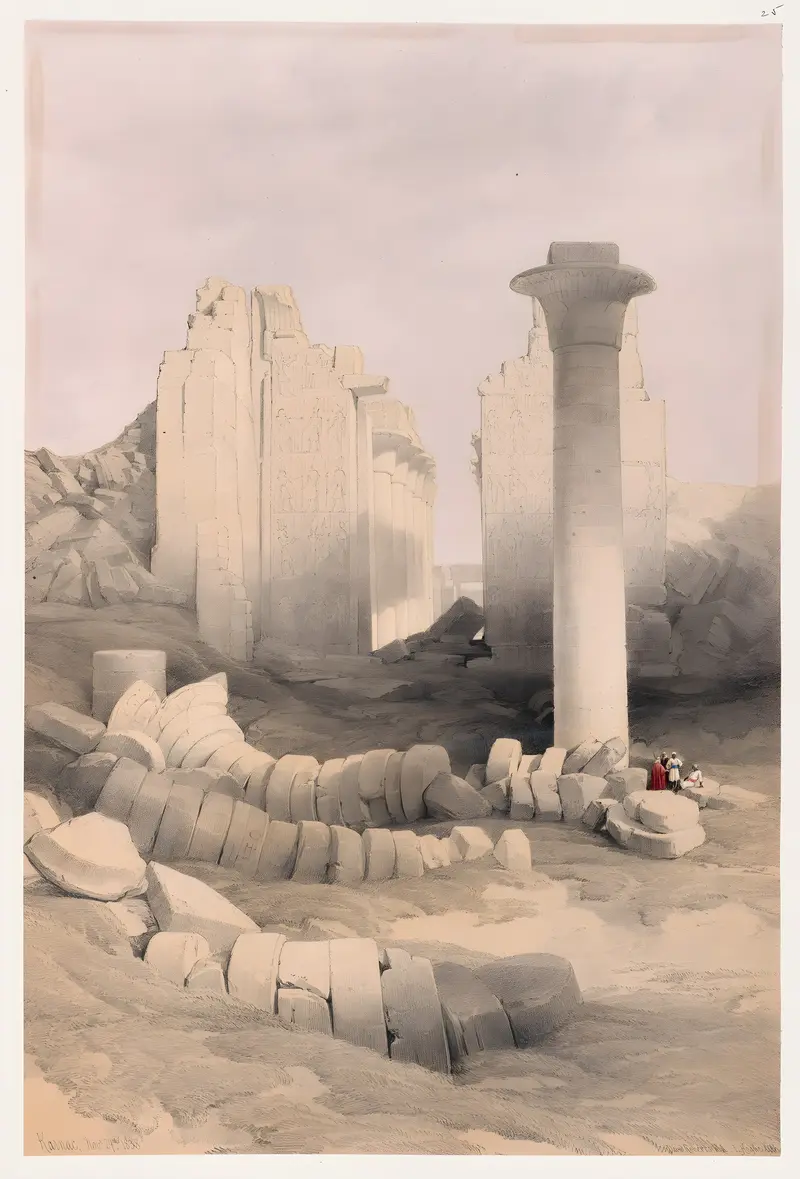
Karnac [Karnak]. Nov. 29th, 1838.
David Roberts
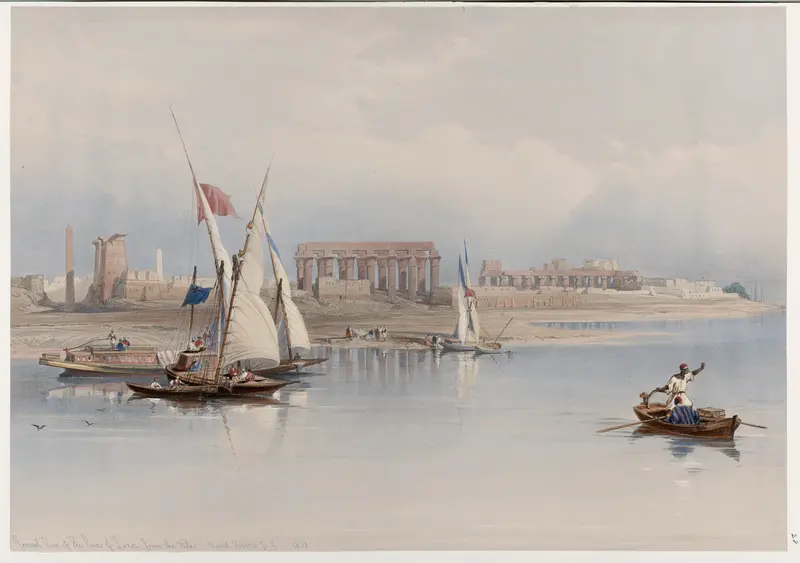
General view of the ruins of Luxor, from the Nile. 1838.
David Roberts
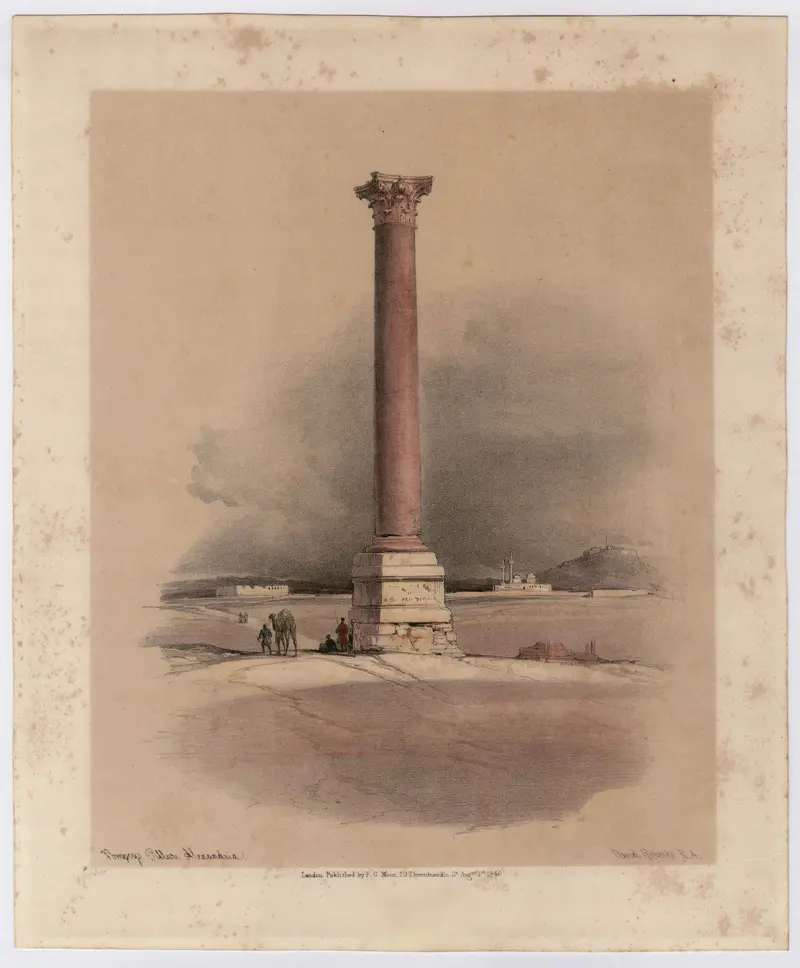
Pompey’s Pillar, Alexandria.
David Roberts
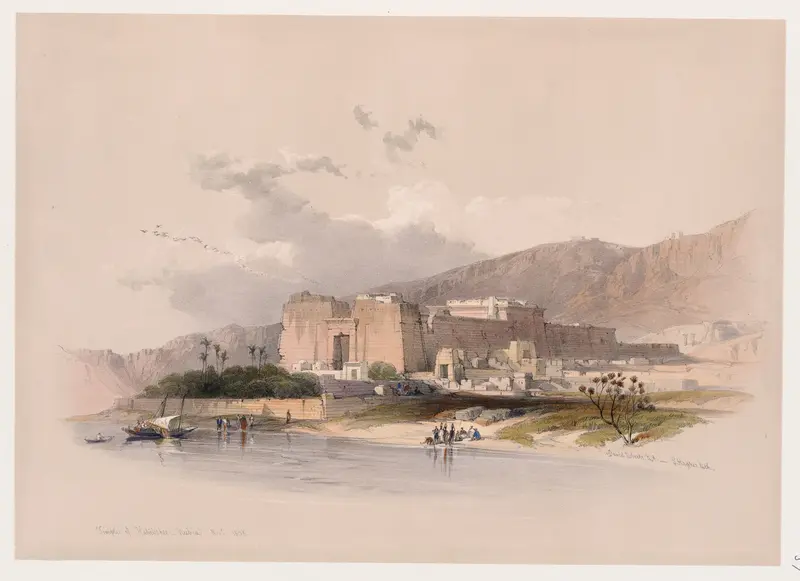
Temple of Kalabshee [Kalabsha, Kalâbishah], Nubia. Nov. 1838.
David Roberts
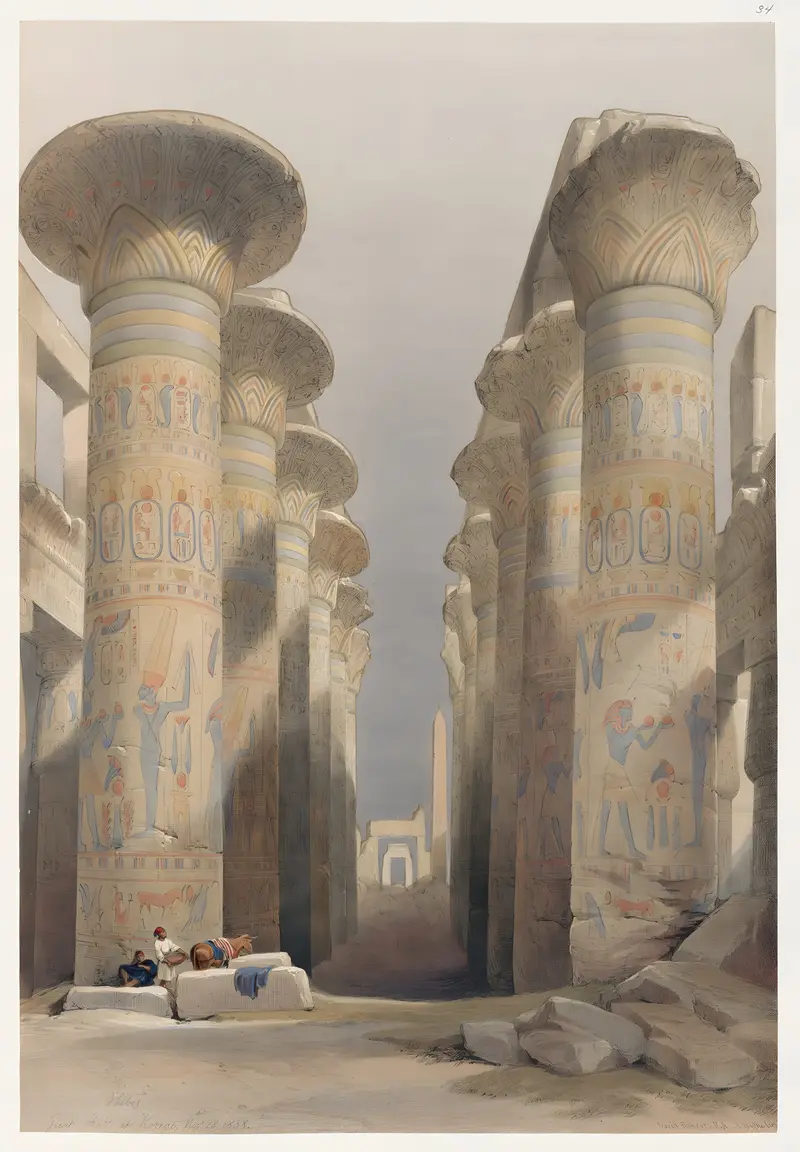
Thebes. Great Hall at Karnak. Nov. 28, 1838.
David Roberts
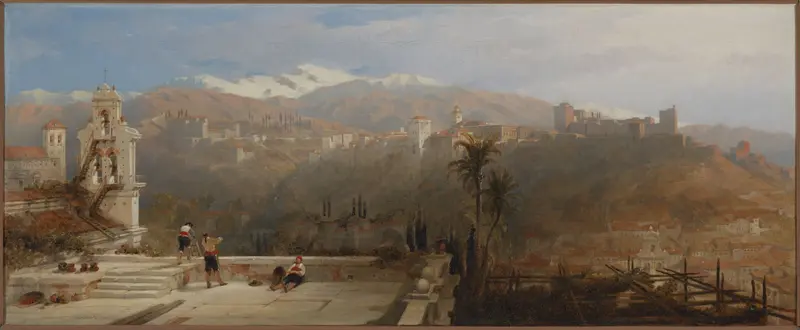
The Fortress of the Alhambra, Granada
David Roberts
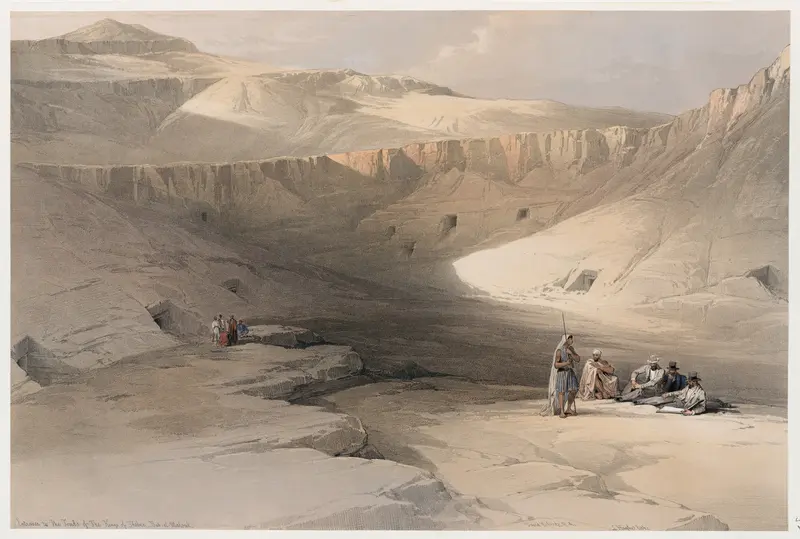
Entrance to the tombs of the kings of Thebes. Bab-el-Malouk [Bîbân al-Mulûk].
David Roberts
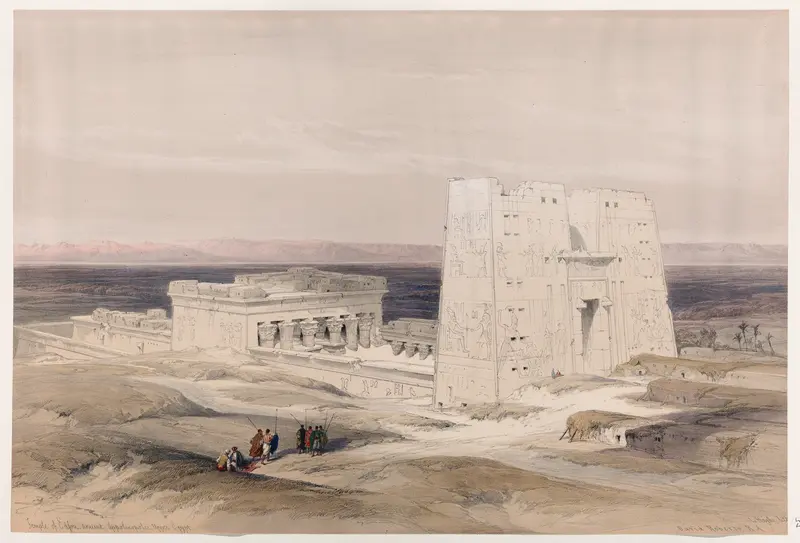
Temple of Edfou [Idfû], ancient Appolinopolis, Upper Egypt.
David Roberts
Statues of Memnon at Thebes, during the inundation.
David Roberts





