
Obere Zäune — History & Facts
It is in the delicate interplay between innocence and yearning that the heart of Obere Zäune resonates most profoundly. The vibrant hues and intricate details evoke a sense of nostalgia, inviting the viewer to explore the layers of meaning buried beneath its surface. Look to the left at the soft, golden light that bathes the young figures, casting gentle shadows that stretch across the landscape. Notice how the artist meticulously depicts a series of wooden fences, their weathered texture contrasting against the bright colors of the flowers in the foreground.
This careful composition creates a sense of depth, drawing our eyes into the scene while simultaneously framing it in a way that suggests boundaries—both physical and emotional. As you delve deeper, consider the juxtaposition of innocence represented by the children against the stark, imposing fences. Each bloom hints at fleeting moments of joy, yet the barriers evoke a sense of separation and longing that permeates the scene. The tension between the vibrancy of youth and the constraints of their environment underscores a profound commentary on the loss of innocence and the inevitability of growing up. During the era in which this piece was created, Johann Jakob Biedermann was active in the mid-19th century, a time marked by a burgeoning appreciation for nature and a romantic sensibility.
His work often reflected a desire to encapsulate the purity of childhood amidst the encroaching complexities of modern life. It was a period when artists began to explore emotional depth and the human experience, setting the stage for the evocative narrative found in Obere Zäune.
More Artworks by Johann Jakob Biedermann
Browse all →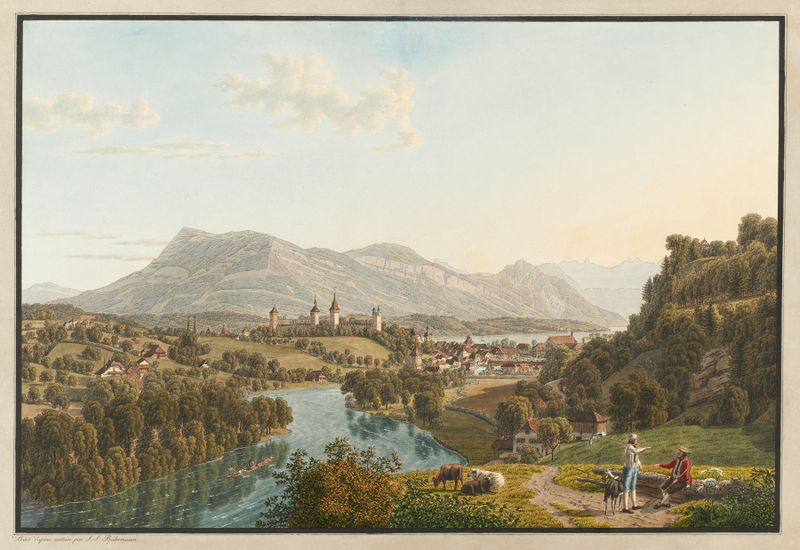
Luzern, von Nordwesten
Johann Jakob Biedermann

Sankt Gallen, von Norden
Johann Jakob Biedermann

Le Glacier nommé Rosenlaui, à côté du Wetterhorn
Johann Jakob Biedermann

Gottstatt, Kloster, von Nordwesten
Johann Jakob Biedermann
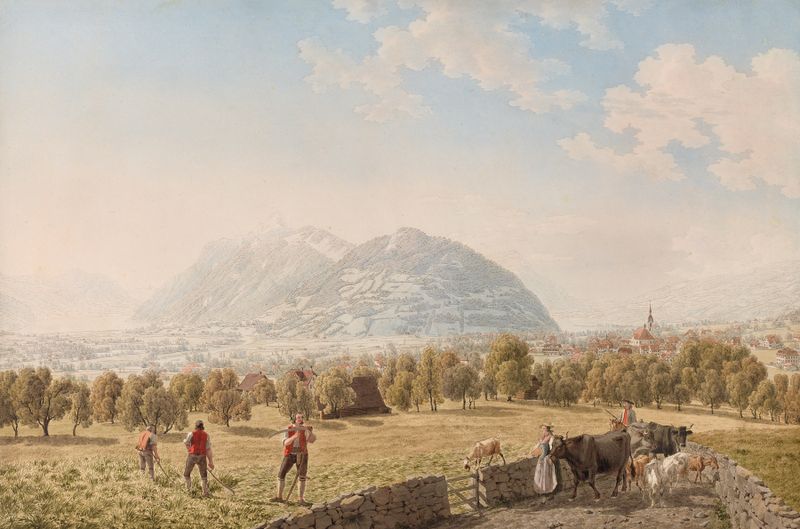
Schwyz, von Osten
Johann Jakob Biedermann

Twann und Bielersee von Nordosten
Johann Jakob Biedermann

Luzern, von Nordwesten
Johann Jakob Biedermann

Luzern, von Südwesten
Johann Jakob Biedermann
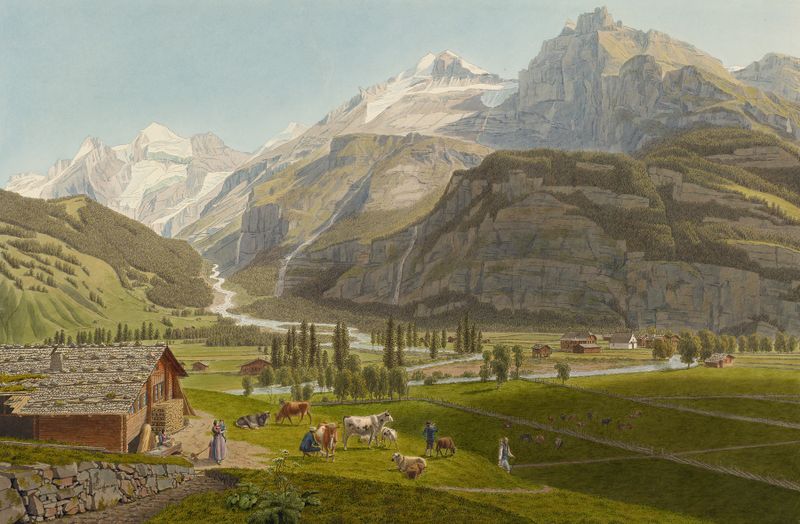
Kandersteg und das Kandertal, von Norden
Johann Jakob Biedermann

Schaffhausen, von Westen
Johann Jakob Biedermann





