
Old drawbridge, Bruges — History & Facts
When did color learn to lie? In the world of art, where hues can mask truth and distort perception, the interplay of light and shadow often reveals the depths of madness lurking beneath the surface. Look to the left at the old drawbridge, standing steadfast against the vibrant blues and greens that envelop it. The brushstrokes swirl with energy, almost alive, as they unify the structure with the tumultuous sky above. Notice how the sun casts a strange, golden light upon the water, transforming the serene canal into a canvas of chaotic reflections that dance and flicker, blurring the lines between reality and illusion. Amidst the beauty, there lurks an unsettling tension—the bridge, emblematic of connection, now appears isolated in its antiquity, hinting at the madness of time passing without change.
The vivid colors, though enticing, evoke a sense of disorientation, as if the scene itself is questioning its own existence. Each brushstroke whispers of the fears and dreams of the past, tethered to a world that is slipping away, revealing a deeper narrative of decay and longing. In 1931, Alexander Jamieson painted this piece in Bruges, a city steeped in history yet grappling with the modern world’s uncertainty. The art scene was shifting, with movements like Surrealism emerging as artists sought to explore subconscious thoughts and emotions.
Jamieson, influenced by the atmospheric landscapes of his surroundings, captured a moment that reflects both the charm and the madness of a bygone era, echoing the complexities of life itself.
More Artworks by Alexander Jamieson
Browse all →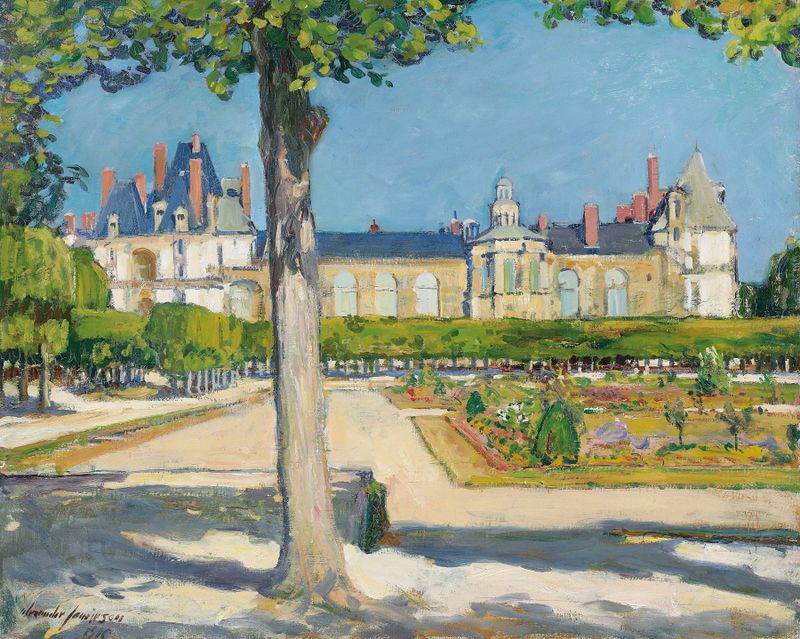
More Architecture Art
Browse all →
The statue of Liberty
Frédéric Auguste Bartholdi

View of Houses in Delft, Known as ‘The Little Street’
Johannes Vermeer

View of Houses in Delft, Known as ‘The Little Street’
Johannes Vermeer

The Cathedral in Rouen. The portal, Grey Weather
Claude Monet

The yellow house
Vincent van Gogh

The Church in Auvers-sur-Oise, View from the Chevet
Vincent van Gogh