Old Houses at St. Albans — History & Facts
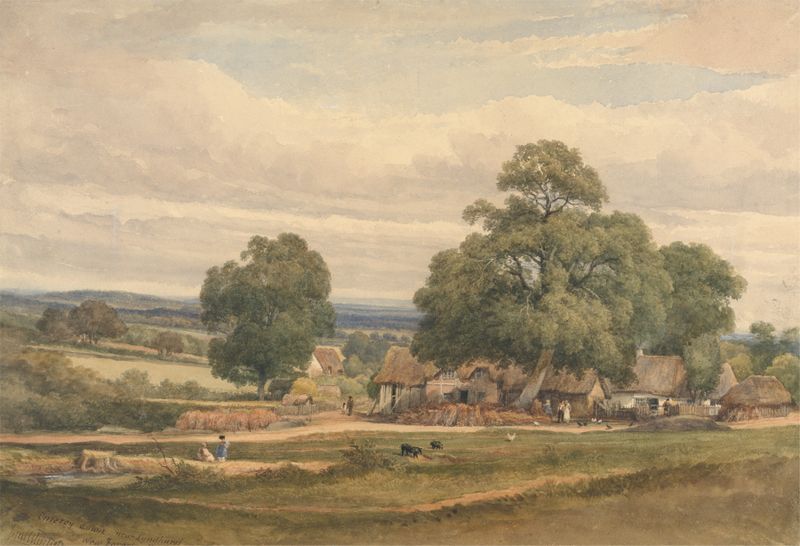
When did color learn to lie? In the stillness of a quiet town, pastel hues mingle with shadows, crafting a tranquility that masks the passage of time. The essence of serenity emanates from the canvas, inviting us to delve deeper into its charm. Focus on the gentle curve of the rooftops as they rise against a backdrop of soft blue skies. Notice how the light gracefully bathes the old houses, illuminating their weathered facades with a warm glow.
The artist employs a harmonious palette, blending muted yellows and gentle greens to evoke a sense of nostalgia while anchoring the structures within their environment. Each brushstroke reinforces the quaintness, creating an inviting scene that draws the viewer in. Yet, beneath this peaceful visage lies a sense of impermanence. The peeling paint and leaning walls suggest histories untold, whispering secrets of lives once lived in these structures.
The contrast between the vibrant colors and the signs of aging reflects the tension between beauty and decay, evoking a bittersweet longing for the past. It’s a reminder that serenity often coexists with fragility, and that every picturesque moment is but a fleeting slice of time. John Whichelo painted this work in the early 20th century, a period when the British art scene was heavily influenced by the burgeoning Impressionist movement. Living in St.
Albans during this time, he captured the essence of his surroundings, allowing the charm of the old houses to resonate with his audience. The world outside was changing rapidly, yet within this canvas, time stands still, preserving a slice of life that invites reflection and contemplation.