Old Warsaw in winter – Brzozowa Street — History & Facts
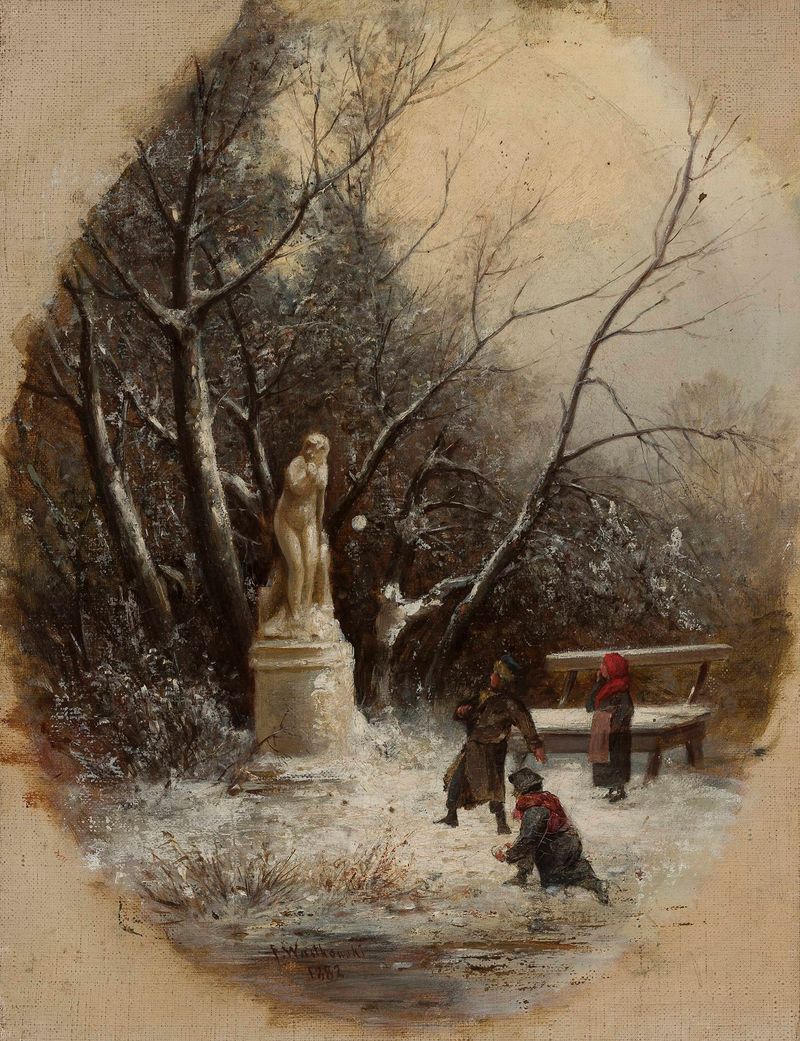
This poignant sentiment evokes the essence of a winter scene, where faith emerges from the quietude of a snow-covered Warsaw. In the stillness, the city stands as a testament to resilience, reminding us of the beauty that can flourish amid starkness. Look to the foreground, where the narrow Brzozowa Street invites the viewer into its embrace. Notice how delicate brushstrokes delineate the icy cobblestones, reflecting a soft, muted palette that captures winter's chill.
The buildings rise majestically, their rooftops laden with snow, each stroke revealing the architecture’s intricate details. As the light dances gently across the scene, it plays with the shadows, creating a harmonious balance between warmth and cold. Yet, within this serene composition lies an intricate tapestry of emotional tension. The contrast between the bustling life that once animated these streets and their current stillness speaks to loss and the passage of time.
The faint figures in the distance, shrouded in their winter cloaks, embody a quiet faith in the enduring spirit of the city—a silent prayer whispered amid the flurries of snow that fall as softly as forgotten dreams. In 1878, during a period of burgeoning artistic spirit in Poland, Franciszek Wastkowski created this evocative piece while navigating the complexities of his surroundings. Living in an era defined by both national struggle and cultural awakening, he sought to capture not just the physicality of Warsaw but the deeper emotional truths that lie beneath its winter landscape. This work stands as a reflection of both personal and collective faith, embodying a moment where art not only depicts reality but transcends it.