
On the Guadalquivir, Seville — History & Facts
What secret hides in the quiet of the canvas? The stillness of On the Guadalquivir, Seville invites the viewer to listen closely to a world suspended in time, where the weight of silence carries untold stories. Look to the left at the delicate brushstrokes that define the rippling waters of the Guadalquivir River, reflecting a soft light that dances across the surface. The artist’s technique displays a remarkable mastery of both color and form; the muted blues and greens evoke a sense of tranquility, while the warm hues of sunlight kissing the trees suggest an afternoon that lingers longer than necessary. Each detail draws the eye further into the heart of the scene, creating an atmosphere ripe with possibility. Beyond its serene beauty, the work hints at deeper themes of solitude and yearning.
The gentle sway of the river contrasts with the stillness of the banks, reflecting a longing for connection that often lies just out of reach. Shadows play along the water's edge, adding layers of complexity to the composition and hinting at the transient nature of light and life. The absence of figures amplifies this sense of solitude, inviting the viewer to ponder the stories that might unfold in such a space. Sánchez-Perrier painted this piece during a period of artistic exploration in late 19th-century Spain.
Influenced by the burgeoning Impressionist movement, he sought to capture the ephemeral qualities of light and atmosphere in his landscapes. During this time, the cultural milieu was vibrant with artistic innovation, as Spain began to embrace modernity while still holding on to its rich traditions. This painting stands as a testament to that intersection, representing both a moment in nature and a deeper reflection on the human experience.
More Artworks by Emilio Sánchez-Perrier
Browse all →
La Rivière, Environs de Santiponce
Emilio Sánchez-Perrier

At The Mouth Of The Grand Canal, Santa Maria Della Salute In The Distance
Emilio Sánchez-Perrier

Paysage
Emilio Sánchez-Perrier
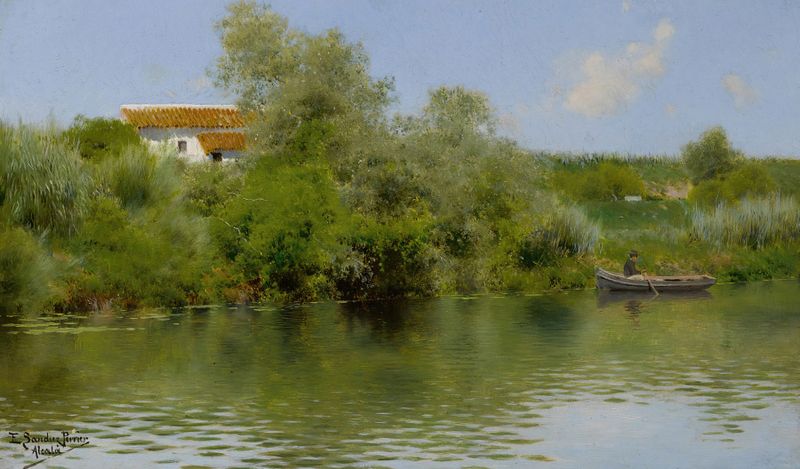
The River at Alcalà
Emilio Sánchez-Perrier

On the river
Emilio Sánchez-Perrier

A summer day on the river
Emilio Sánchez-Perrier

A QUIET STRETCH OF RIVER
Emilio Sánchez-Perrier
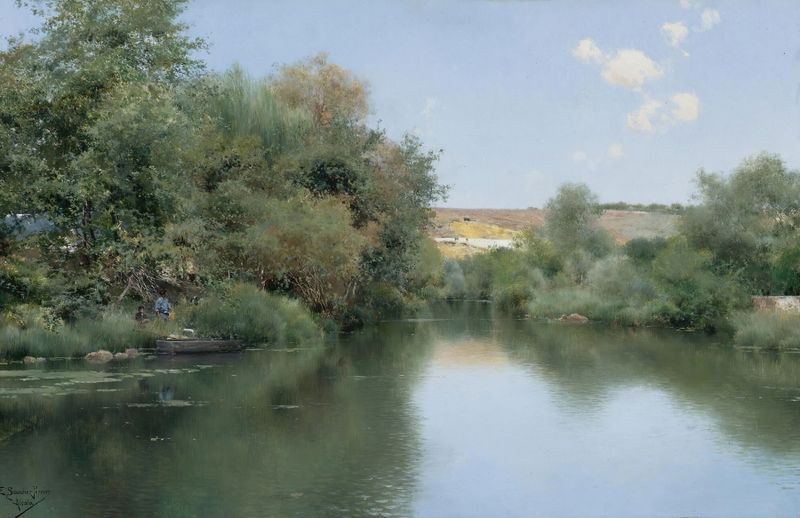
El Rialaje
Emilio Sánchez-Perrier
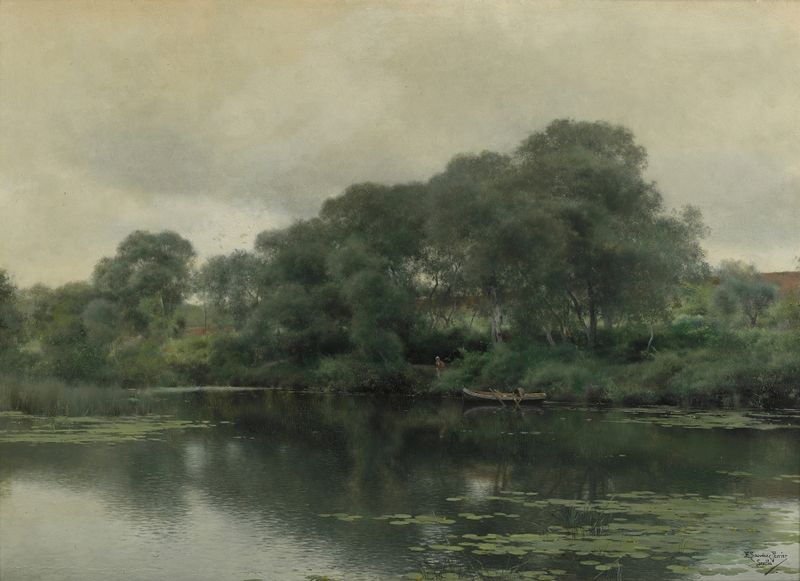
Stillness on a lily pond
Emilio Sánchez-Perrier

A midday’s rest
Emilio Sánchez-Perrier





