
On the Way to Emmaus — History & Facts
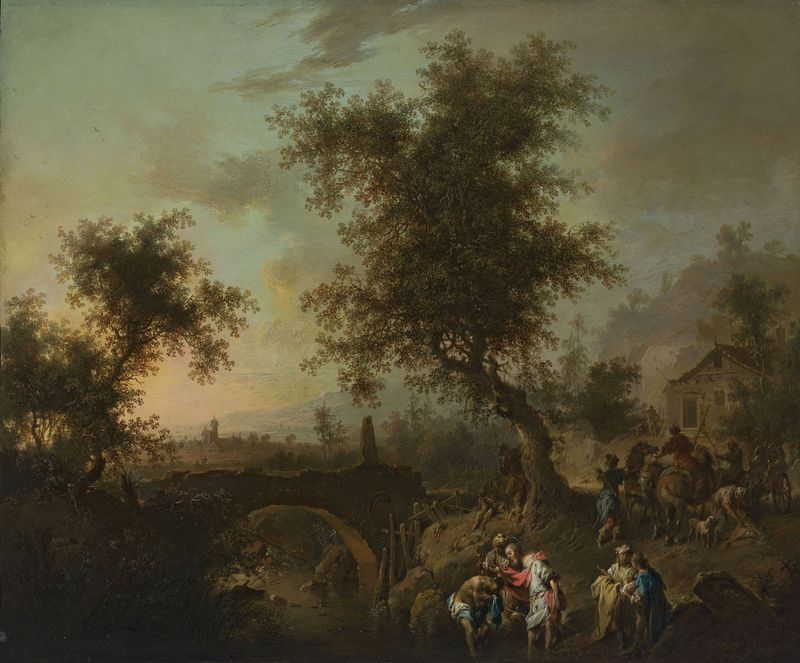
The canvas doesn’t lie — it simply waits. In the stillness of this moment, grief lingers, echoing through the layers of paint and the silence of the figures depicted. Look closely at the central figures, depicted in a soft palette of muted earth tones. Their expressions, heavy with sorrow, draw you in, urging you to search for an unspoken story.
Notice how the light gently illuminates their faces, highlighting the deep creases of their brows and the glistening of unshed tears, creating an intimate atmosphere thick with emotion. The delicate brushstrokes reveal a sense of movement, as if they’re caught in the midst of a conversation that transcends mere words. The scene embodies a poignant contrast between despair and hope. The figures are enveloped in shadows, yet there is a faint light breaking through in the background, suggesting a glimmer of solace amid their grief.
The careful placement of the horizon lines conveys a journey, emphasizing that despair is not the final destination. Each element—facial expressions, color choices, and subtle gestures—contributes to the emotional weight, evoking a universal theme of loss and the search for understanding. Seekatz, creating this artwork during an unspecified period, was part of a broader narrative in the 18th century where artists began to explore emotional depth and realism in their work. Amid this evolving art scene, he was navigating his own experiences, likely influenced by the cultural and social shifts of his time.
This painting captures not just a moment of reflection, but also the artist’s own wrestling with the themes of sorrow and redemption that permeated the fabric of society.
More Artworks by Johann Conrad Seekatz
Browse all →
More Religious Art
Browse all →
The Return of the Prodigal Son
Rembrandt van Rijn

The Garden of Earthly Delights
El Bosco

Count Orgaz’ funeral
El Greco

The Hundred Guilder Print: the central piece with Christ preaching, the plate arched
Rembrandt van Rijn

The Descent from the Cross
Rogier van der Weyden

The return of the prodigal son
Rembrandt van Rijn