On the way to the fair — History & Facts
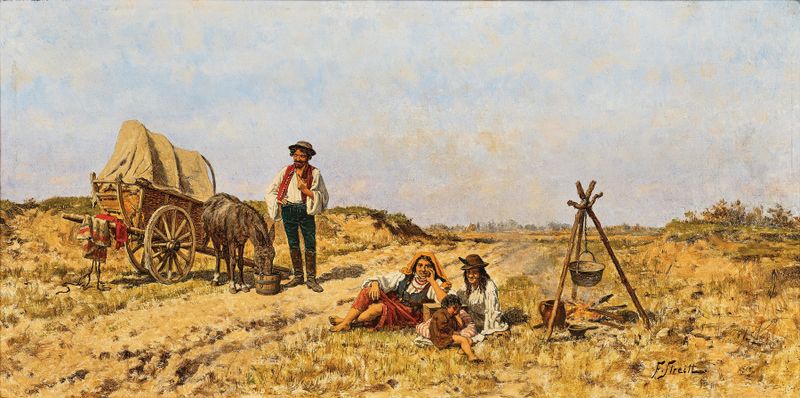
What if silence could speak through light? In the delicate stillness of On the way to the fair, we are invited to ponder the fleeting nature of existence amid the vibrant colors of rural life. Look to the left at the soft, golden hues that envelop the figures trudging towards the fair. The earth beneath their feet is rich and textured, rendered in warm browns that contrast with the vivid greens of the surrounding landscape. Notice how the light falls upon the faces of the travelers, illuminating their weariness and anticipation, creating an intimate connection between viewer and subject.
The gentle brushstrokes evoke a sense of movement, harmonizing with the serenity of the scene while hinting at the unseen stories each figure carries. Within the composition lies a profound meditation on mortality. The fair, symbolizing transient joy and communal celebration, stands in stark contrast to the fatigue etched on the travelers’ faces. Each footstep towards the event whispers of the ephemeral nature of happiness, underscoring the inevitability of time passing.
The interplay of light and shadow invites a contemplation of the moments we cherish, even as they slip away. Painted in 1872, during a time of great social change in Europe, the artist found himself navigating a world marked by both progress and nostalgia. Living in Poland, Streitt was deeply influenced by the evolving landscape of his homeland and the burgeoning art movements that sought to capture the ethos of modernity. This work reflects not only his personal journey but also the universal struggles of humanity, poised between celebration and the inexorable passage of time.