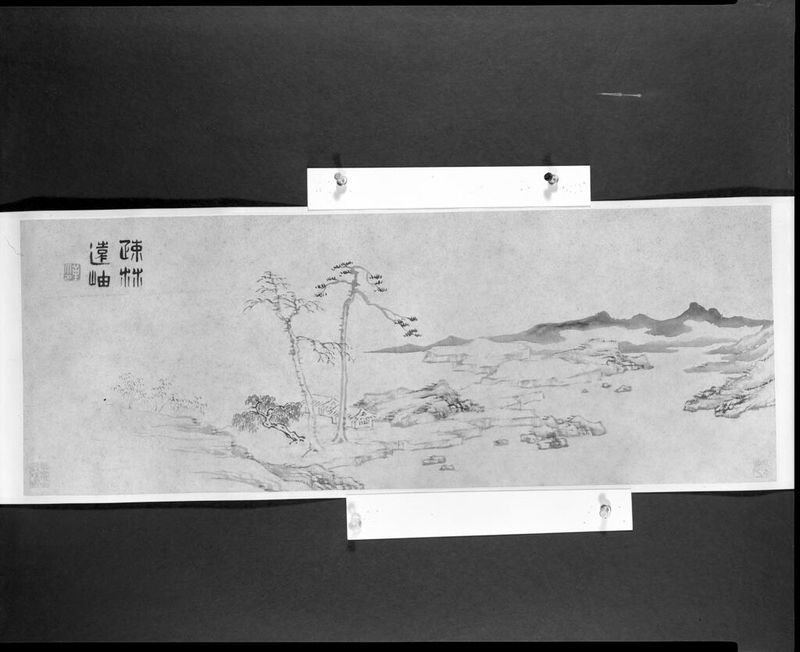
One of Four Landscapes: Reading the I-ching in the Autumn Mountains — History & Facts
Where does light end, and longing begin? The interplay of illumination and shadow in this work draws us into a world where the ethereal meets the tangible, urging us to ponder our own legacies amidst nature’s grandeur. Look to the left at the tranquil figure seated beneath a gnarled tree, their stillness contrasting sharply with the cascading mountains in the background. The subtle hues of autumn leaves—rich yellows, burnt oranges, and deep reds—create a vibrant tapestry, while the delicate brushstrokes evoke a sense of serenity. The composition invites the eye to traverse the undulating forms of the landscape, leading to the softly rendered horizon, where the sky blushes with the spirit of twilight. Within this landscape lies a profound emotional tension—between solitude and connection, contemplation and action.
The act of reading the I-ching suggests an exploration of fate and intuition, reflecting the artist’s inner quest for balance amid the natural world. The juxtaposition of the solitary figure against the expansive mountains serves as a reminder of humanity’s smallness, yet also its profound capacity for reflection and understanding, echoing the timeless dialogue between man and nature. In 1498, Du Jin painted this work during a period of artistic flourishing in China’s Ming Dynasty, as landscapes became a popular subject for scholars and literati. Emerging from a background steeped in poetry and philosophy, he sought to blend these elements into his art, creating pieces that resonated with cultural and spiritual significance.
At this time, traditional values and a reverence for nature were not only celebrated but also deeply embedded in Chinese identity, intricately woven into the fabric of everyday life.