
Oriental Scene — History & Facts
In the stillness of a moment, a revelation waits to be uncovered, beckoning us to look closer and discover its depths. First, direct your gaze to the intricate details in the foreground, where the vibrant hues of the figures’ garments contrast sharply with the muted desert landscape. Notice how the artist employs rich ochres and deep blues, drawing us in and creating a dialogue between the lively characters and their arid surroundings. The subtle interplay of light and shadow adds a layer of intimacy, inviting the viewer to explore the scene's complexities. As your eyes wander, consider the tension created by the figures’ expressions.
There’s a palpable blend of curiosity and contemplation, hinting at stories untold. The delicate gestures of their hands whisper of unspoken connections, while the distant architectural marvels loom large, symbolizing both aspiration and the weight of tradition. Each element speaks to a deeper narrative — one of cultural exchange, the intersection of East and West, and the timeless quest for understanding across differences. In 1838, David Roberts traveled through the Middle East, capturing the essence of its landscapes and peoples at a time when European interest in the Orient was peaking.
This period marked a significant shift in art, as artists began to explore foreign lands with a sense of romanticism and curiosity. Roberts, with his keen eye for detail and vibrant compositions, contributed to a growing fascination that would shape perceptions of the East for generations to come.
More Artworks by David Roberts
Browse all →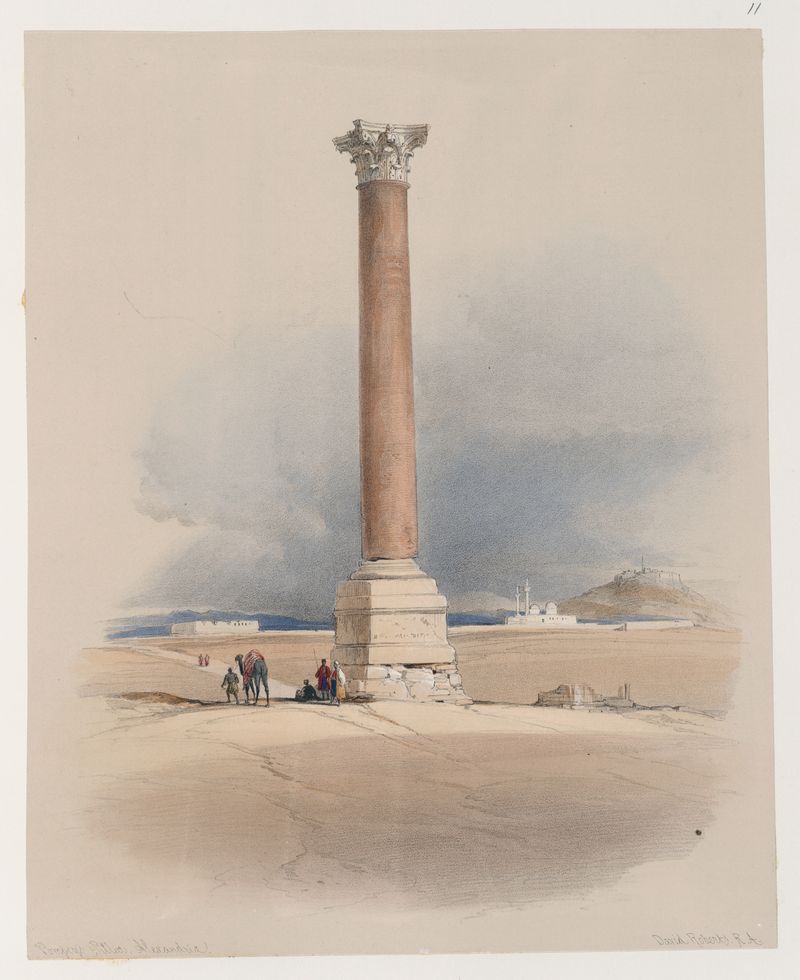
Pompey’s Pillar, Alexandria.
David Roberts

Approach to the Fortress of Ibrim.
David Roberts

Karnac [Karnak]. Nov. 29th, 1838.
David Roberts
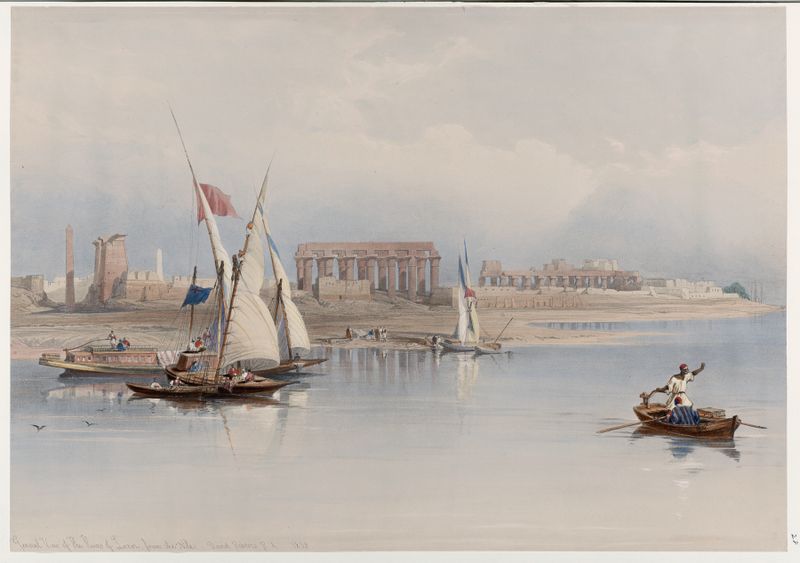
General view of the ruins of Luxor, from the Nile. 1838.
David Roberts

Statues of Memnon at Thebes, during the inundation.
David Roberts

Entrance to the tombs of the kings of Thebes. Bab-el-Malouk [Bîbân al-Mulûk].
David Roberts

The Fortress of the Alhambra, Granada
David Roberts
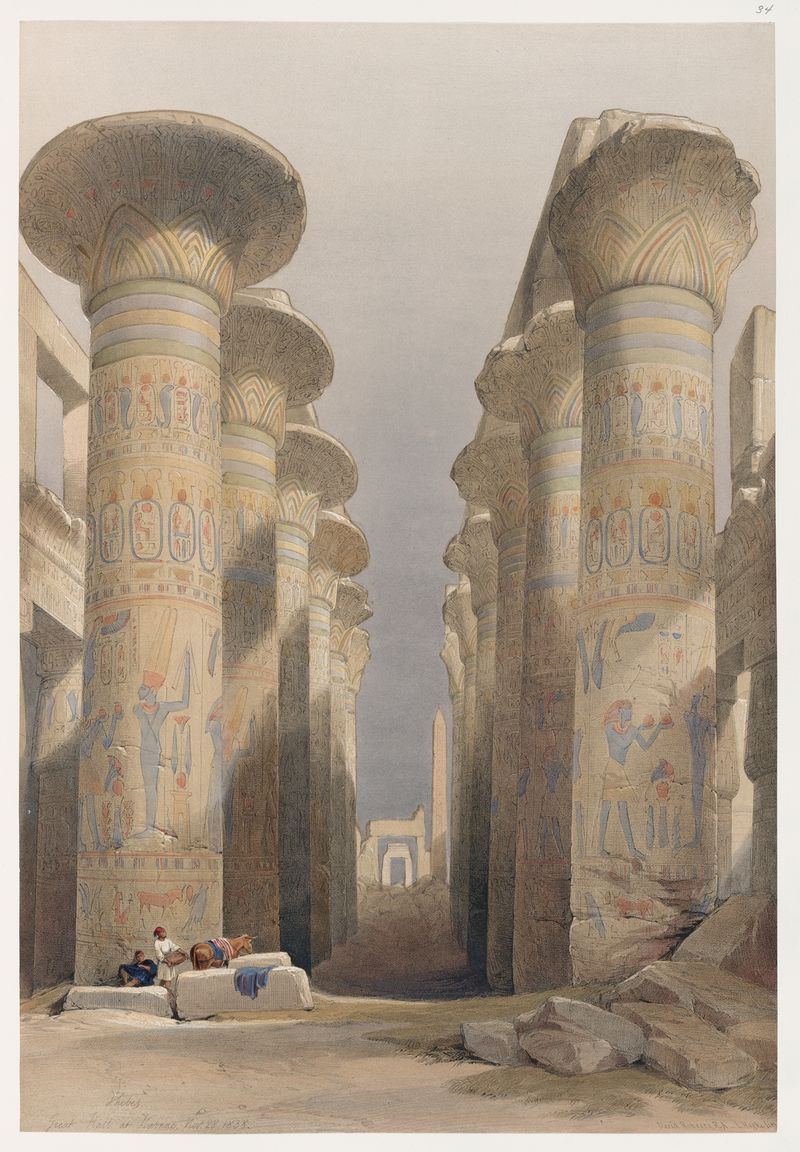
Thebes. Great Hall at Karnak. Nov. 28, 1838.
David Roberts
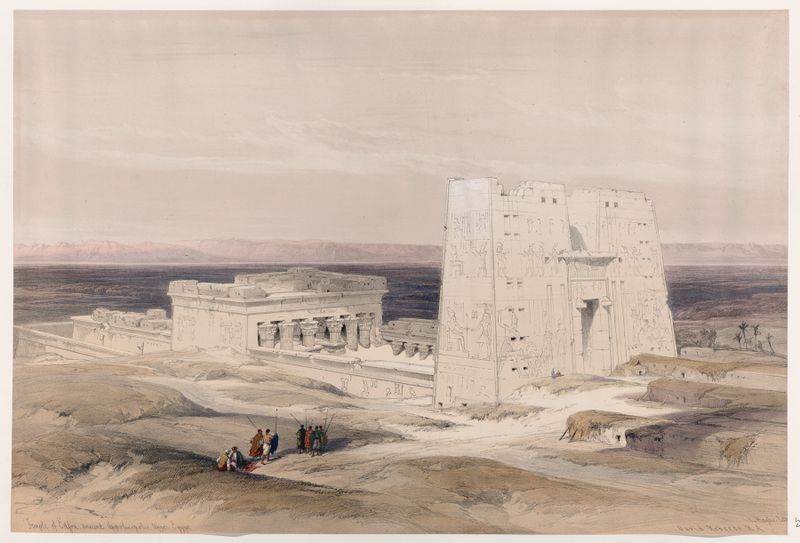
Temple of Edfou [Idfû], ancient Appolinopolis, Upper Egypt.
David Roberts

Temple of Kalabshee [Kalabsha, Kalâbishah], Nubia. Nov. 1838.
David Roberts





