
Oude kerk van Vaassen — History & Facts
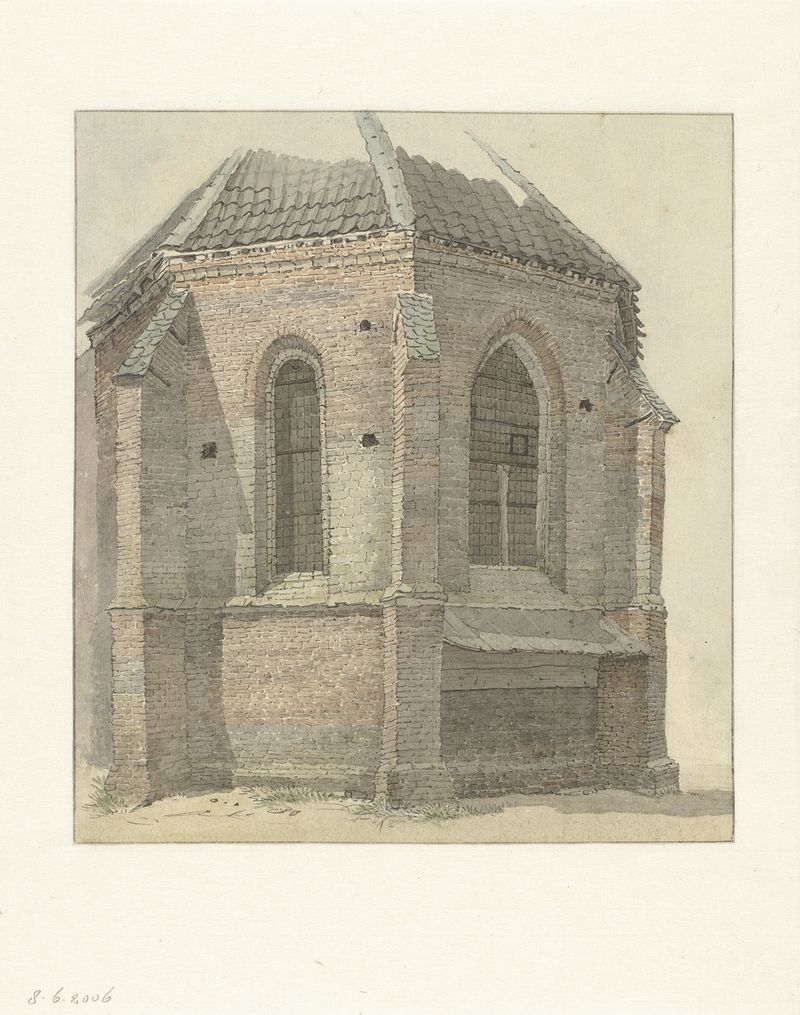
In the gentle embrace of twilight, even the most humble of churches stands as a beacon of hope and resilience, calling us to pause and reflect. Look to the center of the canvas, where the Oude Kerk emerges, its stone façade bathed in warm, golden light. The artist uses a delicate interplay of shadows and illumination, highlighting the textured walls and intricate details of the steeple that pierce the softening sky. Notice how the surrounding trees arch protectively around the structure, their rich greens contrasting with the warm ochres and muted blues, inviting your eyes to wander and settle on this sacred space. The painting whispers of contrasts, revealing a narrative of solitude amidst a backdrop of life.
The blank windows of the church suggest silence, yet the vibrancy of the surrounding nature seems to hum with unspoken stories. There’s a tension between the stone's permanence and the ephemeral light of dusk, evoking a sense of longing — a reminder of the hope that faith can offer, even in the face of looming darkness. Created in 1852, this work emerges from a period of significant transformation in the Netherlands. Gerrit Hulseboom was situated in a time when Romanticism was prevalent, emphasizing emotion and nature.
He painted this piece while grappling with both personal and societal changes, reflecting a yearning for connection to the divine amidst the evolving landscape of the era.
More Artworks by Gerrit Hulseboom
Browse all →
More Architecture Art
Browse all →
The statue of Liberty
Frédéric Auguste Bartholdi

View of Houses in Delft, Known as ‘The Little Street’
Johannes Vermeer

View of Houses in Delft, Known as ‘The Little Street’
Johannes Vermeer

The Cathedral in Rouen. The portal, Grey Weather
Claude Monet

The yellow house
Vincent van Gogh

The Church in Auvers-sur-Oise, View from the Chevet
Vincent van Gogh