Paesaggio sull’Orba con roccia e rampicante — History & Facts
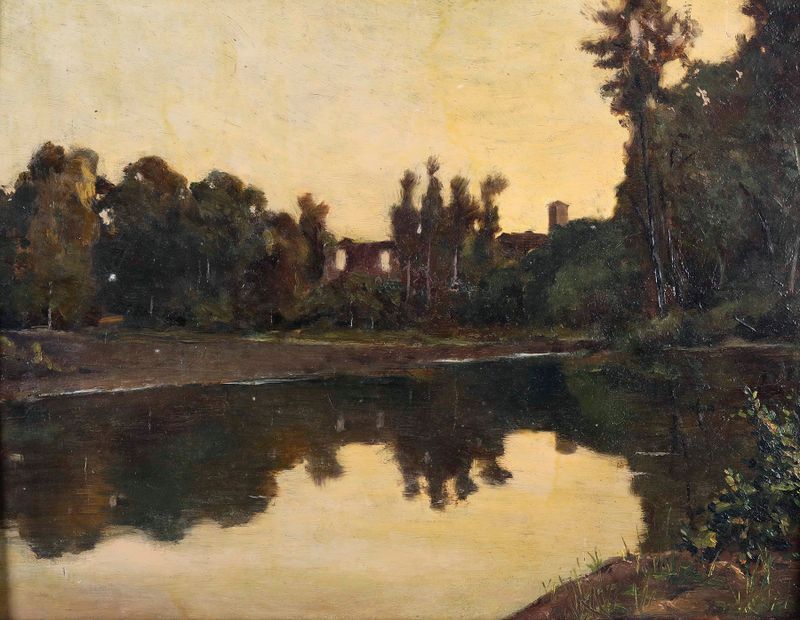
Did the painter know this moment would outlive them? As Cesare Viazzi captured the serene landscape, one can’t help but ponder the weight of time upon the beauty of this scene, intertwined with an undercurrent of fear. Look closely at the foreground; notice how the twisting vine clings to the rugged rock, its vibrant greens contrasting starkly with the earthy browns and grays of the stone. The light cascades gently across the landscape, illuminating the delicate details of both the vegetation and the harshness of the rock, evoking a sense of resilience. Your gaze will naturally draw upward, where the expansive sky meets the horizon, hinting at the limitless possibilities yet to come. Yet, beneath this tranquil exterior lies a tension; the vine’s struggle to thrive against the unyielding rock becomes a metaphor for existence itself.
The juxtaposition between the fragile beauty of nature and the formidable presence of stone suggests a deeper narrative of survival amidst adversity. It evokes a sense of fear — not just of nature’s relentless cycles but of the inevitable passage of time that erodes all things. Between 1903 and 1908, Cesare Viazzi painted this work while living in Italy, a period marked by profound change in the art world, transitioning from Romanticism toward more modern expressions. With a growing emphasis on capturing realism and the emotional weight of landscapes, Viazzi’s work reflects his personal explorations of nature while engaging with the broader artistic trends of his time.