
Palazzo Del Cammello — History & Facts
What if silence could speak through light? The gentle hues and soft shadows in the artwork reveal a profound narrative of loss and longing. Focus on the serene expanse of the foreground, where delicate brushstrokes converge to form the intricate patterns of the building's facade. The muted colors—pale greens and soft browns—give a sense of stillness, inviting you to linger. Notice how the light dances across the surface, illuminating certain areas while leaving others in shadow, evoking the complexity of memory.
As you explore the composition, the quiet beauty of the Palazzo becomes palpable, yet hints at a deeper story lurking beneath its tranquil exterior. Beneath this elegance lies a tension between presence and absence. The empty windows, devoid of life, suggest stories left untold, while the encroaching foliage symbolizes nature reclaiming what once was vibrant. This juxtaposition of architecture and decay speaks to the inevitability of time and the haunting echoes of what we have lost.
Each subtle detail—the way the light caresses the walls and the shadows stretch long—pulls us into a contemplative space, reminding us that silence can resonate just as powerfully as sound. Robert Russ painted this piece in 1882 while residing in Venice, a city steeped in history and beauty, yet also tinged with decay. During this period, Russ was exploring the interplay of light and architecture, responding to the changing cultural landscape of art that embraced both realism and impressionism. This work reflects his deep engagement with the evocative power of light, capturing a moment that speaks volumes about the passage of time and the remnants of the past.
More Artworks by Robert Russ
Browse all →
Helgoland
Robert Russ
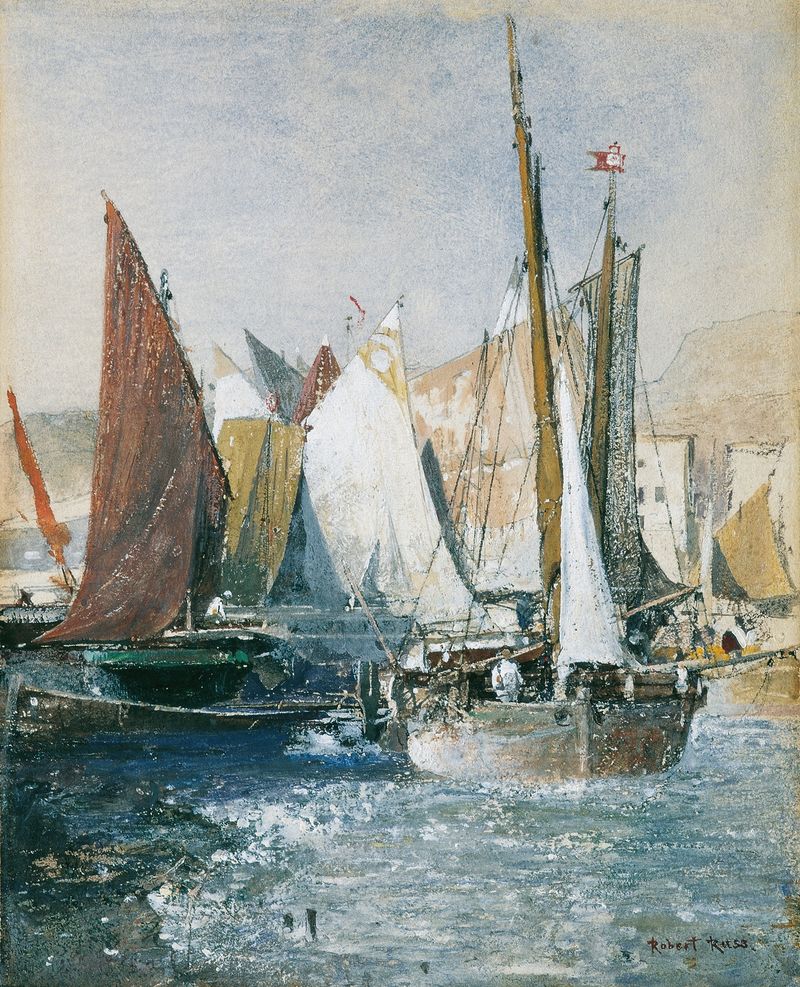
Segelboote
Robert Russ
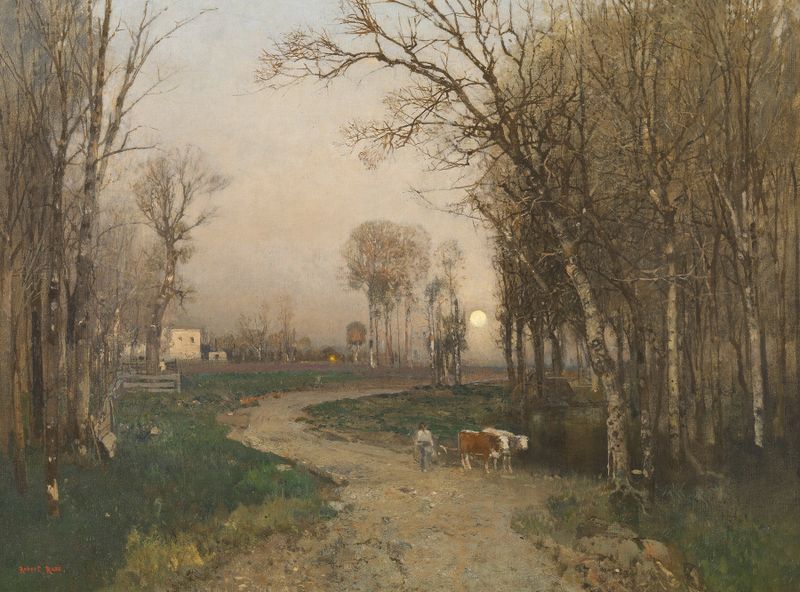
Penzinger Au
Robert Russ

Aus Dürnstein
Robert Russ

Lake Garda, Arco
Robert Russ

Partie aus dem Val Lagarina
Robert Russ

The Harbour of Riva on Lake Garda
Robert Russ

Punta San Vigilio, Lago di Garda
Robert Russ
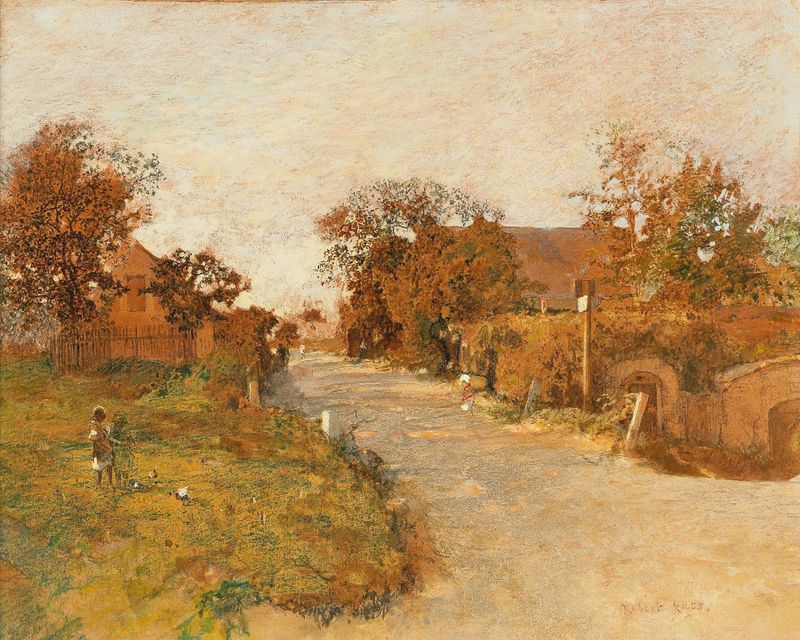
Tierstudie – Motiv aus Feldsberg
Robert Russ

Hof der Fürstenburg in Burgeis
Robert Russ
More Architecture Art
Browse all →
The statue of Liberty
Frédéric Auguste Bartholdi

View of Houses in Delft, Known as ‘The Little Street’
Johannes Vermeer

View of Houses in Delft, Known as ‘The Little Street’
Johannes Vermeer

The Cathedral in Rouen. The portal, Grey Weather
Claude Monet

The yellow house
Vincent van Gogh

The Church in Auvers-sur-Oise, View from the Chevet
Vincent van Gogh