Panorama von Rom — History & Facts
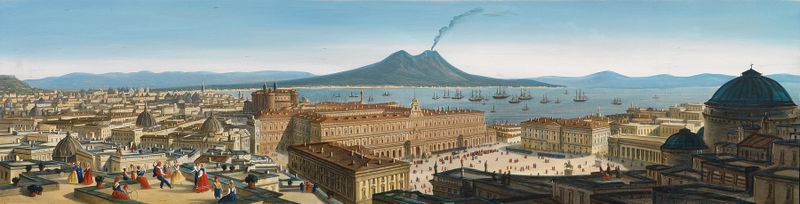
In the delicate interplay of hues, there lies an invitation to discover the nuances of hope interwoven within the fabric of existence. Look to the soft wash of blues and the vibrant touches of ochre that sweep across the canvas, capturing the essence of a city both timeless and transient. The foreground blooms with life, inviting the eye to dance through the bustling streets, while the distant horizon gently melts into a whisper of clouds. Notice how the light caresses the architecture, highlighting the resilience of structures that have witnessed centuries of history and human emotion. The painting’s contrasts reveal deeper truths: the vibrancy of urban life juxtaposed against the stillness of the distant mountains evokes a sense of aspiration and longing.
The interplay of warmth and coolness in the colors hints at the dual nature of hope—its ability to uplift and its fragility. Each brushstroke resonates with the pulse of life, suggesting that amidst the grandeur of the panorama, there is quiet anticipation for what lies ahead, encapsulating both the triumphs and struggles of the human spirit. Leopoldo Calvi painted this remarkable work during a time when artists were exploring new perspectives on landscape and urban life in Italy. Though the exact date remains unclear, it is evident that his surroundings in Rome, a city steeped in rich history, deeply influenced his vision.
This period marked a shift in artistic expression, as many sought to capture the ephemeral beauty of the world through innovative techniques and a fresh lens, resonating with the hopes of a society in flux.