Panoramic view of Avignon — History & Facts
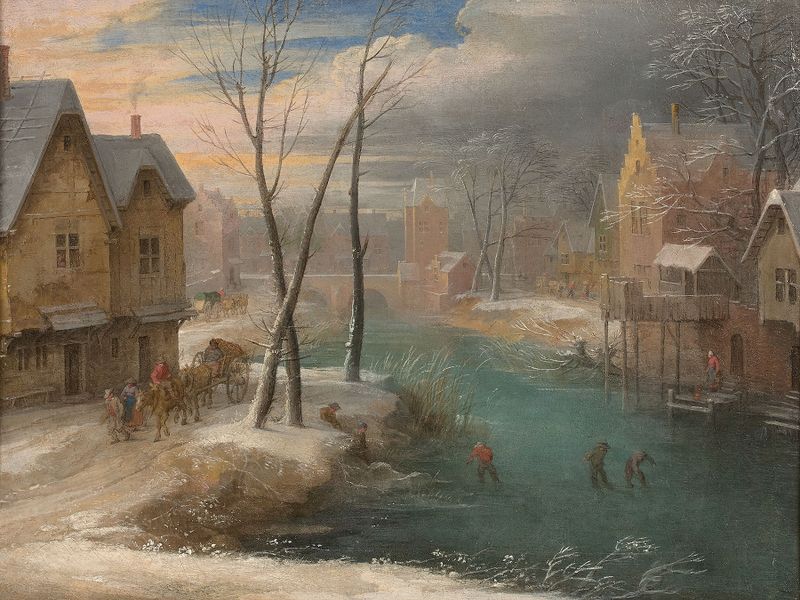
Did the painter know this moment would outlive them? In the quiet stillness of a sweeping landscape, emptiness resonates not as a void, but as a profound space for the imagination to wander. Look to the horizon, where the delicate silhouettes of Avignon’s architecture merge with the sky. The brushstrokes create a soft gradient, transitioning from muted blues to warm golds, suggesting the embrace of twilight. Notice how the contours of the buildings are rendered with a gentle precision, each structure a testament to both the passage of time and the permanence of place.
The subtle interplay of light and shadow invites the viewer to explore the depth of the scene, while the expansive sky suggests boundless possibilities beyond the fixed landscape. This panorama embodies a tension between presence and absence. The artist captures not just the physicality of Avignon but also the ethereal quality of a moment suspended in time. The emptiness surrounding the cityscape evokes a sense of solitude, encouraging reflection on the relationship between humanity and the vastness of nature.
The viewer is compelled to ponder what lies beyond the frame and the continuity of life that exists even in stillness. During an uncertain period in the art world, Panoramic view of Avignon emerged, although the exact date of its creation remains unknown. Jacques Fouquier navigated an era where traditional forms were being challenged, yet he found solace in the classic beauty of his surroundings. The painting not only serves as a visual record of Avignon but also as a meditation on the fleeting nature of existence, making it enduringly relevant.