Park in autumn — History & Facts
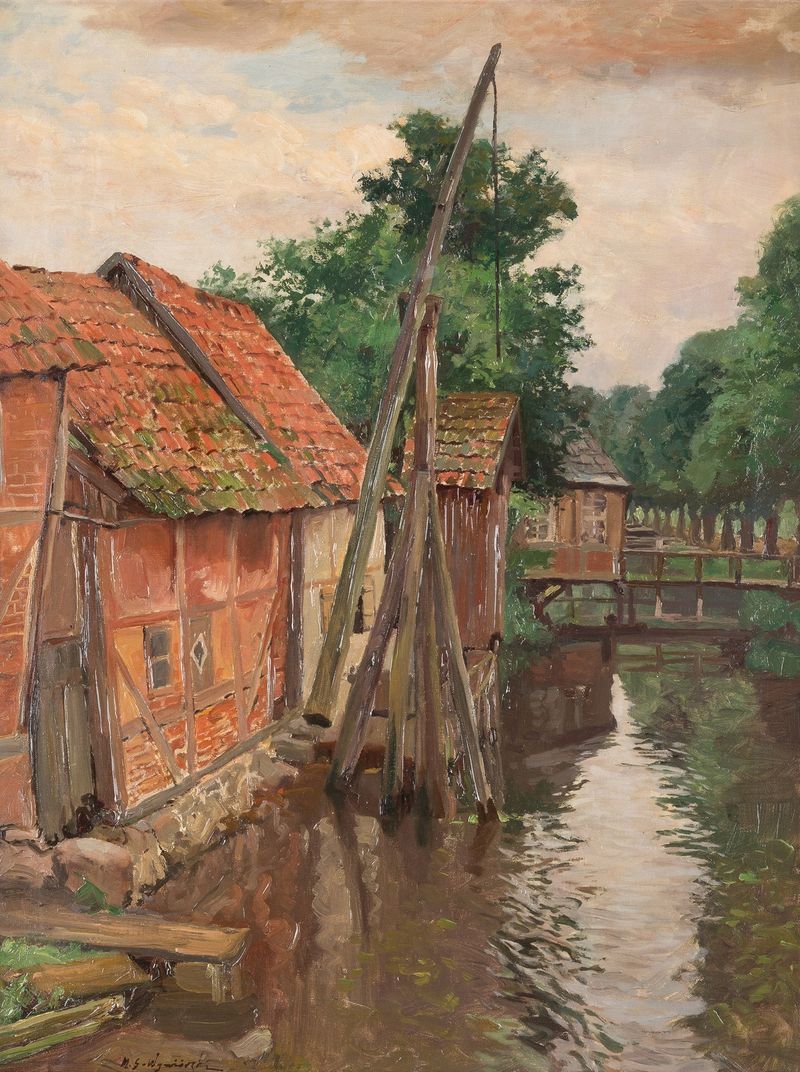
Is this a mirror — or a memory? In Park in autumn, vibrant hues and gentle brushstrokes conjure the fleeting nature of change, inviting us to dwell on the ephemeral. Look to the left at the rich tapestry of warm oranges, yellows, and browns that fill the canvas. The trees stand tall, their leaves in various states of descent, some still clinging, while others lie scattered on the ground, creating a carpet of color. The interplay of light filters through the branches, illuminating the path that winds through the park — a visual invitation to wander and reflect. Amidst the serene beauty, there's a subtle tension between the vibrancy of life and the inevitability of decay.
The movement of the leaves suggests a transient moment, capturing both the joy of autumn's splendor and the nostalgia that accompanies change. Each detail, from the rustling foliage to the quiet path, reflects an internal dialogue about the passage of time, reminding us that every ending harbors a new beginning. Created in 1900, during a period of burgeoning artistic expression in Poland, the work emerged as Gorstkin-Wywiórski explored the relationship between nature and emotion. As an artist influenced by the Romantic movement, he sought to capture the essence of fleeting moments in a rapidly modernizing world.
This painting encapsulates his vision, intertwining personal reflection with broader themes of life, loss, and renewal.