
Pastoral Landscape with a Ruin — History & Facts
What secret hides in the quiet of the canvas? A serene awakening unfolds in Pastoral Landscape with a Ruin, where nature and history gently intertwine, inviting reflection on the passage of time. Focus first on the harmonious blend of greens and soft browns that compose the lush landscape. To the left, notice the weathered ruins peeking through a veil of vibrant foliage, their crumbling stones telling stories of a forgotten past. The light filters through the trees, creating dappled shadows that dance across the ground, guiding your gaze toward the distant horizon where a tranquil sky merges with the earth.
The artist’s technique masterfully balances realism with an idealized vision of nature, creating a scene that feels both familiar and dreamlike. Within this tranquil setting lies a deeper tension: the juxtaposition of decay and renewal. The ruins symbolize the remnants of human ambition, while the encroaching greenery represents nature's relentless resilience. The calmness of the water reflects this dichotomy, suggesting harmony yet also hinting at the inevitable cycle of life and death.
Each brushstroke captures a moment suspended in time, evoking contemplation about what has been lost and what continues to thrive. Jacob Cats painted this piece in 1799, a time when artistic movements were shifting towards romanticism and a celebration of nature. Residing in the Netherlands, he produced this work during a period marked by political upheaval and social change. This backdrop influenced his exploration of themes that resonate with the human experience—connecting the viewer not just to the landscape, but to a collective memory shared across generations.
More Artworks by Jacob Cats
Browse all →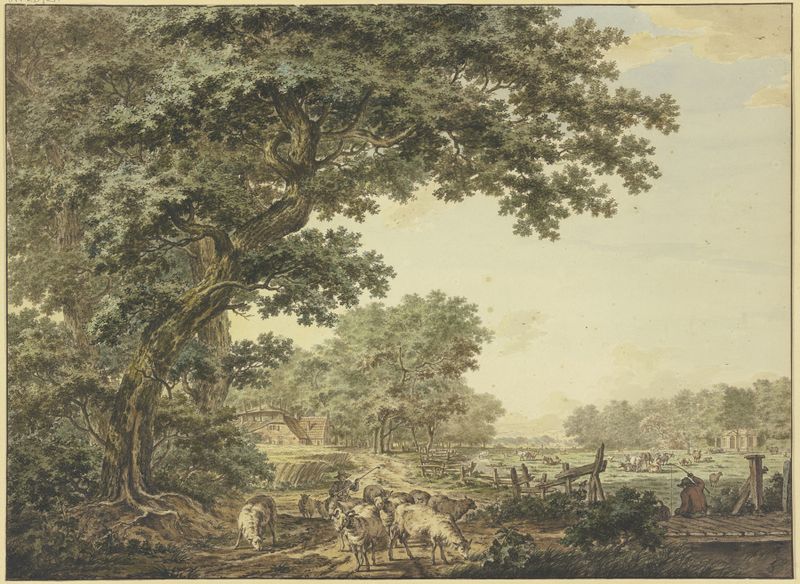
Wiesengrund zwischen dem Wald mit vielem Vieh, vorne ein Schäfer mit seiner Herde, auf einer Brücke rechts ein Angler
Jacob Cats
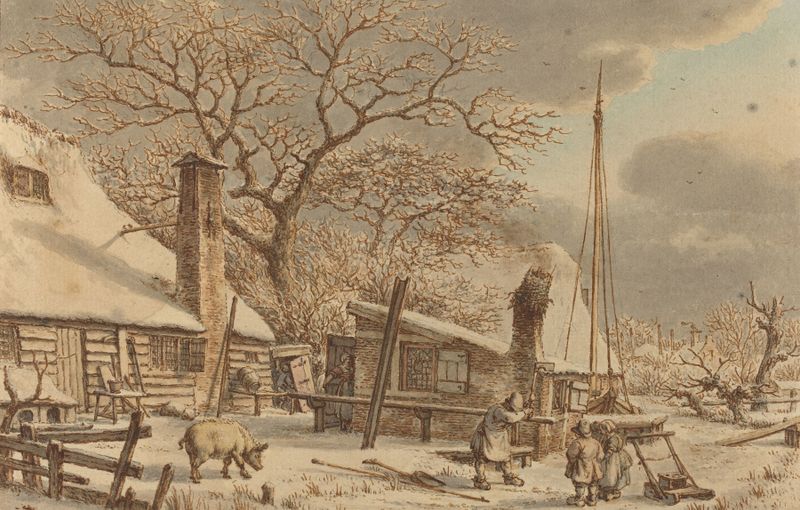
Farmyard in Winter
Jacob Cats
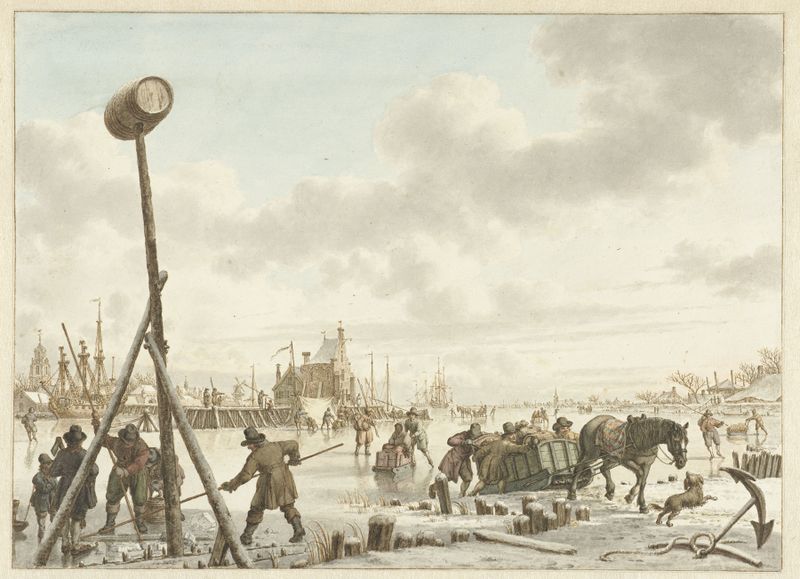
Bedrijvigheid op het ijs bij de stadswal van Veere
Jacob Cats
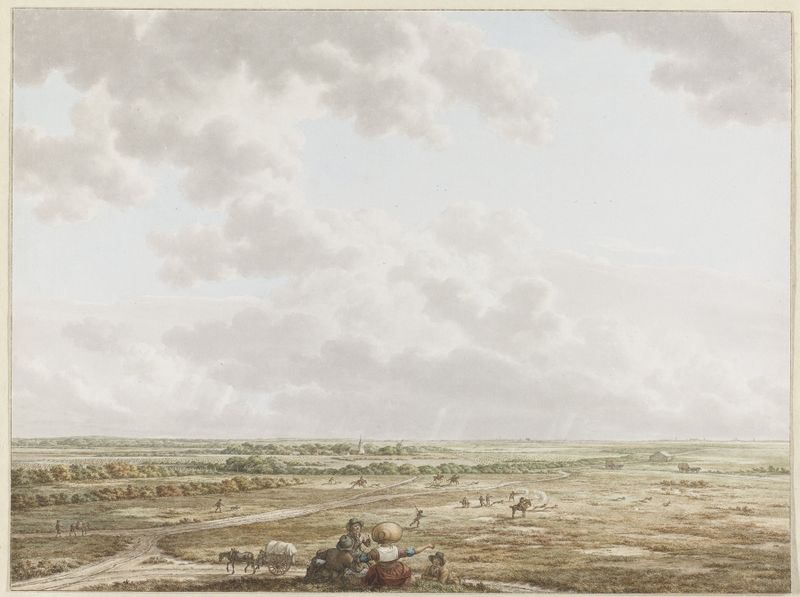
Gezicht van de Tafelberg bij Blaricum, met op de voorgrond Laren
Jacob Cats

Gezicht van de Tafelberg bij Blaricum, met links Craayloos’ Bosch en rechts de ‘tafel’
Jacob Cats
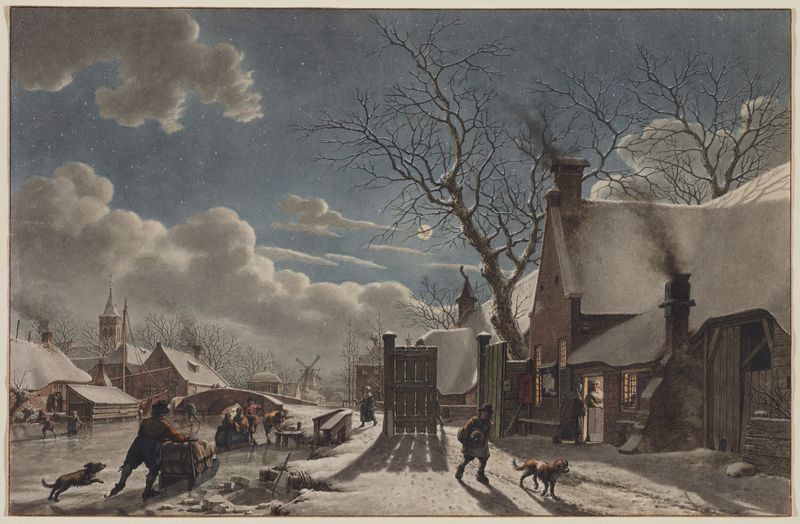
Winter Night in a Dutch Town
Jacob Cats

View of Heemstede
Jacob Cats
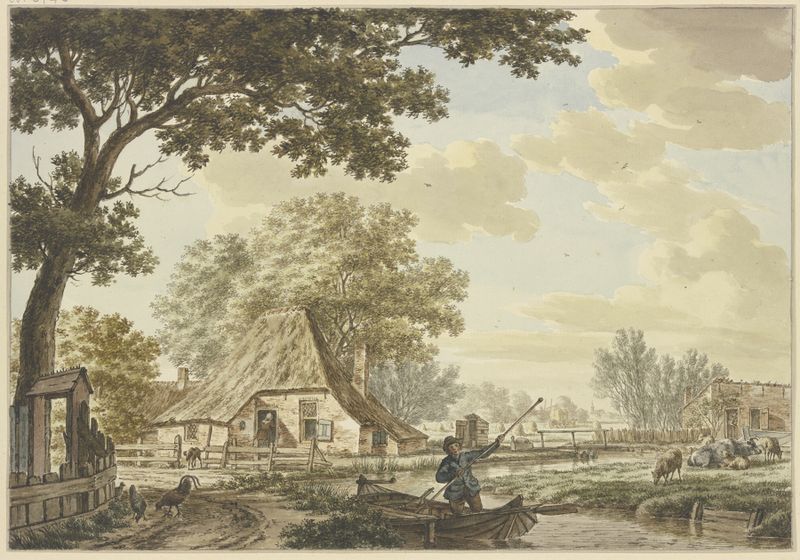
Enger Kanal bei einem Dorf, darauf ein Mann in einem Kahn, rechts Vieh, links Hühner
Jacob Cats
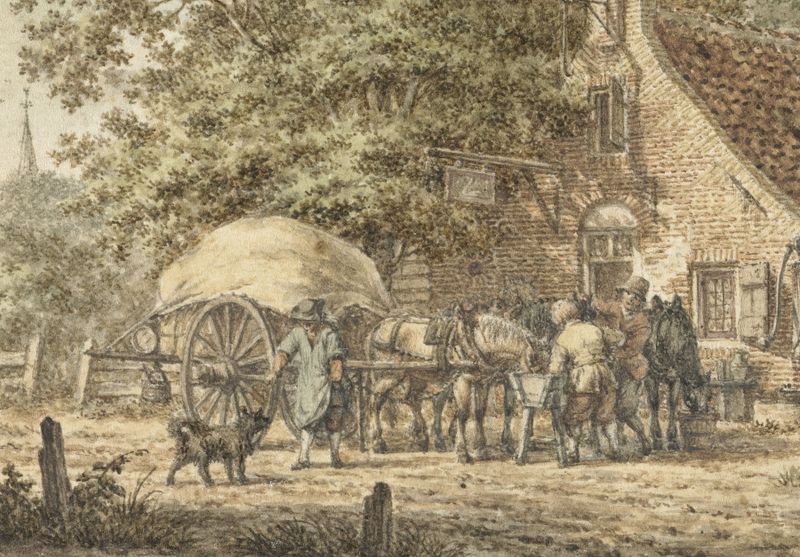
Halte voor een herberg in zomertijd
Jacob Cats
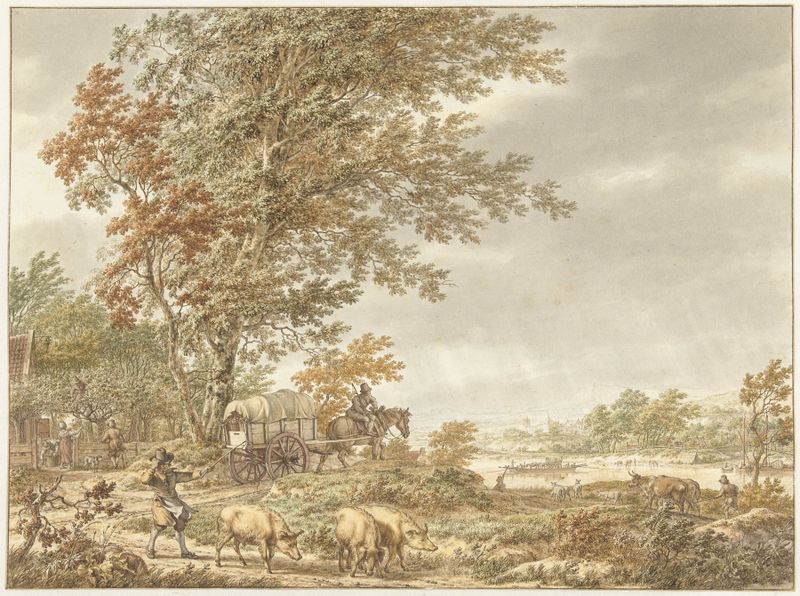
Heuvellandschap met varkenshoeder en andere stoffage, een rivier in de verte
Jacob Cats





