
Pavillon Petit Colombe — History & Facts
Where does light end, and longing begin? This question lingers in the air as we gaze upon a tranquil space, where memory and the essence of home intertwine. Look to the left at the delicate, sun-drenched pavilion nestled amongst lush greenery. The soft pastel hues of the building blend seamlessly with the vibrant foliage, creating an inviting atmosphere. Notice how the light filters through the leaves, casting dappled shadows on the stone pathway that beckons us to explore.
The gentle play of color, with hints of lavender and soft yellow, evokes a sense of nostalgia, as if we are peering into a beloved memory. In the stillness of this moment, contrasts emerge—a juxtaposition of the fleeting joy that sunlight brings against the backdrop of shadowy corners that suggest untold stories. Each brushstroke captures the impermanence of leisure; the pavilion stands as a monument to both serenity and yearning. The meticulous details, from the textured walls to the wispy clouds above, deepen the emotional resonance and invite contemplation of what has come before. Walter Gay created this piece during a period when he sought to capture the subtleties of domestic life and leisure in the late 19th to early 20th century.
His focus on interior and exterior spaces reflected the growing interest in the intimate aspects of daily existence among artists of his time. This artwork embodies both personal memory and broader artistic trends, revealing how the past can resonate through the gentle embrace of light and space.
More Artworks by Walter Gay
Browse all →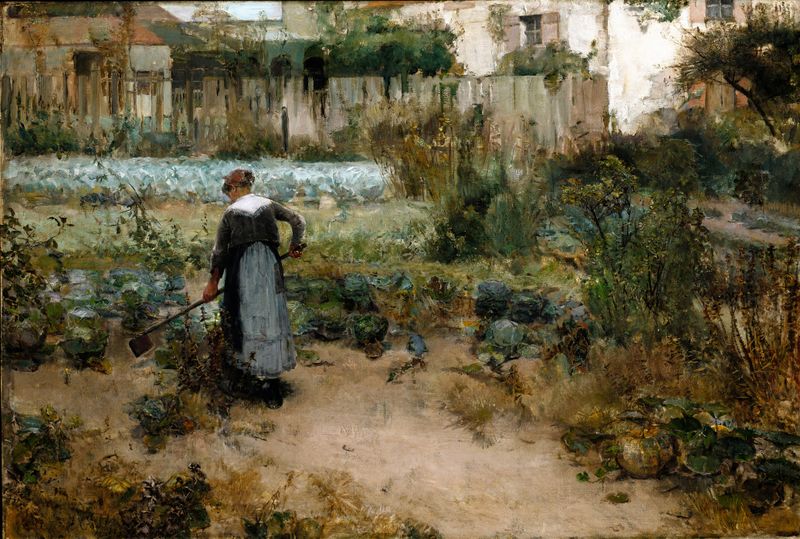
More Architecture Art
Browse all →
The statue of Liberty
Frédéric Auguste Bartholdi

View of Houses in Delft, Known as ‘The Little Street’
Johannes Vermeer

View of Houses in Delft, Known as ‘The Little Street’
Johannes Vermeer

The Cathedral in Rouen. The portal, Grey Weather
Claude Monet

The yellow house
Vincent van Gogh

The Church in Auvers-sur-Oise, View from the Chevet
Vincent van Gogh