Paysage aux bergers — History & Facts
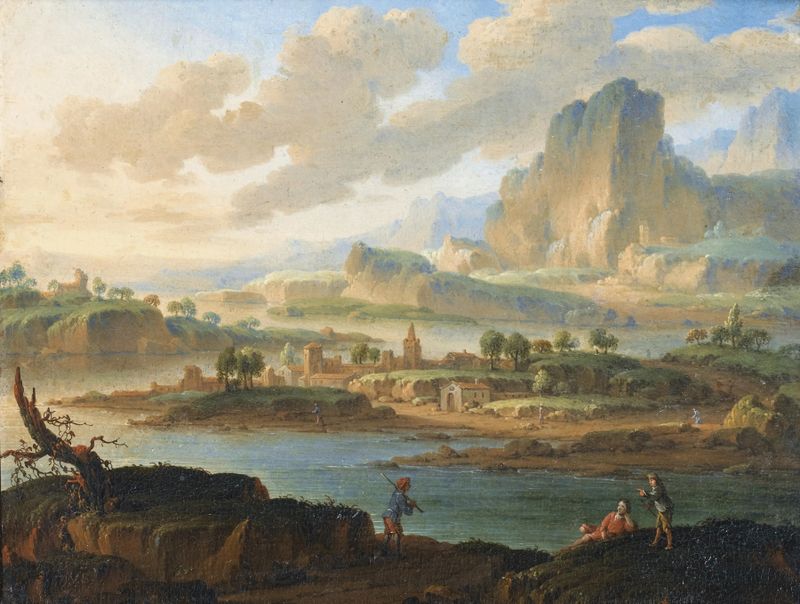
What if beauty was never meant to be finished? This tantalizing thought lingers in the air, echoing through the serene expanse of Paysage aux bergers. The painting invites viewers to contemplate not just the scene but the legacy of nature and human connection it represents. Look to the left at the gentle slopes of the hills, where soft greens and warm earth tones blend seamlessly. The shepherds, rendered with delicate brushstrokes, stand as guardians of this pastoral scene, their figures framed by towering trees that reach toward a brightening sky.
Notice how the sunlight spills across the landscape, illuminating patches of wildflowers, which seem to dance in the breeze, their vibrant hues contrasting with the calm blue above. This interplay of light and shadow hints at an ever-changing world, inviting one to consider the passage of time. Delve deeper into the emotions at play; the shepherds’ gazes are distant, suggesting a longing for something just beyond their grasp. The contrast between the idyllic beauty of the landscape and the transient nature of human life speaks to a universal truth: we are but temporary stewards in this vast tapestry of existence.
The soft brushwork juxtaposes the solidity of the trees, evoking questions about permanence and legacy—what will remain when we are gone? Jan Van Bunnik painted Paysage aux bergers during a time of burgeoning interest in natural landscapes, likely in the late 17th century, as the Dutch Republic experienced economic growth and a flourishing of the arts. Influenced by the Baroque movement, the artist sought to capture not only the beauty of the natural world but also the fleeting moments that define our lives. This work reflects the artist's deep appreciation for nature and its enduring impact on humanity’s collective memory.