
Paysage de Hollande au moulin — History & Facts
Is this a mirror — or a memory? The canvas invites you to wander through its gentle landscape, where time appears to stand still and nature breathes quietly in its eternal cycle. Look to the right at the windmill, its weathered blades stretching out against a soft, cerulean sky. The artist employs a delicate palette of greens and earthy tones, contrasting the vibrant life of the fields with the stillness of the water reflecting above. Notice how the light dances upon the surface, subtly guiding your gaze and creating a sense of tranquility that envelops the viewer.
Each brushstroke seems to echo the whispers of the landscape, inviting contemplation. Beyond its serene beauty, the artwork pulsates with hidden narratives. The sense of movement in the clouds versus the stillness of the water creates a tension between fleeting time and enduring nature. The solitary figure near the water’s edge may symbolize a moment of reflection—a quiet interaction with the past, encapsulated in the stillness of the scene.
This juxtaposition of human presence against the vastness of the landscape speaks to our own impermanence within the broader tapestry of time. The artist created this piece during a time when Impressionism was evolving, likely influenced by the burgeoning appreciation for landscapes that capture transient moments. In the late 19th century, Moreau-Nélaton roamed the fields of Holland, seeking to immortalize the quiet beauty of rural life. His exploration of light and atmosphere spoke to a growing movement in art, where the natural world became a canvas for deeper emotional expression and a reflection of the fleeting nature of existence.
More Artworks by Etienne Moreau-Nélaton
Browse all →
Vue de Paris prise depuis la cathédrale Notre-Dame
Etienne Moreau-Nélaton
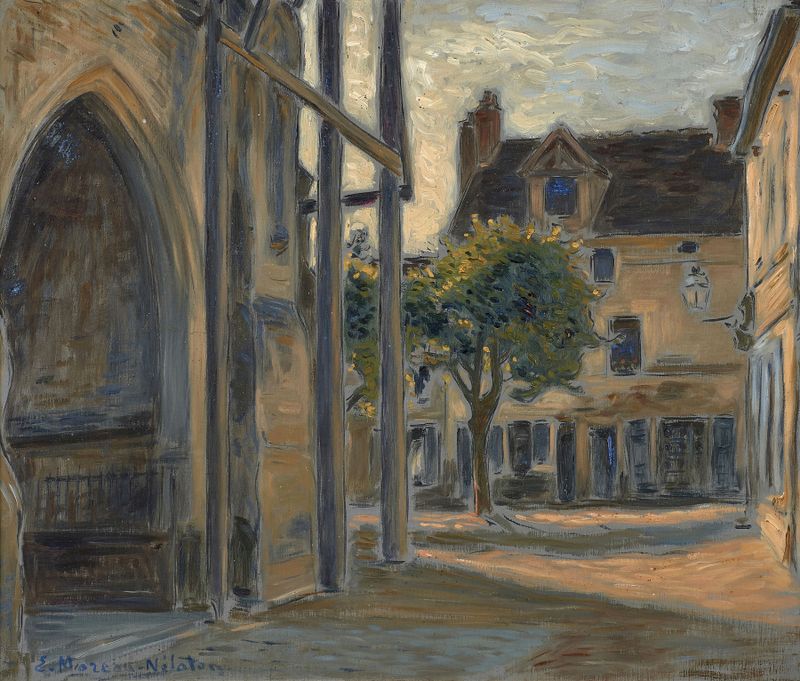
Le porche de l’église Saint-Macre à Fère-en-Tardenois, Aisne
Etienne Moreau-Nélaton
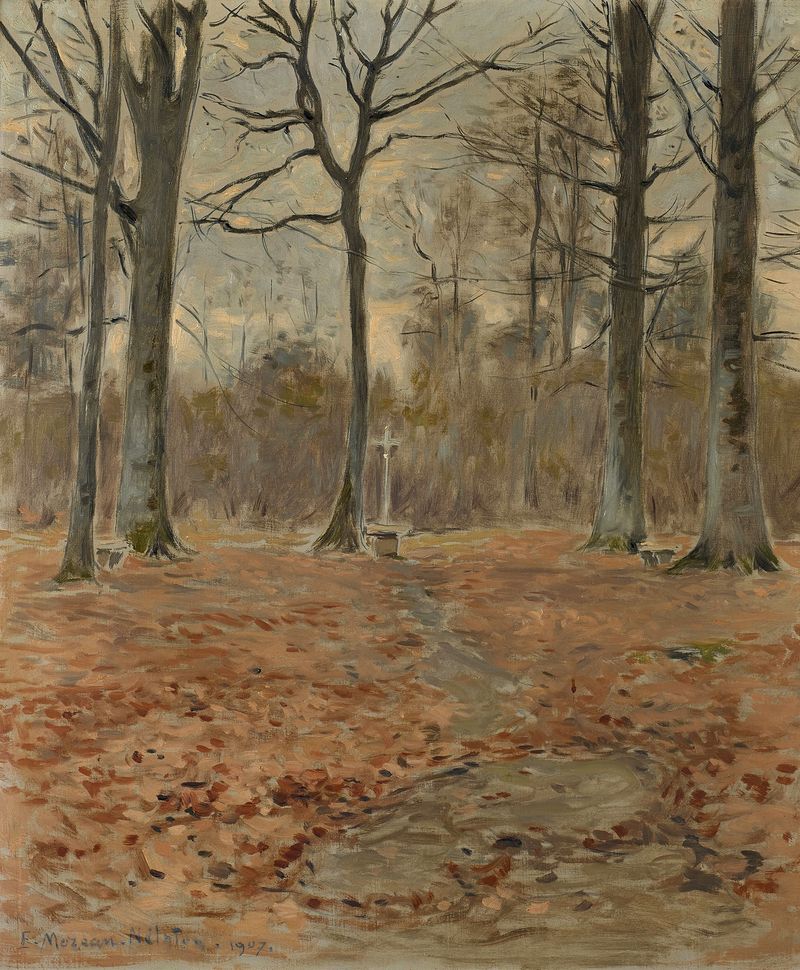
Croix dans un sous-bois
Etienne Moreau-Nélaton
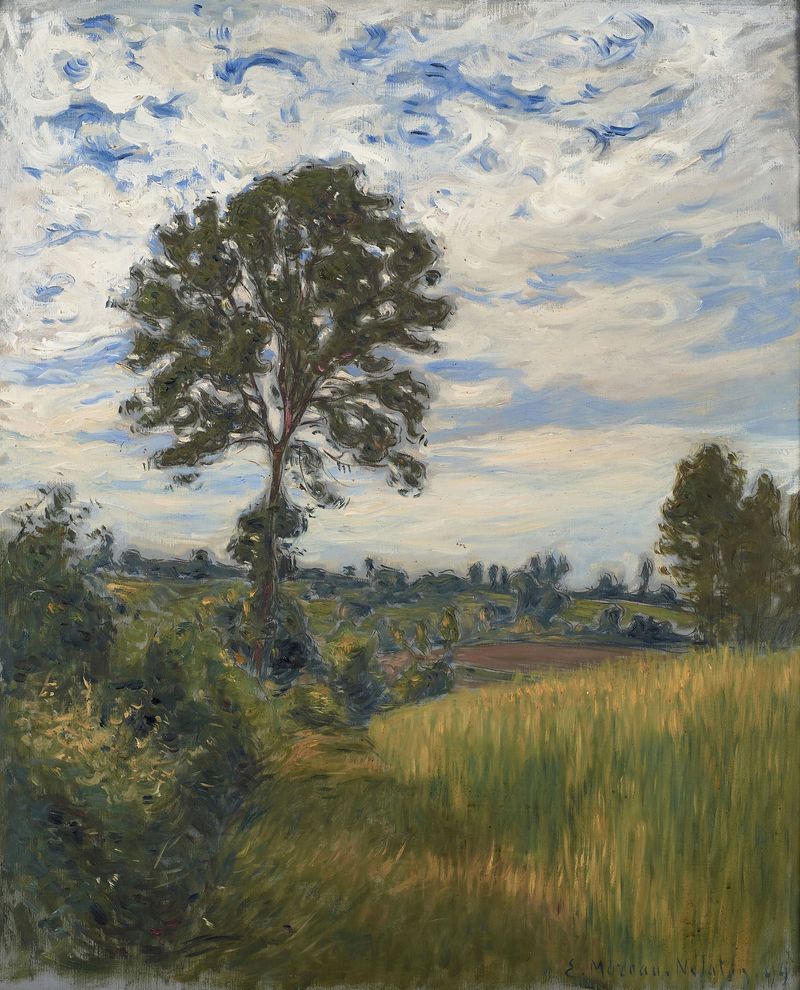
Paysage au grand arbre
Etienne Moreau-Nélaton
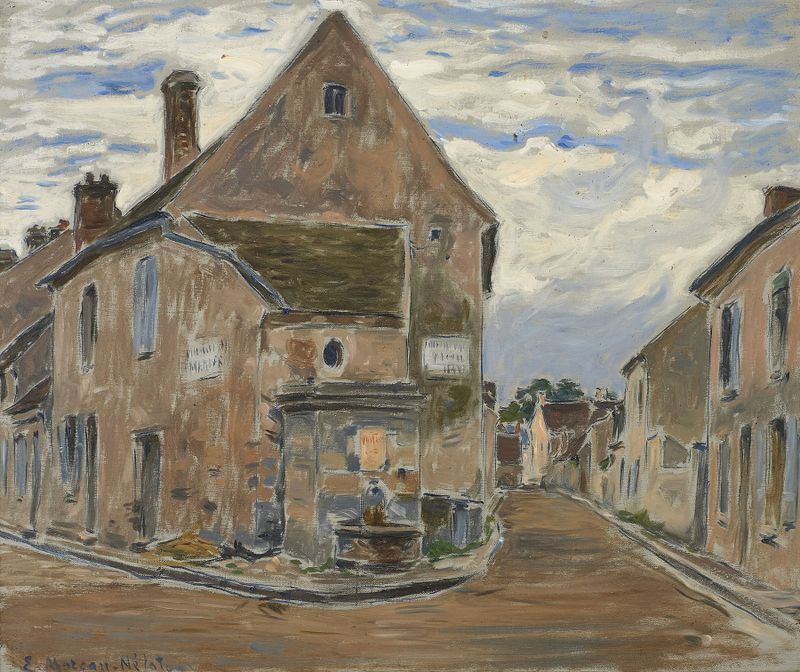
La fontaine de la rue des Ribauds à Fère-en-Tardenois, Aisne
Etienne Moreau-Nélaton

Canal en Hollande
Etienne Moreau-Nélaton





