Paysage, effet de matinée — History & Facts
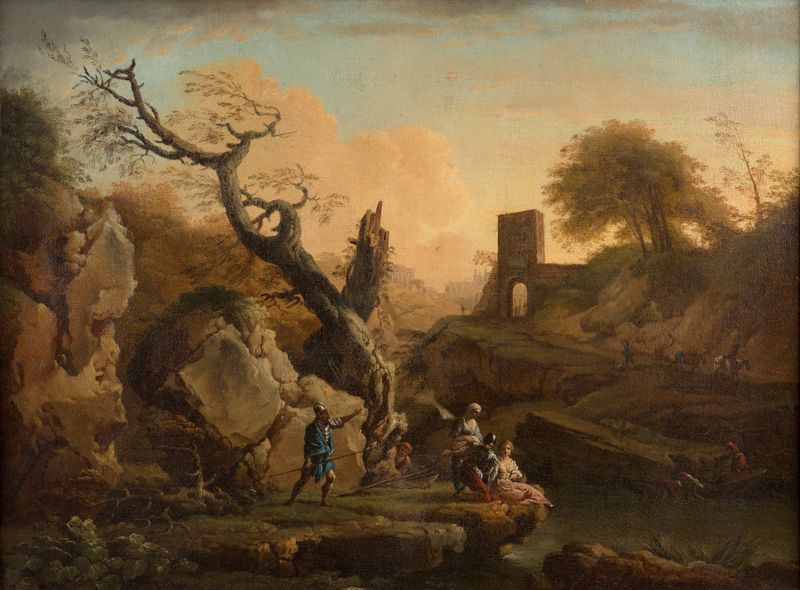
Can beauty exist without sorrow? In Paysage, effet de matinée, the dawn unfurls not just light but the whispers of the past. It invites viewers to contemplate the delicate balance of joy and melancholy embedded within nature's elegance. Look to the horizon where soft, golden rays break through an expanse of delicate clouds, illuminating the serene landscape. Notice how the rolling hills recede into gentle blues and greens, a dreamlike vista that evokes calm.
The painter's deft brushwork captures both the stillness of the morning and the subtle movement of the water, reflecting the sky's palette with shimmering strokes. Each element is meticulously placed, creating harmony within the composition, drawing the eye toward the tranquil river that beckons with a promise of new beginnings. Yet, beneath this serene surface lies a deeper tension. The juxtaposition of light and shadow hints at the transient nature of morning, suggesting that even the most beautiful moments can slip away.
The sparse, solitary trees stand as silent witnesses, their bare branches reaching out like fingers grasping for the dawn, embodying an unspoken yearning. This landscape, while breathtaking, is tinged with a quiet melancholy that resonates deeply in the viewer's heart. During the time this piece was created, Vernet was immersed in the evolving world of 18th-century France, a period marked by both artistic innovation and societal change. His work reflects the Romantic spirit emerging in European art, where nature was increasingly valued for its emotional power.
Although the exact date of this painting remains unknown, it stands as a testament to Vernet's mastery of capturing the fleeting moments of light, holding space for both beauty and the inevitable passage of time.