Paysage historique — History & Facts
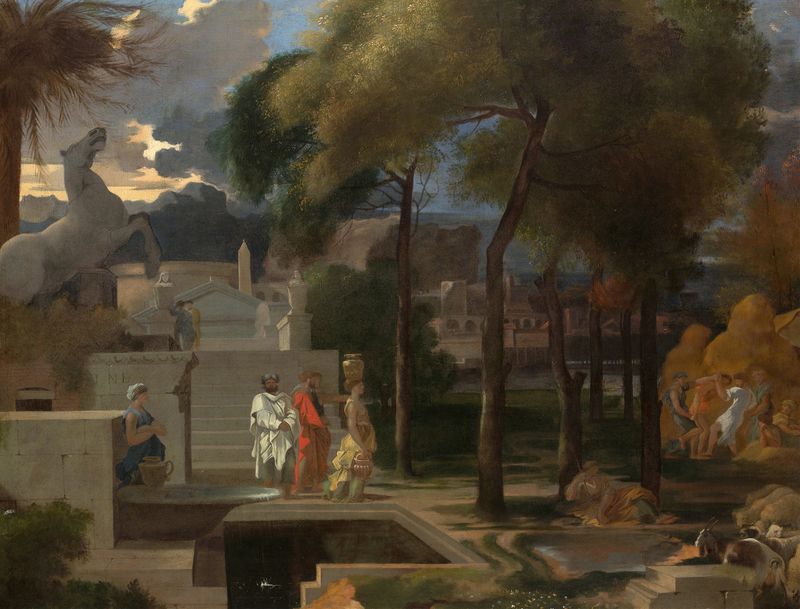
In Paysage historique, the vast expanse of a lonely landscape speaks volumes, wrapping the viewer in an atmosphere dense with unspoken narratives and solitude. It invites us to consider the silent stories unfolding in the shadows cast by the trees and the whispers of wind across the hilltops. Look to the center of the painting where the horizon stretches wide, a delicate blend of greens and browns creating a tapestry of nature's majesty. The sky, painted in gentle blues with hints of golden light, softly contrasts with the dark silhouettes of the trees flanking the scene.
The composition's balance draws the eye towards the distant, mysterious structures, hinting at human presence yet offering no clear indication of life, thereby amplifying the emotional weight of the landscape. As you explore further, notice the interplay between light and shadow, suggesting the passage of time and evoking a sense of nostalgia. The solitary structures may symbolize both refuge and isolation; the viewer is left to ponder whether they hold inhabitants or stand as relics of a past long forgotten. This contrast between the lush beauty of the scenery and the apparent absence of life cultivates a profound sense of loneliness, inviting introspection. During the years 1640-1650, Bourdon was immersed in the cultural hub of Paris, influenced by the burgeoning Baroque movement.
This period was marked by a transition in his style, as he developed a unique approach to landscape painting. As artists sought to capture the sublime, Bourdon's work emerged amidst a backdrop of heightened emotional expression, reflecting both the turmoil of the time and his personal exploration of solitude through nature.