
Paysage près de Zurich — History & Facts
What secret hides in the quiet of the canvas? In Paysage près de Zurich, tranquility envelops the viewer, inviting them to explore the layers of the landscape’s truth. Look to the left at the gently rolling hills, their lush greens meticulously rendered with a soft touch. Notice how the light dances through the branches of the trees, casting delicate shadows on the ground, which creates an inviting yet contemplative space. The sky above, a delicate palette of blues and whites, contrasts beautifully with the deep earth tones below, guiding the eye through serene pathways of nature. Biedermann captures more than just a picturesque scene; he reveals an emotional tension between calmness and the latent energy of nature.
The stillness of the water reflects the scene’s beauty yet suggests an underlying depth, hinting at stories untold. The carefully placed clouds seem to whisper secrets to the earth, while the untouched fields evoke a sense of longing for connection with the world around us. During the time this piece was created, Johann Jakob Biedermann was navigating the evolving landscape of Swiss art in the late 19th century. As a member of the Swiss Romantic movement, he sought to encapsulate the beauty of his homeland amidst a period of rapid industrial change.
This painting represents not just a moment frozen in time but also a reflection of the artist's yearning for authenticity within a transforming society.
More Artworks by Johann Jakob Biedermann
Browse all →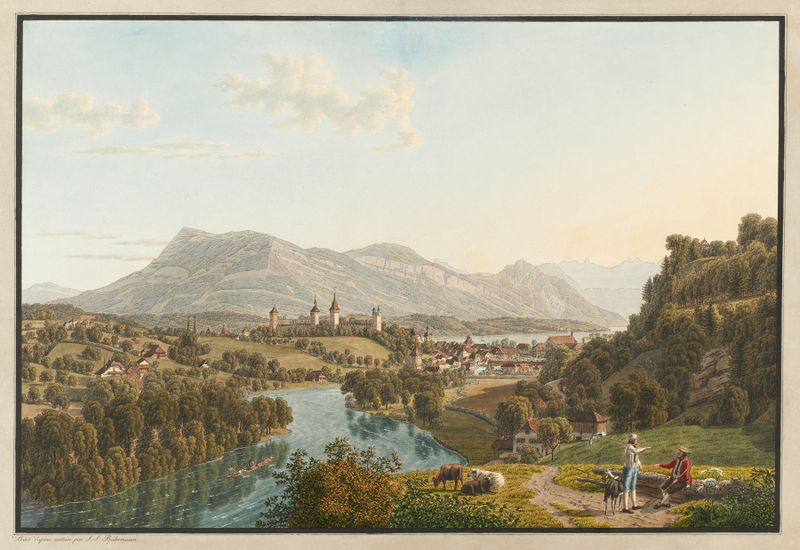
Luzern, von Nordwesten
Johann Jakob Biedermann

Sankt Gallen, von Norden
Johann Jakob Biedermann

Le Glacier nommé Rosenlaui, à côté du Wetterhorn
Johann Jakob Biedermann

Gottstatt, Kloster, von Nordwesten
Johann Jakob Biedermann
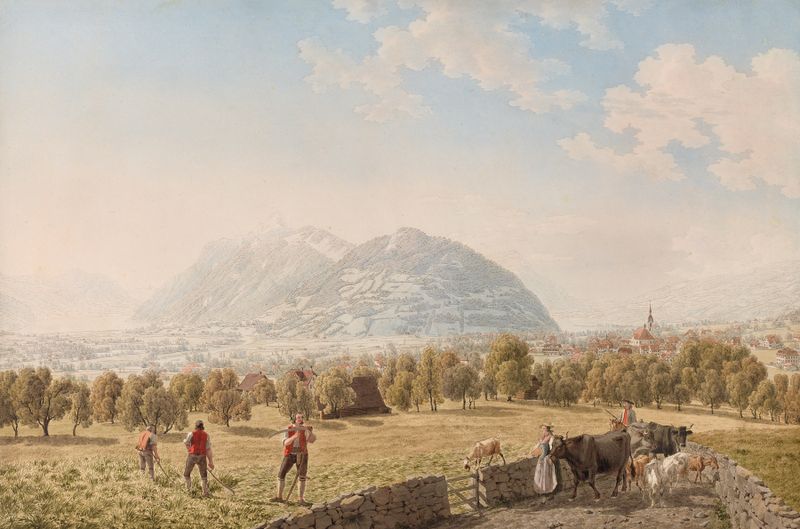
Schwyz, von Osten
Johann Jakob Biedermann

Twann und Bielersee von Nordosten
Johann Jakob Biedermann

Luzern, von Nordwesten
Johann Jakob Biedermann

Luzern, von Südwesten
Johann Jakob Biedermann
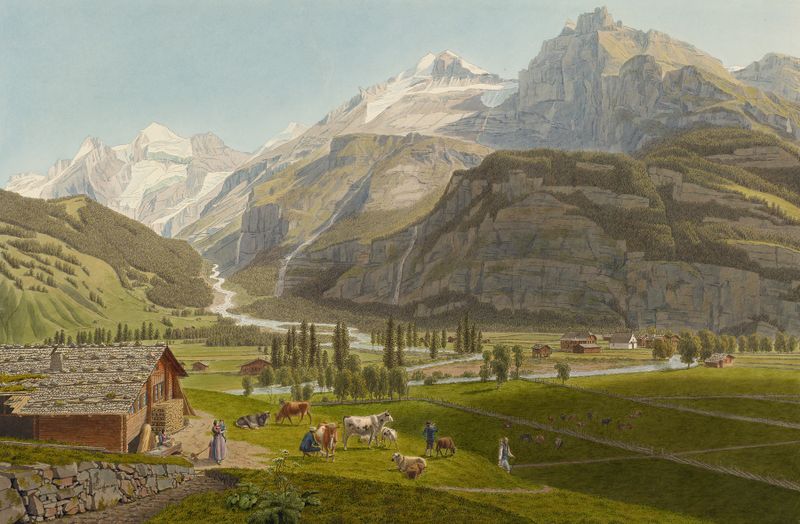
Kandersteg und das Kandertal, von Norden
Johann Jakob Biedermann

Schaffhausen, von Westen
Johann Jakob Biedermann





